Your VO2 Max is more than a fitness number. It’s a starting point for understanding your cardiovascular health and fitness, measuring progress over time, and staying active at every age.
What is a good VO2 Max score? If you’ve checked your smartwatch, searched for VO2 Max by age, or compared your fitness with someone else’s, you’ve probably wondered whether your number is good, average, or needs improvement.
But here’s a more useful question: What is your VO2 Max today, and what can you do to improve it?
You don’t need to be a competitive athlete to significantly benefit from understanding your cardiovascular fitness. Whether your goal is to enjoy longer hikes, cycle more comfortably, keep up with your grandchildren, or simply maintain an active lifestyle, your personal VO2 Max can provide valuable insight into your fitness and how it’s changing.
Your VO2 Max measures your body’s maximum ability to use oxygen during exercise. Rather than focusing on population averages, understanding your own score, establishing a baseline, and tracking improvements over time can help you make more informed decisions about your fitness.
Table of Contents
What Is Your VO2 Max Score?
VO2 Max is the maximum amount of oxygen your body can take in and use during intense exercise. It reflects how effectively your heart, lungs, circulation, and muscles work together to support physical activity.
Generally, a higher VO2 Max indicates a greater capacity for aerobic exercise.
VO2 Max is influenced by several factors, including:
- Age
- Sex
- Genetics
- Body size and composition
- Training history
- Current aerobic fitness
- Testing conditions and protocol
It is not a single measure of health or athletic potential. It is one useful marker of cardiorespiratory fitness that becomes more valuable when interpreted alongside heart rate, ventilation, workload, and training goals.
Your VO2 Max helps explain how well your body can sustain activities that challenge your cardiovascular system, whether that’s climbing a hill, cycling, swimming, or walking at a brisk pace.
Why Does VO2 Max Matter?
Cardiorespiratory fitness is increasingly recognized as an important indicator of long-term health and well-being. A study by the Cleveland Clinic of more than 122,000 adults who underwent treadmill testing found an inverse association between cardiorespiratory fitness and long-term all-cause mortality, with the lowest risk-adjusted mortality among those with the highest fitness levels. 1
VO2 Max has practical relevance to you, here’s why: it can help you understand your current status, and will help your coach or the fitness professional who tests you to give you a time efficient training program for your specifics goals. That means better results and it’s because they don’t have to guess your metabolism.
And the good news is, aerobic capacity can respond positively to regular exercise.
The “Knowledge Doc” Addresses the Importance of VO2 Testing for Him
“VO2 max is probably the best way to describe your health reserve… That exactly aligns with my goal to build up as much health reserve as possible, live as long as possible, but with the quality intact.”
— Dr. Eric Berg DC, 15M YouTube followers
See Dr. Berg’s test, results and recommendations to improve your VO2 max
What VO2 Max Testing Measures
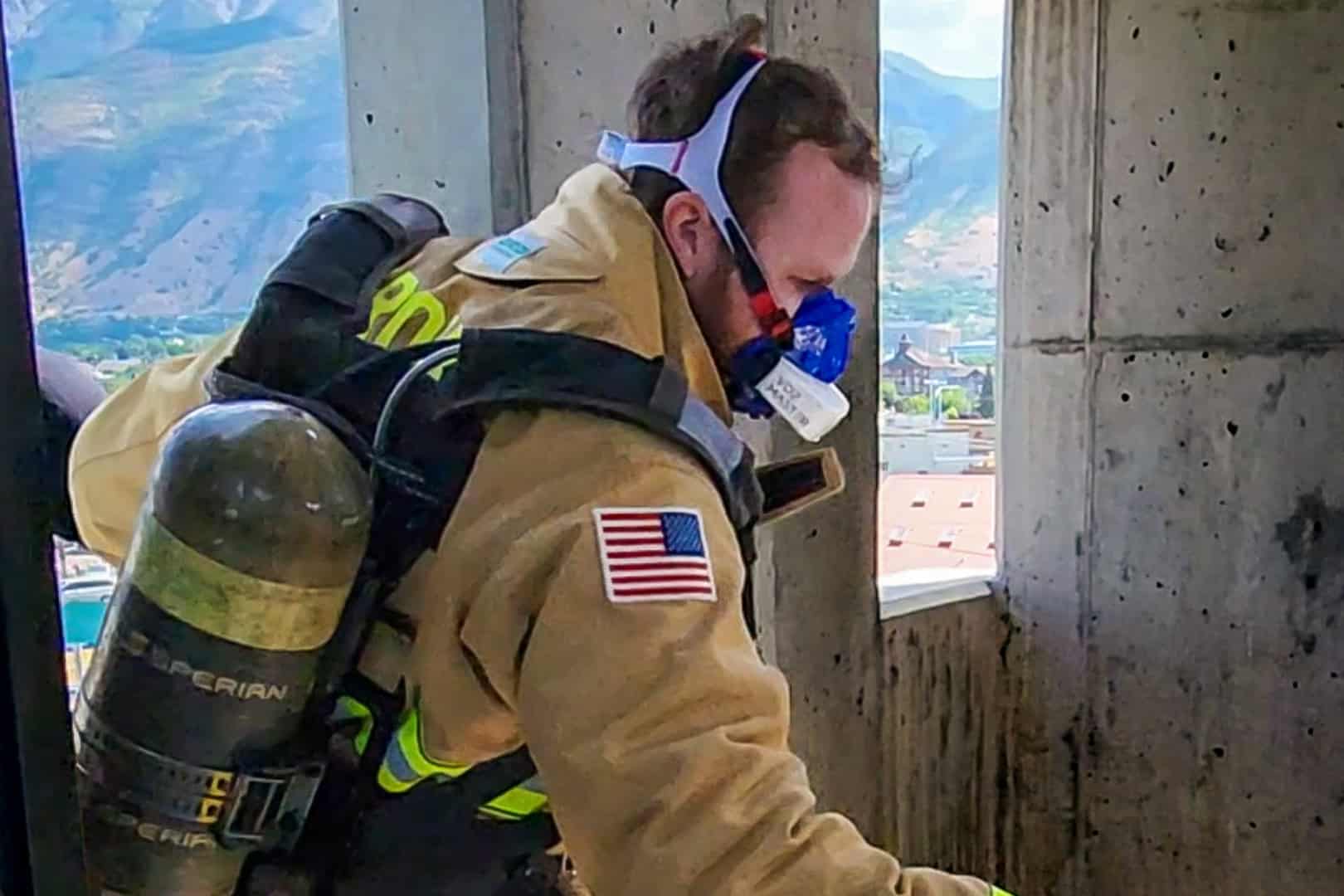
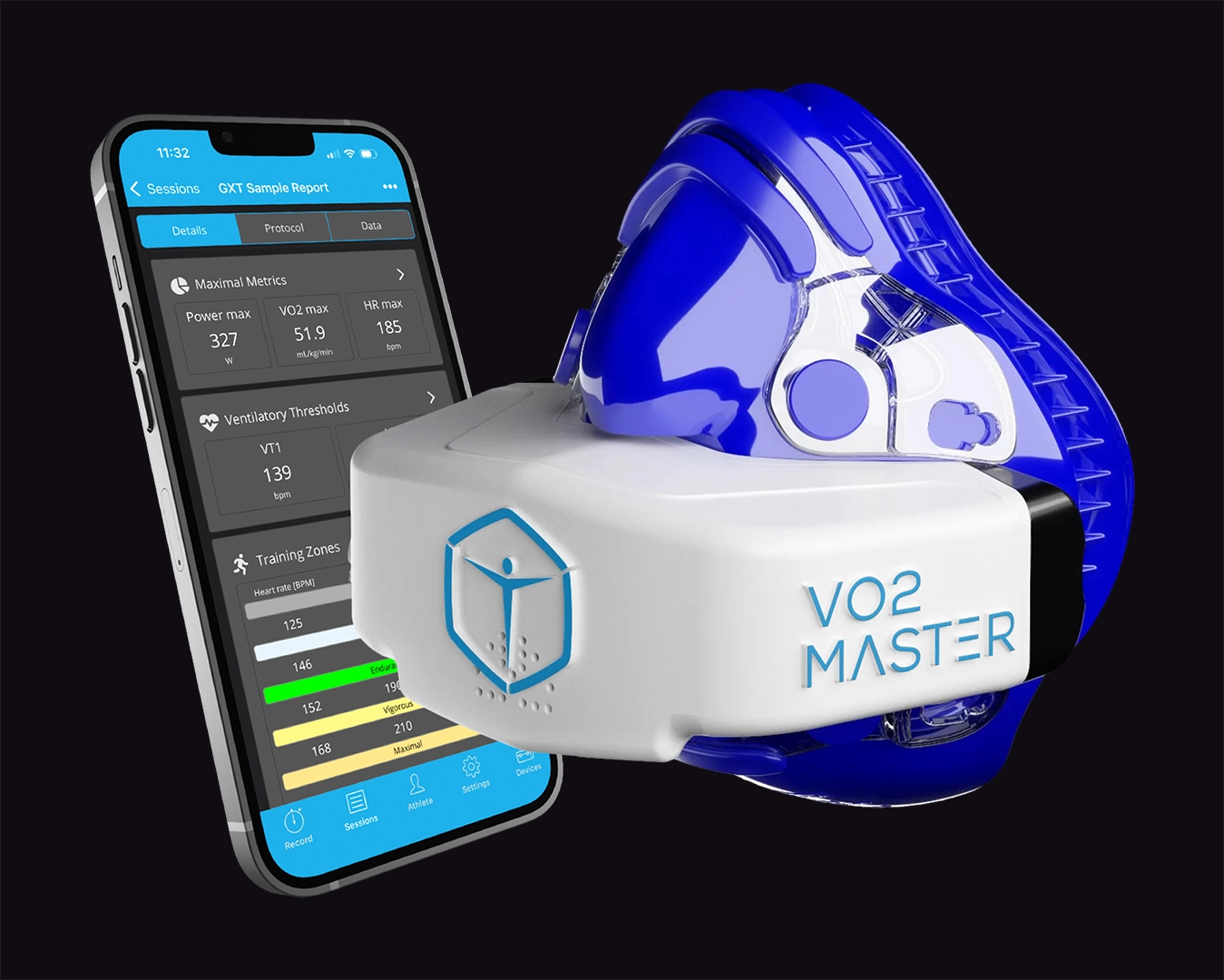
A VO2 Max test measures oxygen uptake while exercise intensity increases (you do not have to go to your max to get valuable information). The VO2 Master analyzer captures breath-by-breath respiratory data and reports VO2 Max alongside other metrics used for training decisions.
Depending on the test and available data, a professional assessment can include:
| Metric | What it tells you |
| VO2 Max | Maximum aerobic capacity |
| VO2 | Oxygen consumption at a given workload |
| Heart rate | Cardiovascular response to intensity |
| Ventilation | Total volume of air breathed per minute |
| Tidal volume | Air moved per breath |
| Respiratory frequency | Breaths per minute |
| Ventilatory thresholds | Intensity points where breathing response changes |
| Training zones | Personalized intensity ranges for training |
The value of thresholds
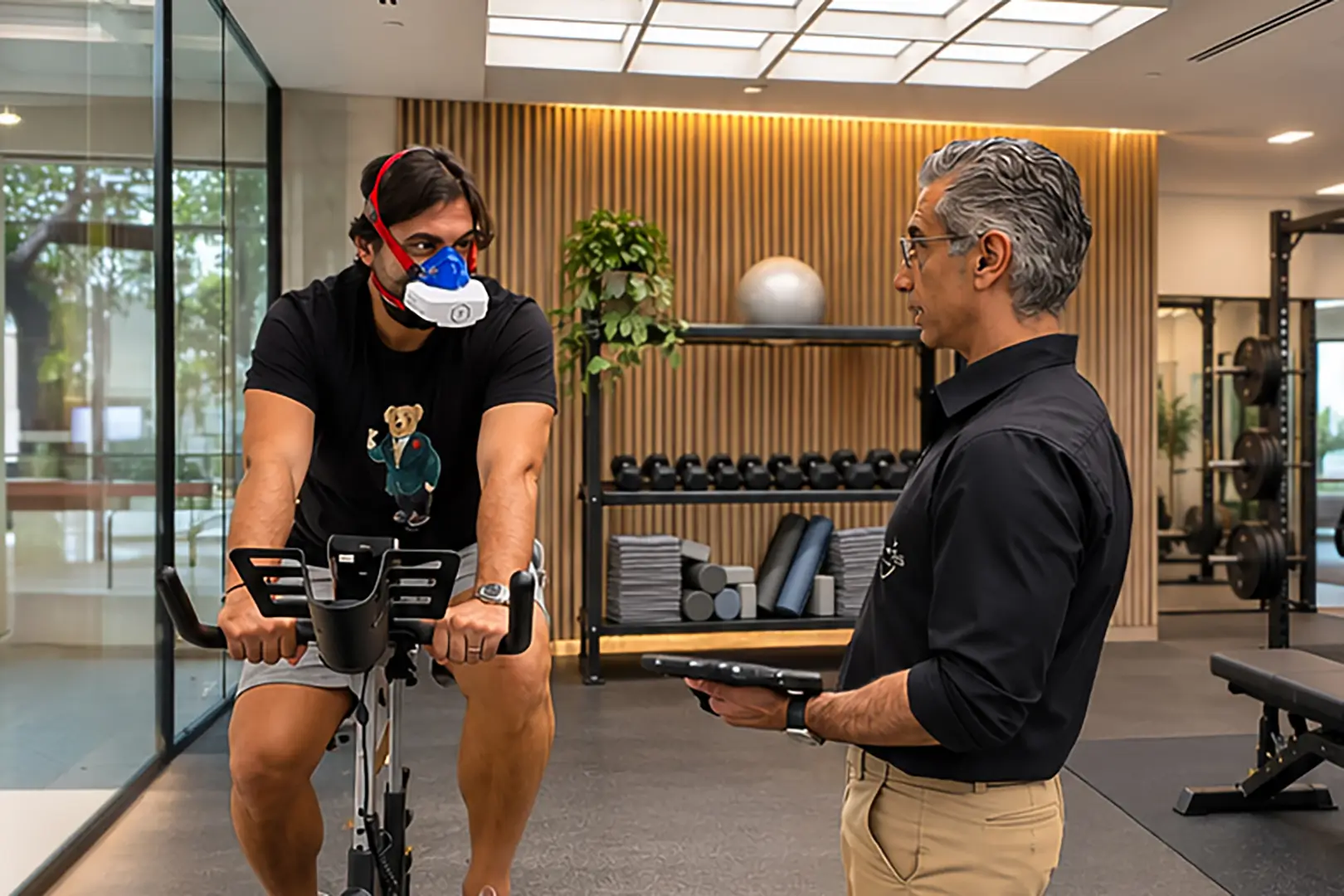
VO2 Max is useful, but it is not the only number that matters. Ventilatory thresholds help identify where a client transitions between easier aerobic work and more demanding sustained efforts.
That matters because two clients can have similar VO2 Max values but very different responses at submaximal intensities. Threshold data helps coaches place workouts in the right part of a client’s physiological range. Submax testing during training is actually preferred by many top endurance coaches to provide key race pace information.
Why Your Own VO2 Max Matters More Than the Population Average
When people receive their VO2 Max results, one of the first things they want to know is, “How does my score compare with other people my age?” That’s understandable, we naturally look for comparisons to understand whether we’re doing well.
But according to elite coach Sean Seale, the most important VO2 Max number is your own because then you can track your progress in a meaningful way.
Discover why Sean Seale prioritizes individual physiology over isolated metrics when making informed coaching decisions.
“I look at VO2 max through the lens of capacity: being able to climb a hill, keep up with your family and continue doing what matters to you as you age. A well-conducted test gives you a useful starting point for understanding your aerobic fitness. Consistent activity that gradually challenges you can help build that capacity. For me, the goal is for better fitness to translate into more freedom in everyday life.”
— Dr. Elie Abirached, Becoming Limitless, @elie.limitless 590K followers
Your Baseline is More Important than Someone Else’s Score
Consider two people, both 55 years old. One has a VO2 Max of 25 mL/kg/min and the other has a VO2 Max of 35 mL/kg/min.
The second person has a higher aerobic capacity relative to body weight, but that comparison doesn’t tell us much about either person’s fitness history, goals, or potential for improvement.
If the first person begins a consistent walking and cycling program, they could realistically increase their VO2 Max from 25 to 29 mL/kg/min after several months. That’s a healthy improvement in their personal aerobic capacity, regardless of where they fall on an age-based chart.
Some important questions you will be able to answer after the initial test and a follow up test are:
Where was my fitness when I started? Has it improved or not and how?
Two that really hit home to me: Am I becoming more capable of doing the activities I enjoy? What changes should I make to continue progressing?
What Is a Good VO2 Max by Age?
Although personal progress should be the priority, age-based reference values can provide some context.
VO2 Max generally declines with age, although genetics, activity levels, body composition, and training history influence individual results.
Population reference data also show average differences between men and women.
Average VO2 Max Scores by Age
Percentile Breakdown (Treadmill)
| Age Group | 10th Percentile | 25th Percentile | 50th (Median) | 75th Percentile | 90th Percentile |
| 20–29 (Men) | 32.1 | 40.1 | 48.0 | 55.2 | 61.8 |
| 30–39 (Men) | 30.2 | 35.9 | 42.4 | 49.2 | 56.5 |
| 40–49 (Men) | 26.8 | 31.9 | 37.8 | 45.0 | — |
Note: Cycle ergometer medians are systematically lower than treadmill values across all age and sex brackets in the registry.
Values are in mL/kg/min. These are values from the study population, not prescribed fitness targets.2
These figures help illustrate how VO2 Max typically varies across age groups. They do not determine what you are capable of achieving.
What About VO2 Max for Women?
Women generally have lower average VO2 Max values than men of the same age, reflecting several physiological differences. However, individual fitness varies considerably. An active woman in her 50s can definitely have a higher VO2 Max than a less active woman in her 30s.
For women focused on healthy aging, maintaining endurance, and staying physically active, measuring personal progress can be more useful than focusing on population averages.
The takeaway: Reference charts can tell you where your score falls within a population. Your own measurements over time can tell you how your fitness is changing.
Explore how direct VO2 testing helps women at different life stages better understand their aerobic fitness and measure personal progress.
Why VO2 Max Matters for All of Us, Not Just Athletes
Metabolic health affects far more than athletic performance. It plays a central role in energy levels, weight regulation, cardiovascular health, and long-term disease risk. Metabolic testing identifies where this flexibility breaks down and how training can improve it.
VO2 max can inform your fitness and health decisions, plus everyone wants more efficient training and results for their invested time.
Regardless of what you enjoy, running, biking, dancing pickleball or golf, these activities all require aerobic endurance to varying degrees. Improving cardiovascular fitness can help increase your capacity to sustain physical activity, making it easier to pursue goals that matter to you.

How to Improve Your VO2 Max
The good news is that VO2 Max is not fixed. Although age and genetics influence aerobic capacity, consistent cardiovascular exercise can help improve or maintain it.
You don’t necessarily need a complicated training program. Walking, cycling, swimming, and other activities can provide effective activity levels for success.
Once you have your VO2 Max score, the coach will provide information as to what intensity levels and training will help you achieve your personal fitness goals.
While I won’t go into detail in this blog, including strength training and weight loading activities is also very important for long term health and fitness.
Find a VO2 Master testing facility to establish your baseline and use personalized metabolic data to track changes over time.
Walking, Biking Swimming: Start with What You Can Do Today
Walking is one of the most accessible ways to build cardiovascular fitness. For someone who is currently inactive, regular brisk walking may provide a meaningful aerobic challenge. Start with a comfortable duration and gradually increase the amount of time you spend walking.
As your fitness develops, you can introduce a slightly faster walking pace, gentle hills, longer walking routes and short intervals of brisk walking followed by easier recovery. For example, someone who normally walks for 20 minutes might gradually increase to 30 minutes, then introduce several short periods of faster walking.
The goal is consistent, manageable progression.
Practical training strategies
- Build an aerobic base. Use sustainable moderate-intensity sessions to increase overall aerobic volume.
- Add higher-intensity work carefully. Intervals near or above threshold can provide a strong training stimulus for many clients. I love the fact that short bursts make a difference and follow what Dr. Rhonda Patrick calls “exercise snacks” after hearing her talk about it on the Huberman Lab. I will jump onto my air bike and do one hard minute and four moderate minutes several times a day rather than worrying about always doing a minimum of 20 minutes of cardio like I used to. As she said, running after your kids or grandkids counts! While I don’t have to chase my kids anymore, I do want to be able to keep skiing, biking, dancing and hiking.
- Use individual zones. Base intensity on measured VO2, heart rate, and ventilatory thresholds from your VO2 test rather than generic formulas.
- Progress gradually. Increase duration, frequency, or intensity one variable at a time.
- Include strength training. Resistance work supports overall physical capacity and can complement endurance training.
- Retest periodically. Repeat testing under similar conditions to assess trends and adjust the plan.
According to the American College of Sports Medicine (ACSM), moderate-intensity aerobic exercise generally corresponds to 40–59% of VO2 reserve or heart rate reserve, while vigorous exercise corresponds to 60–89%. ACSM recommends that most healthy adults complete at least 150 minutes of moderate-intensity aerobic activity per week or 75 minutes of vigorous activity, or an equivalent combination. 3
Smartwatch Estimates vs. Direct VO2 Max Testing
Many people discover their estimated VO2 Max through a smartwatch. Devices such as Apple Watch, Whoop and Garmin have made fitness information readily available, encouraging more people to pay attention to cardiovascular fitness.
There is an important distinction between an estimated VO2 Max and a directly measured result.
How Smartwatches Estimate VO2 Max
Most consumer wearables use algorithms based on population averages combined with your information such as heart rate, pace, weight and activity to estimate VO2 Max. An important factor to understand is that VO2 Max information will be reported by many wearables whether you are doing a max effort or not. To get the valuable physiologic information from a max test, you must be giving a maximal, 10/10 physical effort.
Secondly, a smartwatch does not directly measure how much oxygen your body consumes during exercise because this cannot be measured through the skin, it must be measured through the lungs with breath.
What Happens During a Direct VO2 Max Test?
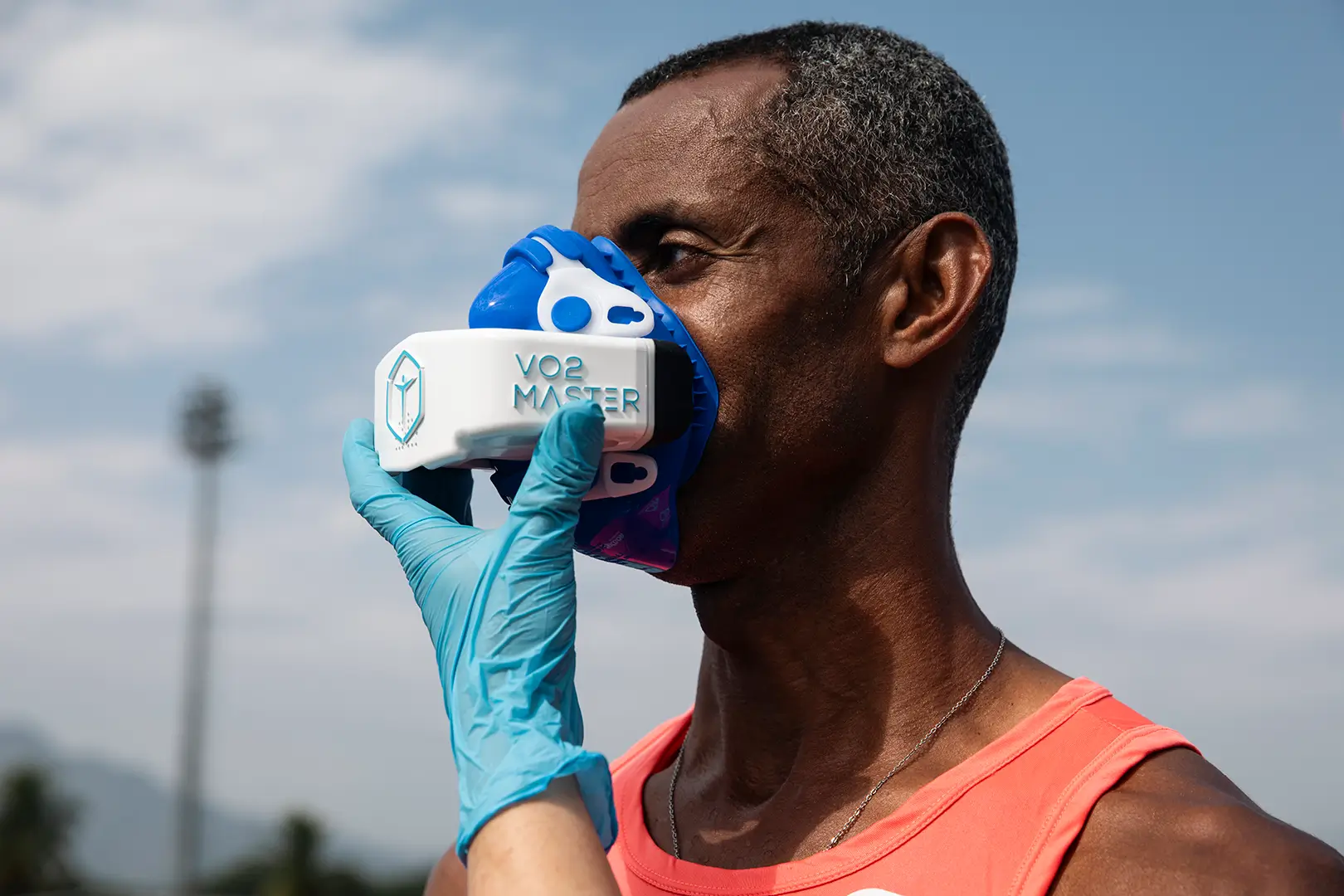
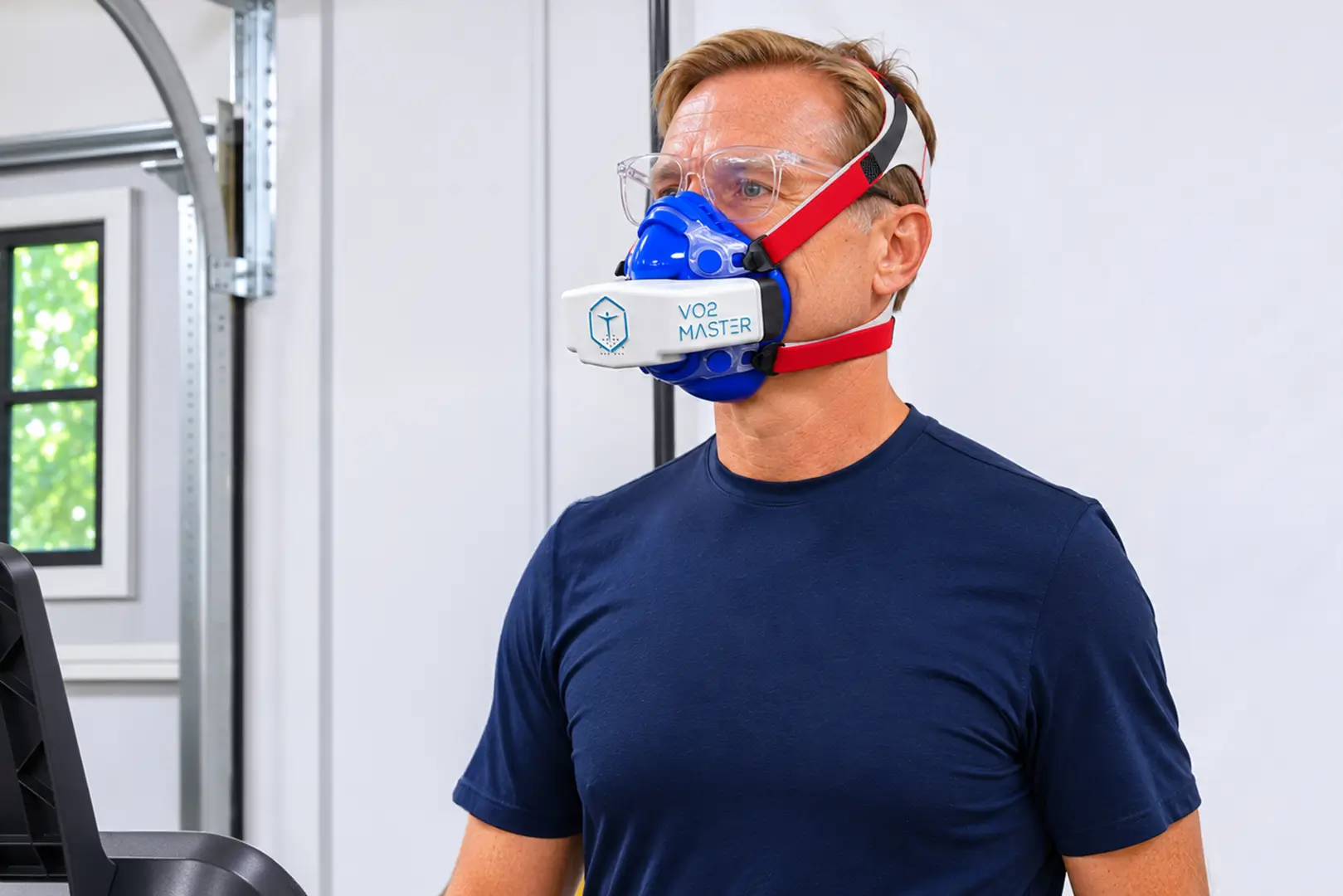
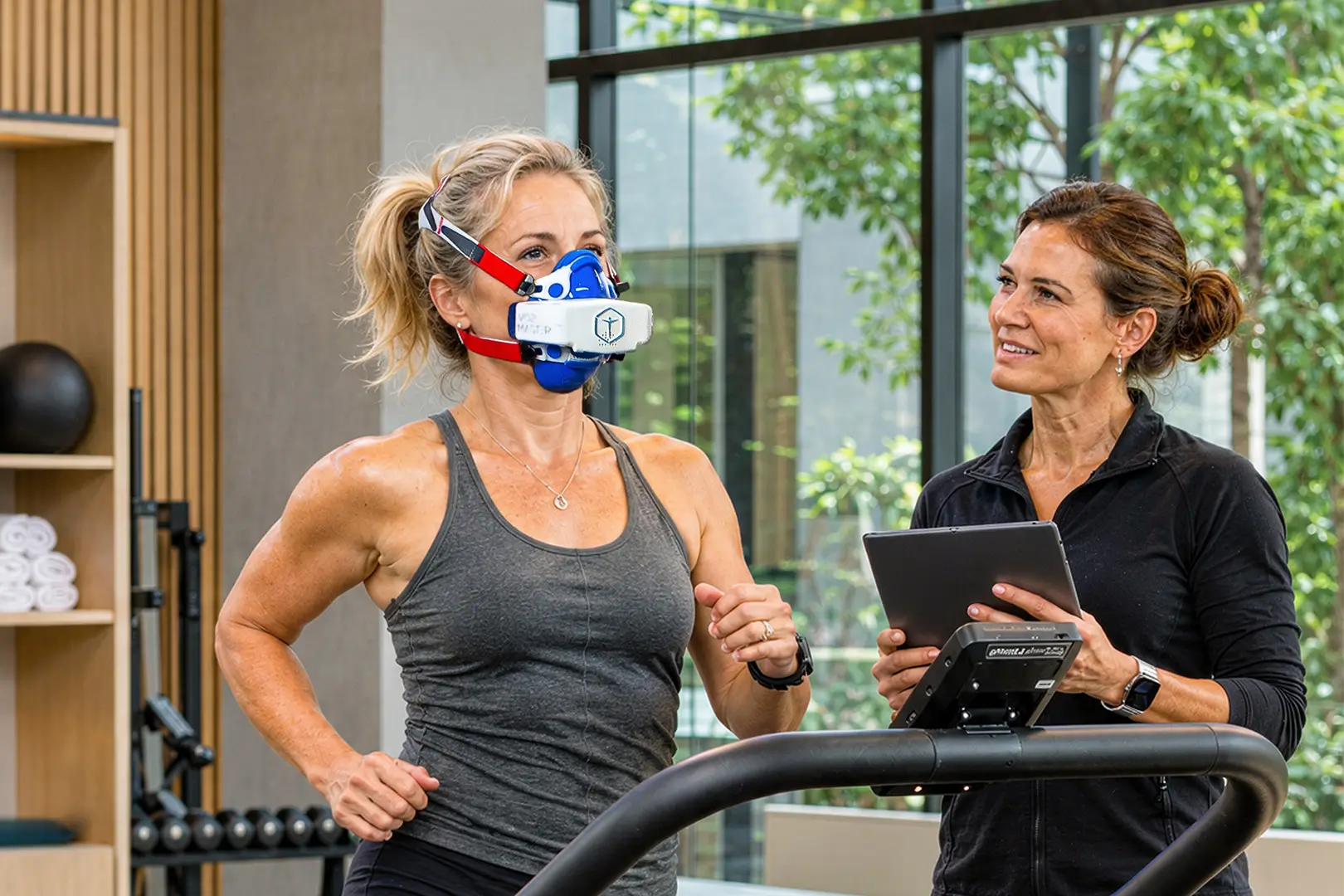
Direct metabolic testing measures oxygen consumption while you exercise. During a typical VO2 Max test, you wear a specialized equipment such as the VO2 Master portable metabolic analyzer while completing a progressively challenging exercise protocol on a treadmill or stationary bike.
The analyzer measures oxygen consumption as exercise intensity increases. Note, you do not have to go to maximal effort to get very valuable information about your cardiovascular fitness.
The information provides fitness and wellness professionals with directly measured data that will give your precise metabolic metrics.
| Smartwatch estimate | Direct VO2 Max testing |
| Estimates aerobic capacity using algorithms and population averages | Measures your oxygen consumption during exercise |
| Convenient for ongoing monitoring | Provides a directly measured assessment |
| Accuracy varies by device and conditions | Accuracy depends on analyzer, protocol, and test quality |
| Useful for observing general trends | Useful for establishing a measurable baseline and evaluating changes over time |
Both approaches can have a place in a fitness routine.
A smartwatch can help monitor everyday activity, while direct metabolic testing can provide personal metrics that inform training decisions and actual progress.
For fitness and wellness professionals:
Bring direct VO2 Max testing to your clients with VO2 Master. Shop Now or Book a Demo to learn how portable metabolic testing can support personalized fitness assessments.
Use Your VO2 Max Score to Track Your Health and Fitness Progress
Knowing your VO2 Max is helpful for getting your training program optimized for results, knowing your VO2 Max over time is an invaluable picture of your long-term health and fitness.
After a sustained period of consistent exercise, reassessing your VO2 Max can help determine whether you have reached your goals and provide information as to how you can effectively proceed.
For the most useful comparisons, repeat testing should use similar protocols and conditions whenever possible. A qualified professional can help interpret changes and adjust your training program accordingly.
Progress may also be reflected in everyday activities such as completing a familiar route more comfortably or maintaining a faster walking pace at a similar effort.
Your VO2 Max is not a competition with other people. It’s a valuable picture of your heart, lung and muscle function that you can use to better understand your own health and fitness journey.
Conclusion: The Most Important VO2 Max Number Is Yours
The most useful information comes from understanding your own cardiovascular fitness, establishing a baseline, and following your progress over time.
Whether you’re 35, 55, or 75, your fitness goals should reflect the activities you want to enjoy and the physical capabilities you want to maintain.
Regular walking, cycling, swimming, and other aerobic activities can help you build or maintain cardiovascular fitness if you continue to challenge yourself.
By learning your VO2 number, you can gain a clear and precise understanding of where you’re starting and how your aerobic capacity changes as you train to achieve your life goals, whether that’s walking with your grandkids or running a marathon.
Discover Your VO2 Max Want to understand your cardiovascular fitness and establish your own baseline?
Find a VO2 Master Testing Facility near you and connect with a professional who can help you measure your VO2 Max and interpret your results.
For fitness and wellness professionals:
Help your clients move beyond population averages with directly measured metabolic data. Shop Now or Book a Demo to discover how the VO2 Master Analyzer can support personalized fitness assessments.
Authoritative sources
- Mandsager et. al (2018) Association of Cardiorespiratory Fitness with Long-term Mortality Among Adults Undergoing Exercise Treadmill Testing
- Kaminsky et al. (2015), Mayo Clinic Proceedings. Reference standards for cardiorespiratory fitness measured with cardiopulmonary exercise testing in the FRIEND Registry.
- Garber et al. (2011) – ACSM Position Stand
Frequently Asked Questions
What is a good VO2 Max score?
A good score depends on your age, sex, fitness history, and personal goals. Population reference values provide context, but your own baseline and changes over time are often more useful for guiding your fitness program.
Can you improve your VO2 Max after 50?
Yes. Adults can improve aerobic fitness at any age through regular cardiovascular exercise. Individual results vary based on training history, exercise consistency, and other factors. An inactive person with a low score who begins training consistently will see more relative improvement over time than someone who already has a very high score, trains intensely and is looking for a 1% or 2% improvement for competition.
Is walking enough to improve VO2 Max?
Walking can improve aerobic capacity, particularly for people who are currently inactive. As fitness increases, faster walking, hills, or longer distances may provide additional training challenges.
How accurate is a smartwatch VO2 Max score?
Accuracy varies between wearable devices and individuals. Smartwatches estimate VO2 Max using algorithms and population averages combined with information such as heart rate, age and weight, while metabolic analyzers directly measure a persons’ oxygen consumption from the breath during exercise. Health and fitness professionals use actual data from their client’s direct metabolic test to guide optimal personalized training, while individuals use their wearables to monitor everyday activity trends, not specific VO2 or breathing mechanics information which help identify training limiters.
How often should you measure your VO2 Max?
There is no single testing schedule that works for everyone. Reassessment after a sustained training period can help evaluate progress. A fitness professional can recommend an appropriate interval based on the client’s goals.
Should I worry if my VO2 Max is below average for my age?
A below-average score does not automatically indicate a health problem. Reference values describe population patterns and do not account for every individual circumstance. Focus on understanding your result, discussing concerns and goals with an appropriate professional, and identifying realistic opportunities to improve fitness.