For fitness and wellness professionals, VO2 Max testing for women over 40 is becoming a more requested assessment.
Direct metabolic testing can establish an individualized baseline, reveal how her physiology responds as exercise intensity rises, help determine appropriate training intensities for her goals, and create an objective way to measure change over time.
Table of Contents
Why VO2 Max Matters for Women Over 40
In a study exploring the health priorities and challenges of 980 midlife women (ages 45–70) in British Columbia, Canada, they found staying physically fit was the top priority, followed by weight management, brain health, and mental wellness.1
VO2 Max is the maximum amount of oxygen the body can use during intense exercise. It reflects the combined ability of the cardiovascular, respiratory and muscular systems to deliver and use oxygen.
“Metabolic testing is becoming an increasingly important tool for women over 40 who want to understand how their bodies are changing and, more importantly, what they can do about it. We’re seeing more women take an active role in understanding their fitness, metabolism and long-term health, and VO2 max testing provides a powerful, objective measure of cardiovascular fitness that can be tracked over time.”
— Dr. Kaitlin Link, MD. Benchmark Proactive Health
The American Heart Association has argued that cardiorespiratory fitness should be considered an important clinical vital sign because of its strong relationship with health outcomes.2
For a fitness professional, VO2 Max becomes particularly useful because the information can lead to more personalized and effective client decisions.
A test can help answer:
- What is this client’s current aerobic capacity?
- How does she respond as exercise intensity increases?
- Where do important physiological thresholds occur?
- Are her current heart rate training zones appropriate?
- How efficiently does she perform at submaximal intensities?
- Has her fitness changed after a training intervention?
That makes VO2 testing for women relevant in a wide array of scenarios and stages of life whether she is premenopausal, perimenopausal or postmenopausal.
A 45-year-old marathon runner, a 52-year-old beginning structured exercise for the first time, and a 60-year-old longevity client may have very different goals. Each can benefit from understanding her own physiology rather than relying entirely on generalized formulas.
How Does VO2 Max Change with Age?
Population research consistently shows that aerobic capacity tends to decline with age.
Biomedical health expert Dr. Rhonda Patrick says research shows aerobic capacity decreases by roughly 10% per decade after about age 25.3
There is good news though, averages shouldn’t be mistaken for an inevitable trajectory south.
Training history, activity level, genetics, body composition, health status, exercise modality and other factors can all influence measured VO2 Max.
This is an important distinction for professionals conducting fitness testing for women over 40.
Age provides useful context, it does not provide an individualized exercise prescription.
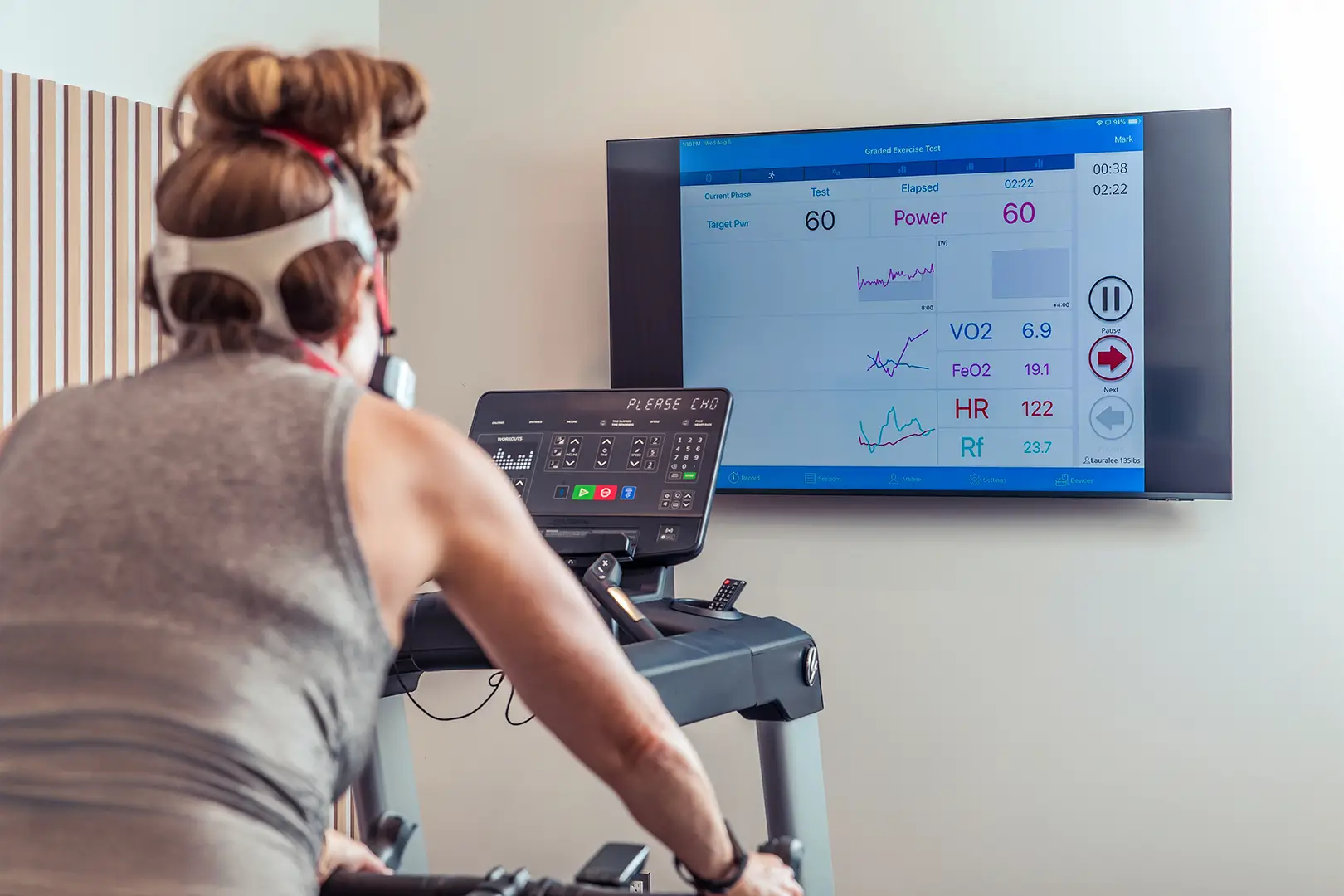
VO2 Max by Age for Women: Useful Context, not a Target
One of the most common questions clients ask fitness and health professionals is:
“What should my VO2 Max be for my age?”
Again, the answer can be used as a reference point, not a goal.
Two women of the same age may have significantly different training histories, physiology and objectives.
Data from the Fitness Registry and the Importance of Exercise National Database, known as FRIEND, have provided widely used reference standards based on directly measured cardiopulmonary exercise testing.
This registry offers useful reference values because its data were collected using direct cardiopulmonary exercise testing rather than simply estimating VO2 Max from activity or workload.4
Median values commonly referenced from the FRIEND dataset include:
| Age | 50th percentile VO2 Max |
| 40-49 | 26.7 mL/kg/min |
| 50-59 | 23.4 mL/kg/min |
| 60-69 | 20.0 mL/kg/min |
| 70-79 | 18.3 mL/kg/min |
Current resources using FRIEND data reproduce these age-related differences, including a median of 26.7 mL/kg/min for women aged 40 to 49.
For professionals discussing VO2 Max by age for women, a more useful approach is:
Use population data to provide context, then use direct testing to understand the individual.
Why Direct VO2 Exercise Testing Matters
Wearables and fitness equipment increasingly provide VO2 Max estimates.
Those estimates can be convenient for monitoring trends, but estimating oxygen consumption through population averages is very different from measuring it directly from the lungs.
See Why Measured VO2 Tells You More Than an Estimate.
“We do have data, for one, measuring cardiorespiratory fitness, which is a marker of cardiovascular health, being physically fit right? Obviously, the gold standard of that would be measuring VO2 Max, your maximal oxygen uptake during maximal exercise.”
Dr. Rhonda Patrick, Huberman Lab Podcast Interview
Direct VO2 testing uses indirect calorimetry to measure oxygen consumption during exercise.
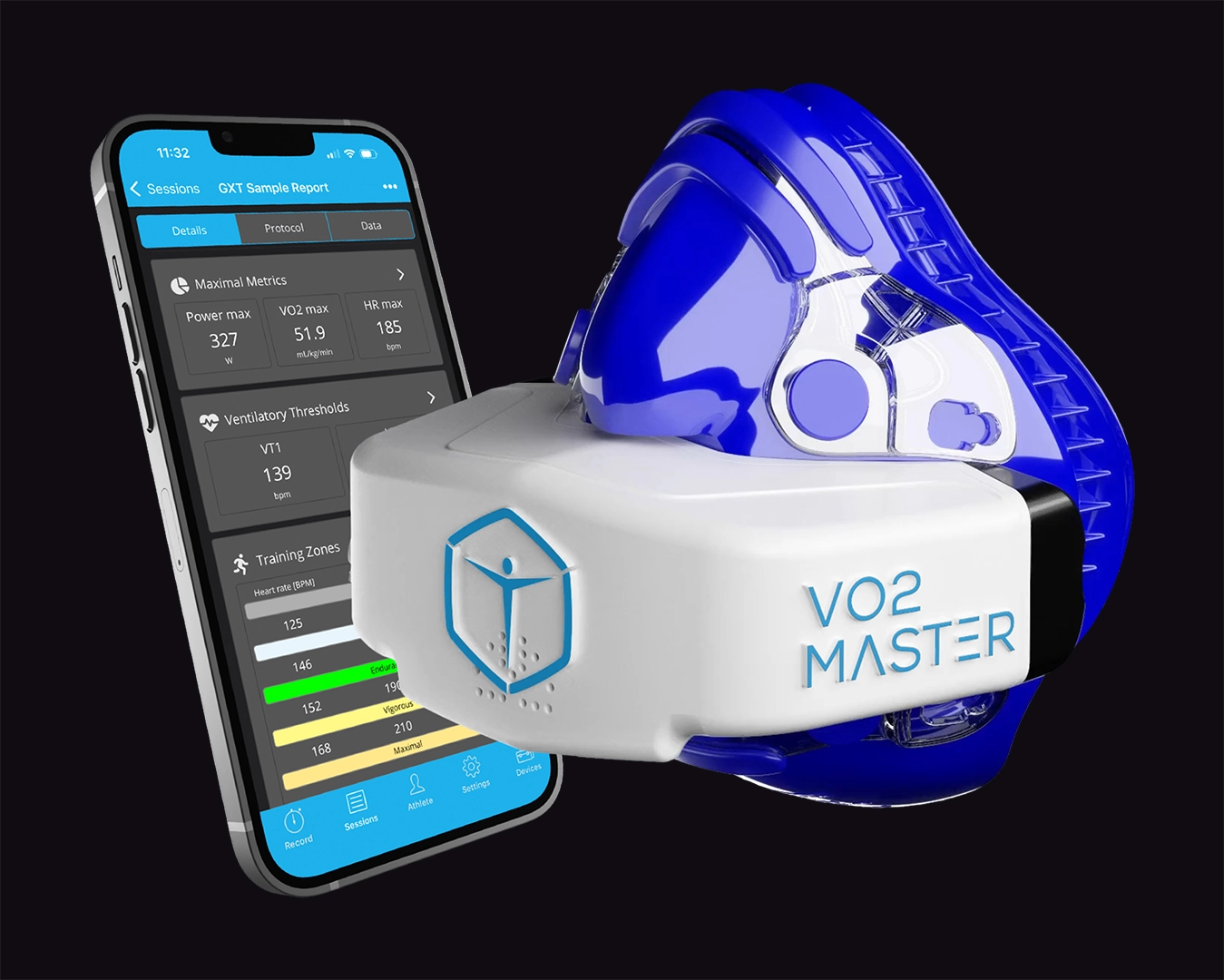
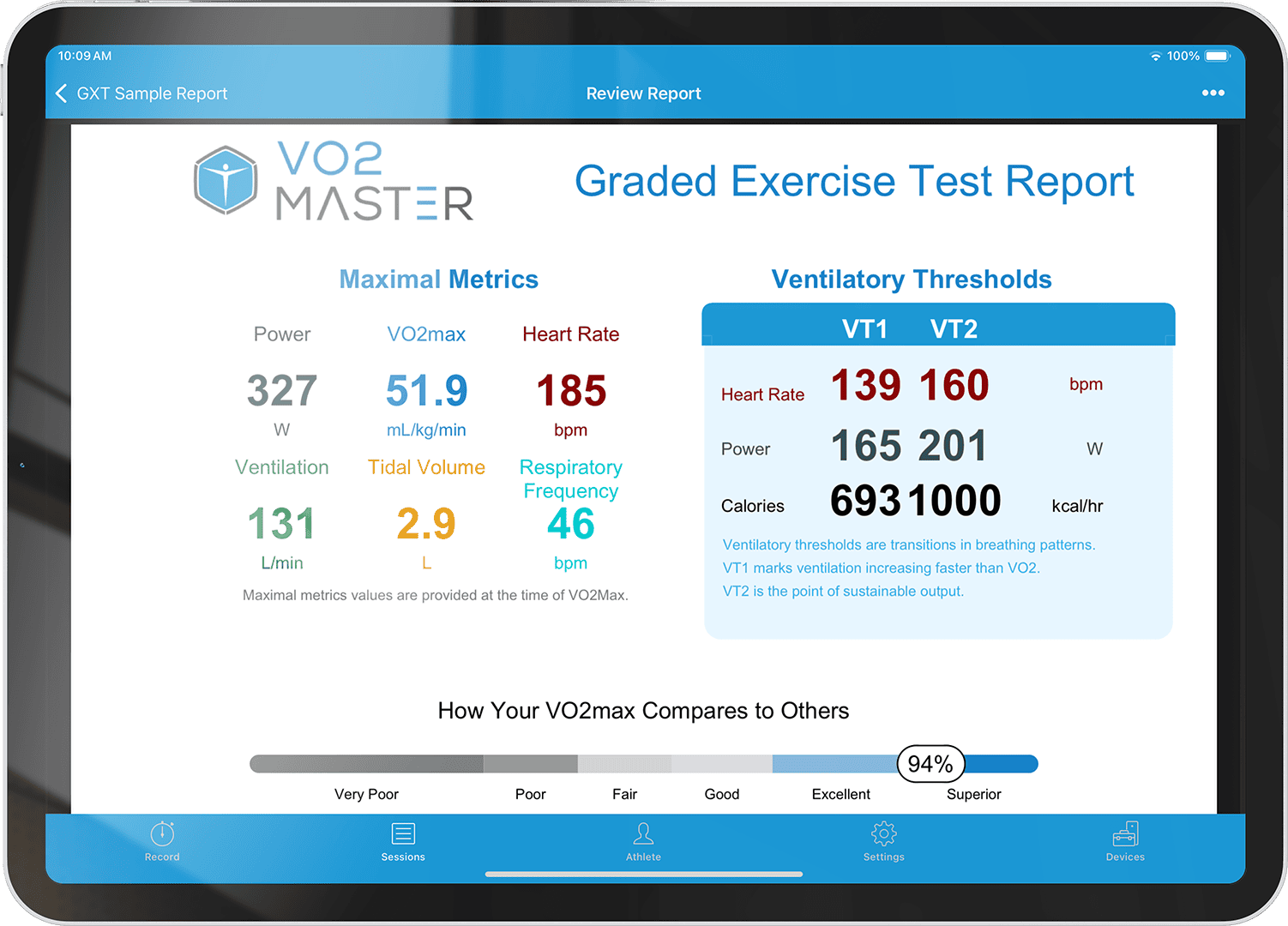
With the VO2 Master analyzer, professionals can examine VO2 alongside ventilation, breathing responses and ventilatory thresholds rather than relying on a single estimated fitness score.
This can expand the client conversation so it’s based on real physiologic insights, not population averages. Rather than simply asking, “Are you exercising enough?”, metabolic testing makes it possible to ask a more useful question:
Is the training actually improving your cardiorespiratory fitness?
Establish an individual baseline
The first test is important because it establishes a starting point, this is why many leading fitness and health facilities start with a metabolic test as part of their coaching program.
See How Baseline Testing Can Strengthen Client Motivation
A woman’s first metabolic assessment at age 47 does not need to answer whether she is better or worse than every other 47-year-old.
It needs to answer:
Where is she now?
That baseline can then be used to evaluate future change.
Not only the maximum number
VO2 Max receives considerable attention, but much of the valuable information comes before the client hits their maximum such as breathing mechanics, efficiencies, and more. Submaximal physiology can therefore also provide valuable information.
A metabolic test can examine how oxygen consumption, heart rate and ventilation respond throughout increasing exercise intensities.
Identify physiological thresholds
Ventilatory thresholds are points where ventilation changes disproportionately as exercise intensity increases.
Identifying these transitions can help practitioners establish individualized training intensities rather than relying entirely on percentage-based formulas.
This is particularly relevant when developing training zones for women.
Learn the Difference Between Submaximal and VO2 Max Testing.
What Can Professionals Learn from a VO2 Exercise Test?
Depending on the testing protocol and objective, practitioners may evaluate:
- VO2 Max
- Oxygen consumption at submaximal workloads
- Power
- Ventilation
- Respiratory frequency
- Tidal volume
- Ventilatory thresholds
- Heart rate responses
- Exercise efficiency
- Personalized training intensities
- Changes during repeat testing
The goal is not to overwhelm clients with physiological data.
The goal is to identify information that improves the decision you’re making about creating or modifying their training program.
For example, two women may achieve a similar VO2 Max but reach their ventilatory thresholds at different workloads.
Their headline fitness score may look similar, while their training prescriptions could be quite different.
That is one reason metabolic testing for women can add more value than simply reporting a VO2 Max percentile.
Dr. Stacey Sims exercise physiologist and nutrition scientist who specializes in female-specific health, fitness, and performance and author of the book Roar, has often emphasized that women should distinguish genuinely high-intensity work from simply spending lots of time at moderate intensity.
That creates an excellent question for health professionals performing portable metabolic testing:
How do you know whether a woman is actually training at the intended physiological intensity rather than relying on generic heart-rate zones?
This provides more valuable answers for your clients.
Ready to add individualized metabolic testing to your client assessments?
Shop VO2 Master or book a demo to see how portable VO2 testing can fit into your fitness or wellness workflow.

From VO2 Exercise Testing to Personalized Training
Testing becomes valuable when it influences what happens next.
Start with the client’s objective
Before selecting a protocol, ask what you are trying to learn.
Is the client:
- Improving general cardiorespiratory fitness?
- Training for an endurance event?
- Returning to structured exercise?
- Building a longevity-focused fitness plan?
- Trying to make her current training more individualized?
The assessment should support the objective.
Use thresholds to guide intensity
Generic heart rate zones typically begin with population-based estimates.
Direct testing allows the practitioner to observe how the individual responds. That information can help establish training intensities around her measured physiology.
Instead of telling every 50-year-old woman to work at the same percentage of an estimated maximum heart rate, practitioners can prescribe exercise using her own physiologic response to increasing workloads.
Translate the physiology
Clients do not necessarily need a physiology lesson, they need to understand what the information means for them.
After testing, a practitioner should be able to explain:
- The client’s current starting point
- Where the client’s important training intensities occur
- What the next training block should accomplish
- Which variables will be monitored
- When we should consider testing again
That transforms a fitness assessment into an ongoing coaching process and the development of a long-term health and fitness profile for your client.
Standardization Makes Retesting More Valuable
If the purpose of your clients’ fitness assessment is to measure change and optimize results over time, consistency is essential.
Keep the exercise modality consistent
Treadmill and cycling tests can produce different physiological responses.
When longitudinal comparison is the goal, use the same modality whenever practical.
Repeat the testing protocol
Keep stage duration and workload progression reasonably consistent between assessments.
If the protocol changes substantially, it becomes harder to determine whether differences came from the client or the test itself.
Record testing conditions
Context can influence performance.
Useful information to document include:
- Recent training
- Sleep
- Illness
- Medication changes
- Nutrition
- Environmental conditions
- Relevant menstrual or menopause information when appropriate to the client’s goals
This information is meant to improve the quality of longitudinal data.
How Metabolic Testing Can Strengthen Your Wellness Offering
For wellness businesses, this opportunity is about creating a more comprehensive assessment service.
Many facilities already offer:
- Strength assessment
- Mobility testing
- Blood biomarkers
- Nutrition coaching
- DEXA or body composition testing
- Lifestyle or longevity consultations
VO2 and Resting Metabolic Rate testing adds important dimensions for long-term health and training decisions.
How does the client’s body function during exercise?
That allows businesses to create services such as:
- Women’s complete fitness assessment
- VO2 and resting metabolic rate (RMR) assessment
- Longevity fitness baseline
- Personalized training-zone assessment
- Annual cardiorespiratory fitness review
- Post training block metabolic reassessment for athletes
This makes wellness testing more actionable because assessment is linked directly to training decisions and progress tracking.
Retesting Creates a Precise Fitness Profile Over Time
A single VO2 test tells you where your client is today. Repeated testing can help determine what is changing.
Retesting helps professionals evaluate whether the intervention is producing the results they intended.
A useful workflow is:
Measure. Program. Train. Remeasure. Adjust.
And VO2 Max does not have to increase dramatically for a retest to be useful.
A client may:
- Produce more power at the same oxygen consumption
- Run faster at the same physiological demand
- Reach a ventilatory threshold at a higher workload
- Show a different breathing response
- Maintain a given intensity more efficiently
Those changes may be highly relevant even when their VO2 Max value moves relatively little.
Conclusion: Provide Invaluable Client Insights from Metabolic Testing
Age-based norms provide useful context. They can help practitioners explain broad population trends and give clients perspective on their results.
But they cannot tell a professional exactly how an individual responds to exercise or what training intensity is appropriate for her based on her current fitness and desired goals.
Direct VO2 testing can.
It provides an objective baseline, reveals physiological responses across increasing exercise intensity, helps establish individualized training zones and gives professionals a repeatable way to measure change.
For fitness and wellness businesses serving women in their 40s, 50s, 60s and beyond, this creates an opportunity to move the conversation from:
“What should my VO2 Max be for my age?”
to:
“What does my physiology tell us, and what should we do next?”
Shop VO2 Master or book a demo to see how portable VO2 and Resting Metabolic Rate testing can help you build successful wellness and longevity assessments for women over 40.
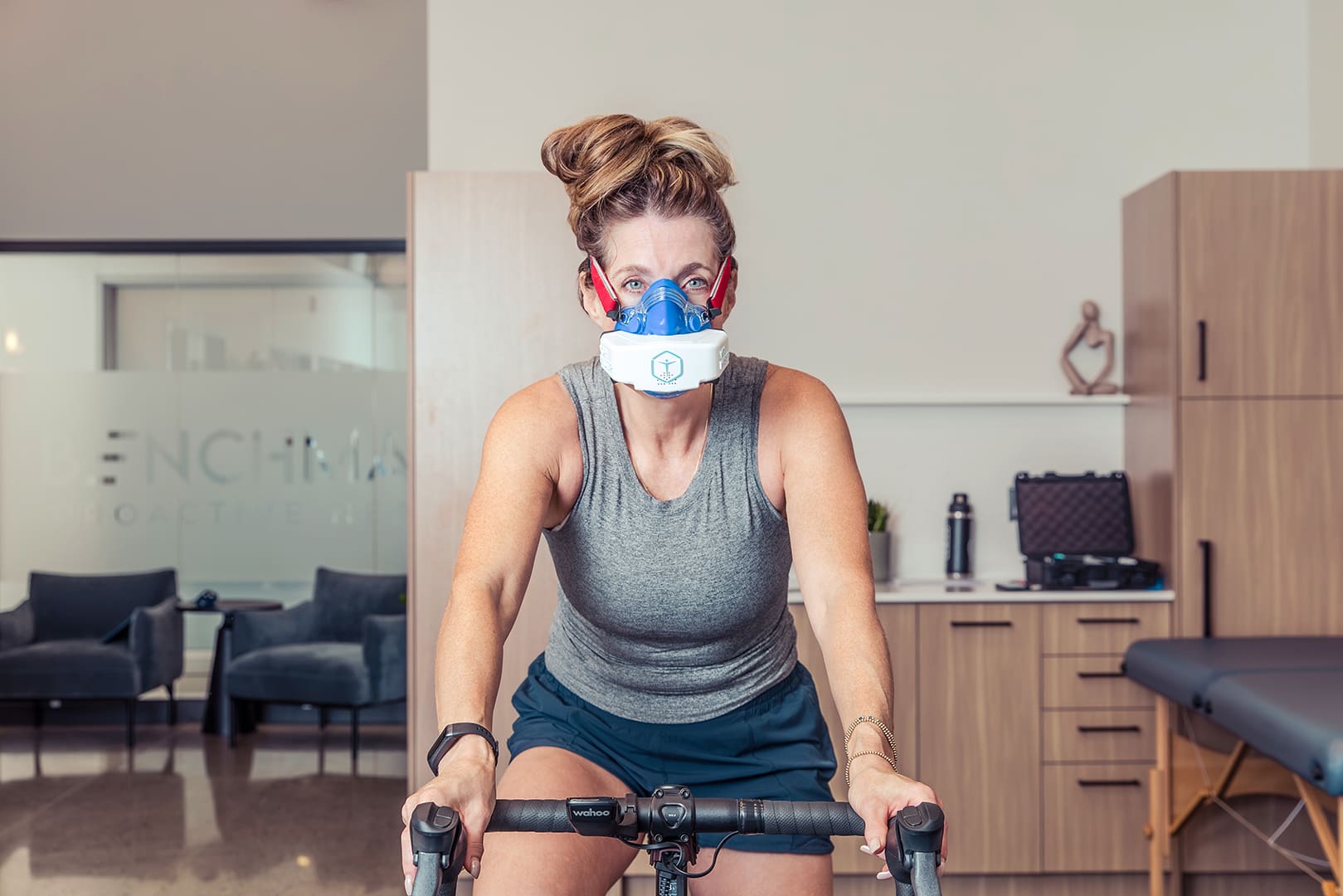
Feature photo credit: Benchmark Proactive Health.
Authoritative Sources
- Shabnam Ziabakhsh Navigating midlife: Priorities and program needs of women in British Columbia, Sage Journal, Feb. 2026
- Ross R, Blair SN, Arena R, et al. Importance of Assessing Cardiorespiratory Fitness in Clinical Practice: A Case for Fitness as a Clinical Vital Sign. Circulation, 2016.
- Fitzgerald MD, Tanaka H, Tran ZV, Seals DR. (1997). “Age-related declines in maximal aerobic capacity in regularly exercising vs. sedentary women: a meta-analysis.” Journal of Applied Physiology.
- Kaminsky LA, Arena R, Myers J. Reference Standards for Cardiorespiratory Fitness Measured With Cardiopulmonary Exercise Testing: Data From the FRIEND Registry. Mayo Clinic Proceedings, 2015.
Frequently Asked Questions
Is VO2 testing only useful for athletic women?
No. VO2 testing can be useful for women across different fitness levels when the assessment matches her goals and readiness. A beginner, a returning exerciser, a longevity client, and a competitive athlete can all benefit from understanding baseline aerobic capacity, thresholds, breathing response, and training zones to get optimal training outcomes with their coaches and health professionals.
What can women learn from VO2 testing beyond VO2 Max and RMR?
Women can learn how their body responds as exercise intensity changes, not just their maximum fitness score or resting energy needs. A test may show ventilation, breathing response, heart-rate response, oxygen use at submaximal workloads, thresholds, and exercise efficiency. These insights help their coach or health professional explain specifically what they should focus on in their training and why.
How can VO2 testing help when heart-rate zones or wearable estimates feel inaccurate?
VO2 testing gives professionals a measured reference point from the lungs, it can not be measured through the skin. Instead of relying only on estimated maximum heart rate or wearable VO2 Max, the practitioner can use the test to identify precisely where her client’s physiological intensity changes in their cardiorespiratory system and adjust training zones accordingly for optimal training results in less time.
How can VO2 testing improve training zones for women over 40?
VO2 testing helps set training zones around measured physiology rather than broad formulas and estimates based on population averages. This matters because two women of the same age may have very different thresholds, recovery needs, training histories, and exercise responses. For a coach or health professional, the test data can clarify where easy aerobic work, moderate training, and harder intervals should sit for their client.
How should professionals use VO2 Max by age without discouraging clients?
Use age-based VO2 Max norms as context, not as a scorecard. They can help explain broad population trends, but they should not become the client’s identity or final goal. The better conversation is: “Here is your current baseline, here is what your physiology shows, and here is what we can work on next.” Then with repeat testing and tracking changes over time, the client can see the impact of their training on their specific metrics.
Can VO2 testing support women at different life stages?
Yes, VO2 testing can support women who are starting structured exercise, returning after a break, training for an event, or building a longevity-focused plan. It can help guide exercise intensity, monitor progress, and personalize programming.
What makes VO2 testing valuable after the first assessment?
The first test creates a baseline. Retesting shows whether the program is creating useful change. A woman may improve VO2 Max, but she may also reach a threshold at a higher workload, use oxygen more efficiently, show a different breathing response, or maintain intensity with less physiological demand. These changes can make progress easier to explain.
How can VO2 and RMR testing be packaged into a women’s wellness service?
VO2 and RMR testing can support a broader women’s wellness assessment, especially when paired with strength, mobility, body composition, nutrition coaching, or longevity programming. The package should include a baseline test, a clear explanation of results, a personalized training or coaching plan, and a scheduled retest. That structure creates a valuable long-term health profile for the client.
What should professionals avoid promising when offering VO2 testing for women?
Professionals should avoid presenting VO2 testing as a diagnosis or making unsupported claims about hormones, menopause, disease risk, or treatment. The stronger message is that VO2 testing supports fitness programming, training-zone personalization, progress tracking, and client education. If symptoms, medications, or medical concerns are involved, the conversation should support referral or collaboration with qualified healthcare providers.