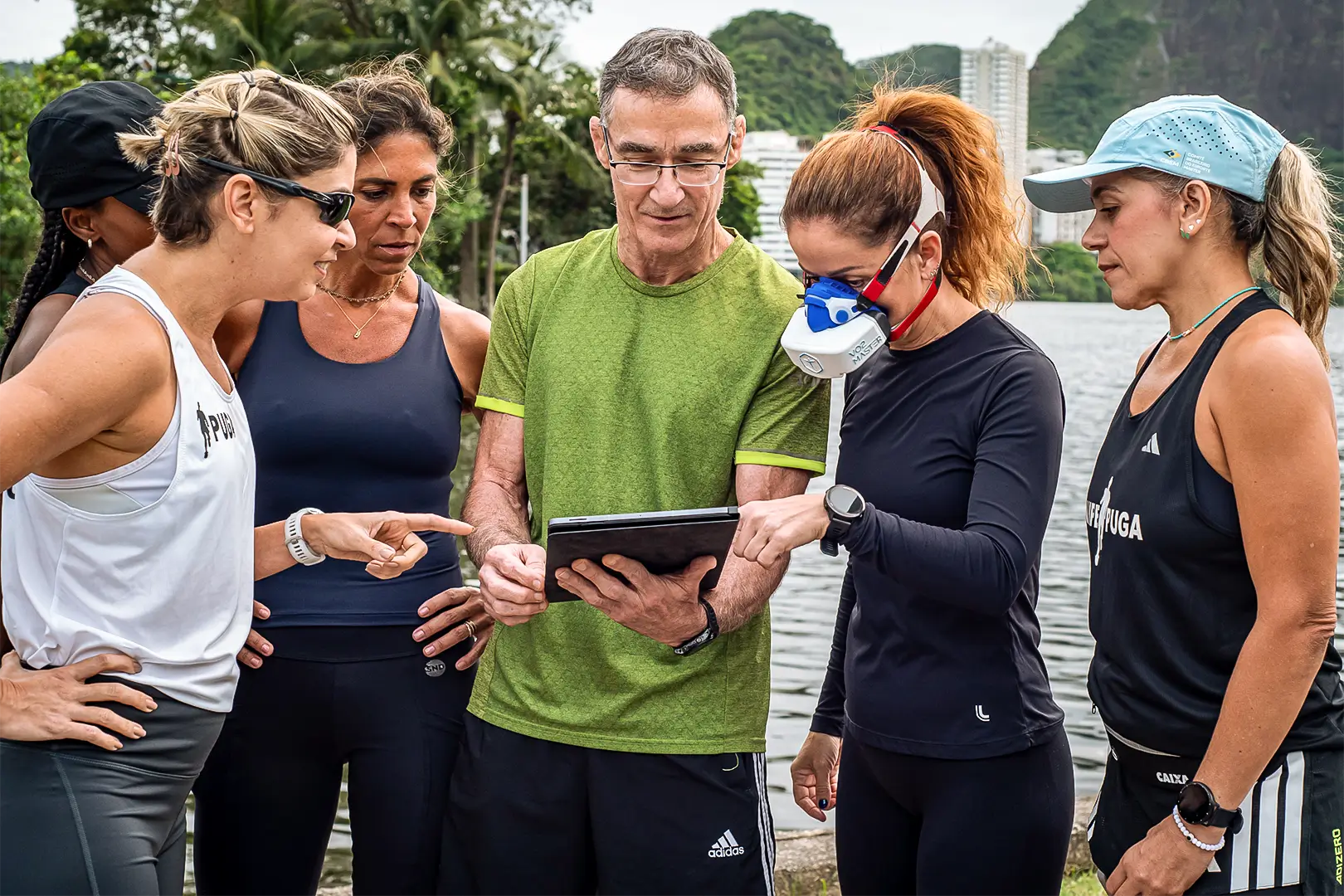
Why Longevity Focused Women are an Important Growth Opportunity for Fitness and Wellness Professionals
Women 40+ and beyond are often actively engaged decision makers who want credible ways to invest in their fitness, health and future. Women in this demographic are influential health and wellness consumers whose decisions often extend to their families, friends and communities. Their evolving needs are gaining greater attention across industries, from beauty and fitness to menopause care and longevity-focused wellness services.
For fitness and wellness professionals, metabolic testing for longevity focused women offers a way to participate in this shift with something more substantial than another wellness trend. Directly measured physiological data can establish an individual baseline, guide training decisions and give clients an objective way to see what key factors change over time.
The opportunity is to combine good measurement with good decisions and optimal health and fitness results.
Table of Contents
Why Women Over 40 Deserve More Attention from Fitness Businesses
For years, many fitness businesses focused heavily on younger consumers, athletic performance or weight loss.
The market has significantly broadened. Healthspan, strength, mobility, cardiorespiratory fitness, sleep, nutrition, body composition and maintaining the ability to do the things people enjoy are increasingly part of the wellness conversation.
That creates an important opening for fitness and health professionals.
McKinsey has reported that women account for approximately 80% of consumer purchasing decisions in healthcare. Women are not simply consumers of healthcare and wellness products for themselves. In many households, they also influence decisions affecting partners and family members.1
At the same time, McKinsey’s research has identified women’s health as an area that historically has been underserved and underfunded, with considerable unmet demand.
That combination matters.
This is about recognizing a group of consumers who have demonstrated interest in health and wellness, while acknowledging that businesses have not always designed products, services and experiences around what they actually want and feel comfortable with.
For professionals who can do that well, there is room to create something valuable to the client’s individual health and ultimately the community’s improved health.
What Other Industries Have Learned about This Audience
Look at what has happened across wellness during the past decade.
Beauty companies have expanded products for mature skin. The menopause category has grown. Longevity has moved into mainstream wellness conversations on podcasts and other media platforms. Wearables have made personal health data part of everyday life. Strength training, nutrition, sleep (thank you Arianna Huffington) and healthy aging are increasingly discussed together rather than as isolated topics.
McKinsey’s 2025 Future of Wellness research describes a global wellness market worth approximately $2 trillion, encompassing health, sleep, nutrition, fitness, appearance and mindfulness. While younger generations are major drivers of wellness spending, McKinsey also notes growing interest among older consumers in this broader definition of wellness.2,3
Women’s health is part of that expansion. The lesson for fitness professionals is not that they should copy beauty or consumer-product marketing.
It is that successful industries have recognized something important: women do not suddenly become less interested in feeling good, looking good, performing well or investing in themselves after 40.
Their priorities may evolve, and fitness and wellness businesses can evolve with them.
From “Anti-Aging” to Positive Aging and Longevity
There is another important lesson from consumer marketing.
Women do not necessarily want to be told that aging is a problem that needs to be fixed.
AARP research found that 76% of women 50+ surveyed said they feel more comfortable in their own skin as they age.4 That suggests a better approach for fitness businesses.
Instead of: “Fight aging.”
Consider: “Understand where you are now and build the fitness you want for what you want to do next.”
Instead of assuming every client wants weight loss, ask what she actually wants.
It might be:
- Having more energy for an active lifestyle
- Becoming stronger
- Training for her first endurance event
- Keeping up with children or grandchildren
- Hiking, cycling or skiing
- Building fitness as part of a longevity plan
- Seeing whether her training is actually producing measurable change
Those are positive goals and you as a professional can help translate them into an appropriate assessment and training strategies.
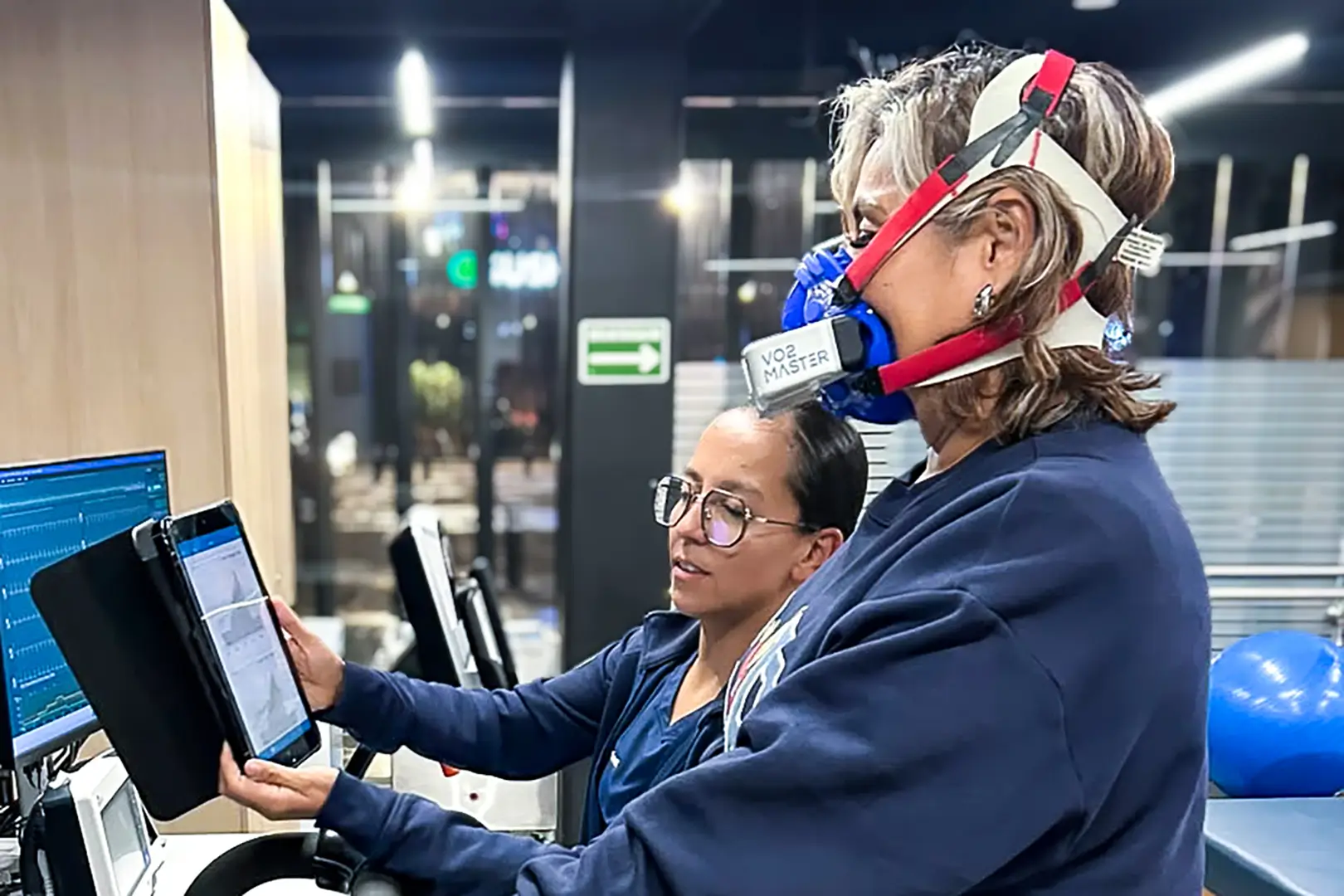
Why Metabolic Testing for Longevity Focused Women Fits This Shift
One reason metabolic testing fits naturally into this market is personalization.
Women in their 40s, 50s, 60s and beyond are not one homogeneous group.
A 46-year-old competitive cyclist may have little physiologically in common with a 46-year-old who is beginning structured exercise. A 55-year-old preparing for a trek may have different priorities from a 55-year-old focused on general fitness and longevity.
Age-based averages can provide context, they cannot provide individualized training insights based on a person’s own metabolism and goals.
Direct VO2 testing gives coaches another option.
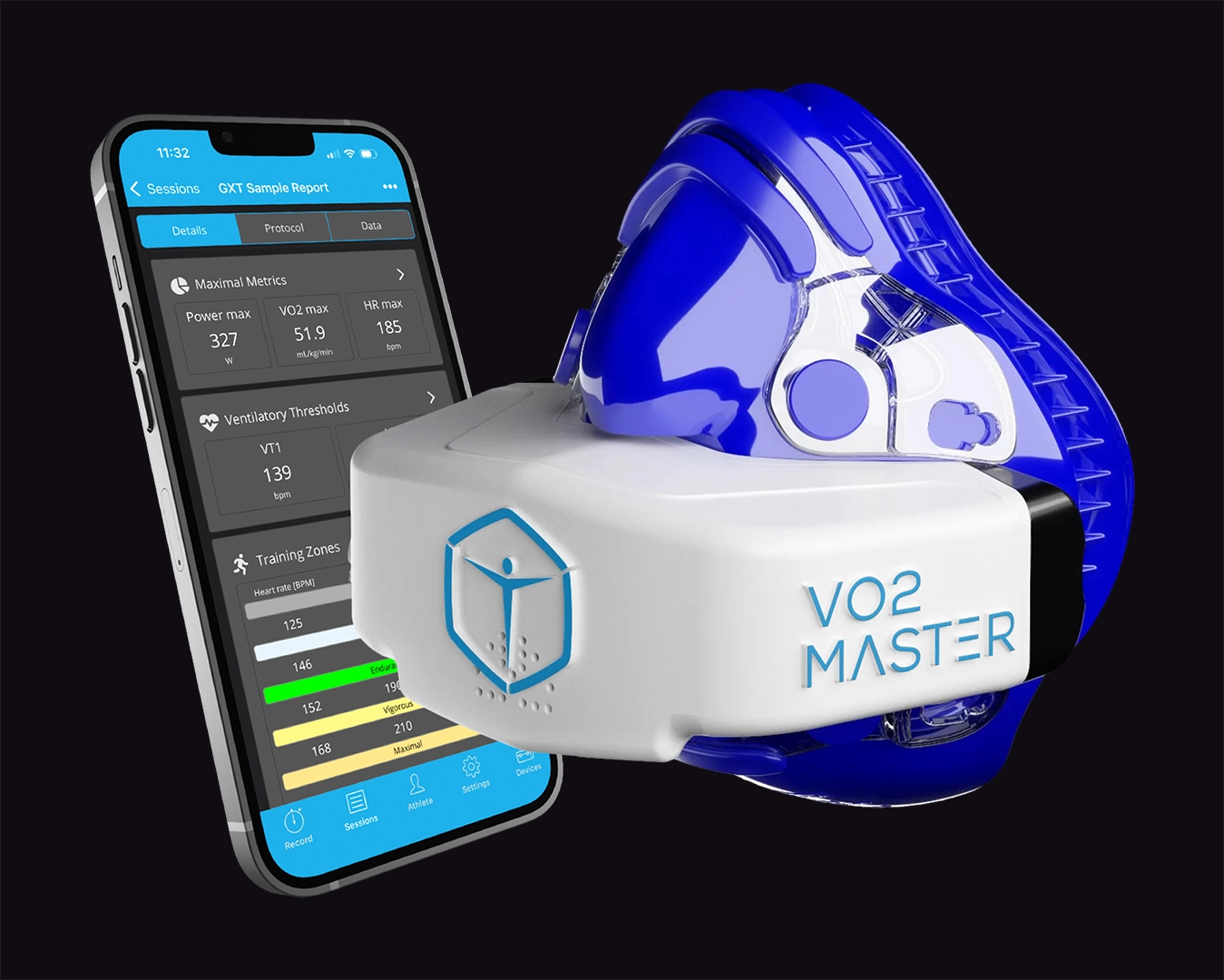
VO2 Max measures the maximum amount of oxygen a person can use during intense exercise, submax measurements can also be taken depending on client goals, and metabolic assessment provides much more than one VO2 number.
Depending on the protocol, coaches can examine variables including:
- VO2 Max or Submax
- Ventilation
- Respiratory frequency
- Tidal volume
- Heart rate response
- Ventilatory thresholds
- Exercise efficiency
- Personalized training intensities
That creates a different coaching conversation.
Instead of simply discussing, “How fit should someone your age be?”
You can ask, “What does your physiology show today, and what can we work on next?”
Explore how to turn physiological insights into personalized coaching
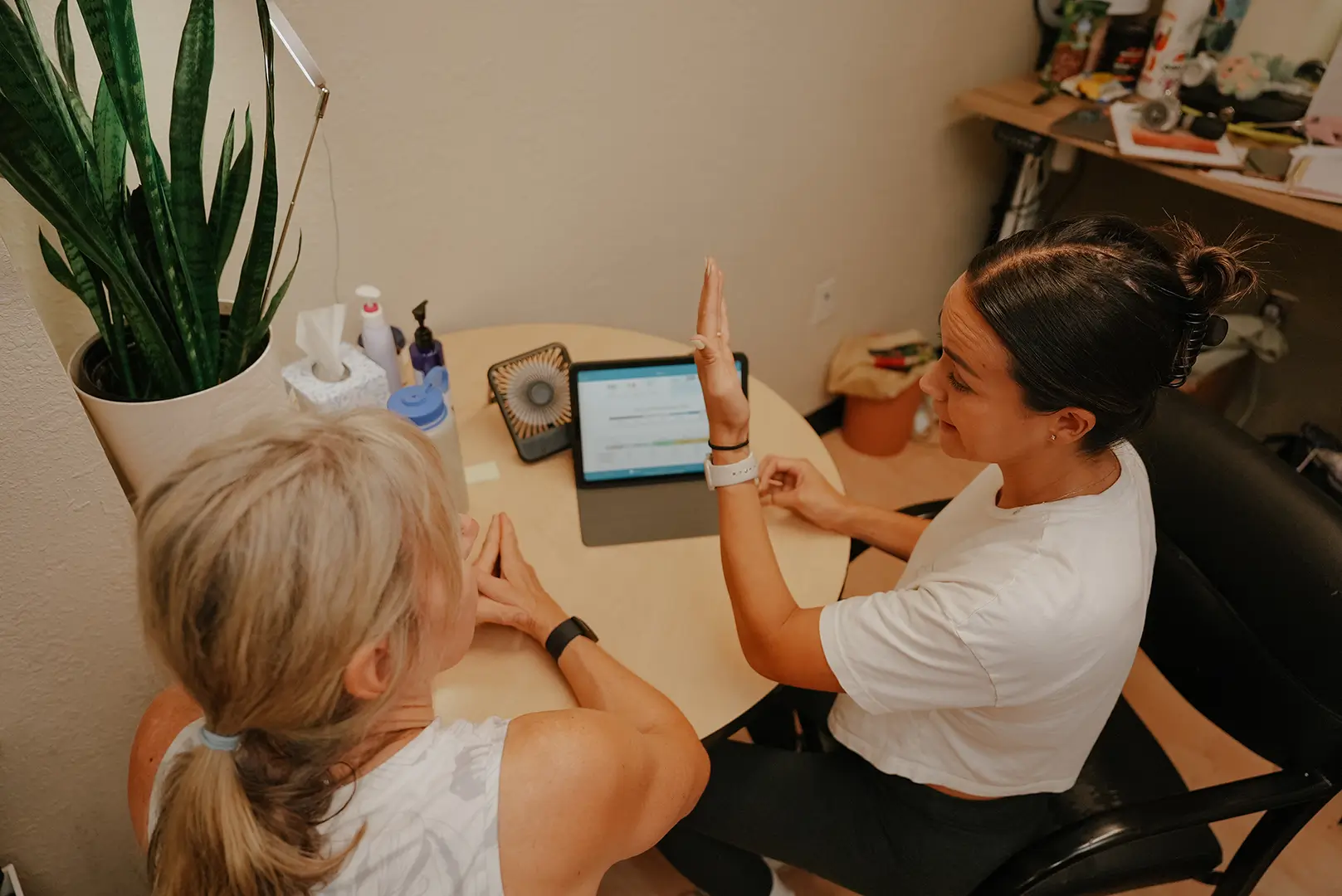
What Coaches Can Offer Beyond a VO2 Max Number
The opportunity is not simply selling a VO2 test, it is building a professional service around the information and ultimately providing a long-term health profile with valuable insights identifying progress as well as priorities to work on.
Establish a meaningful baseline
A first assessment creates a starting point. That baseline can make an abstract goal such as “improve my fitness” more tangible. You and your client have objective information that can inform their training program and create the beginning of a long term health profile.
Personalize training intensity
Generic training zones are typically based on population formulas and estimated maximum heart rate. Direct metabolic testing allows you to observe how your client responds as workload increases and identify ventilatory thresholds that can help guide training intensity.
Make progress visible
A weight scale does not tell even close to the whole fitness story; people’s metabolisms are very different.
Neither does a single VO2 Max value tell the whole story present and future, it’s a snapshot.
On repeat testing, a client might produce more power at a similar physiological demand, reach a ventilatory threshold at a higher workload, run faster at a comparable oxygen consumption or show other changes relevant to the goals of her program.
This can give coaches more ways to demonstrate progress or identify limiters to work on to improve general health or athletic capability.
Turn assessment into coaching
Data alone is not the service; better physiologic insights allow for more efficient training programs and improved results in less time.
A strong coach should be able to translate the assessment into clear answers:
Where are you now? What should we focus on? How will we train it? What will we measure? When should we test again?
Example, for a moderately fit 50 year old woman who wants to do more hiking, the coach may provide a framework around the results that begins with, “For your goal of feeling stronger on hikes and improving everyday aerobic fitness, we’ll focus much of your training around the intensities where you can build endurance efficiently, while adding some higher-intensity work to challenge your aerobic capacity.”
That is where metabolic testing becomes part of an ongoing professional relationship rather than a one-time fitness test.
Ready to build metabolic testing into your client experience?
Shop VO2 Master or book a demo to see how portable VO2 and Resting Metabolic Rate testing can fit into your fitness or wellness business.
Building a Women’s Longevity and Fitness Service
A coach does not need to create a completely separate business to serve this audience.
Metabolic testing can strengthen services already being offered.
| Existing service | Metabolic testing can add |
| Personal training | Individualized baseline, training zones and retesting |
| Longevity program | Objective cardiorespiratory fitness assessment |
| Resting Metabolic Rate data for caloric balance information | |
| Endurance coaching | VO2, thresholds and individualized training intensities |
| Annual wellness assessment | Repeatable fitness data that can be tracked longitudinally |
A business might package these elements as a Women’s Fitness Baseline, Longevity Fitness Assessment, VO2 and RMR Assessment, or a more comprehensive annual wellness service.
The exact package matters less than the workflow:
Measure > Explain Results and Specific Training Program > Train > Remeasure > Adjust Training
This iterative process gives clients a reason to remain engaged well beyond the first assessment and into the future.
Note: surveys have shown many people are uncomfortable in weightlifting or highly athletic and visible training environments. Specific times for metabolic testing with this demographic, or performing tests in a separate area could be effective for increasing participation and word of mouth referrals.

Why One Client Can Influence a Wider Community
There is another reason this audience matters. Health decisions rarely happen in complete isolation.
Women frequently influence healthcare and wellness purchasing within households. McKinsey has also profiled wellness companies that have found women purchasing products not only for themselves, but also making decisions for partners and other household members.
So a client who has a good experience with fitness testing may talk about it. She may encourage her partner to become more active. She might discuss VO2 Max with friends, bring a family member to the facility, or recommend her coach to someone in her community.
That is how healthier behaviors spread. For a fitness or longevity business, creating an excellent experience for one person can build trust well beyond a single transaction. For families and communities, greater engagement with exercise and fitness is a positive outcome in itself.
How to Market to Longevity Focused Women Authentically
The opportunity can be undermined by poor positioning; these women do not need to be reminded constantly that they are getting older. They also should not be treated as one uniform demographic.
AARP’s research on women 50+ is particularly instructive. Many women say they want more realistic representation of people their age in advertising.
Show capability, not decline
Show what’s possible, use images of women doing things. Walking, lifting, cycling, running, hiking, testing, training and enjoying an active life can communicate far more effectively than imagery built around fear of aging.
Lead with individual goals
“Improve your fitness” is more useful than “reverse aging.”
“Measure your baseline” is more credible than making promises about longevity that a fitness assessment cannot support.
Avoid stereotypes
Not every woman over 50 is a beginner. Some are elite athletes. Some are starting exercise for the first time. Many fall somewhere between those points.
Your marketing should leave room for and be respectful of all of them.
Explain why the data matters
Do not advertise metabolic testing as simply more data. Explain the questions it helps you answer:
What should you focus on?
What is your current aerobic capacity?
What are your personal training zones and how do you use them effectively to reach your goals?
Is your fitness changing?
That moves the conversation from technology to current and future value.
Building a Long-Term Coaching Relationship
Perhaps the strongest opportunity is long-term. A metabolic test captures a point in time. A coaching relationship can alter the trajectory of a person’s life through improved health and well-being.
Testing, programming and retesting can allow professionals to follow relevant fitness metrics as clients move through their 40s, 50s, 60s and beyond.
The client may change goals along the way. Someone initially interested in general fitness may decide to run a half marathon. Another client may discover strength training. Someone else may simply want to remain active enough to travel, hike and enjoy time with family.
The coach remains valuable because their service is built around tracking and addressing the natural change that will occur over time, whether there is more or less exercise and training.
It is built around understanding the individual, making informed decisions and continuing to work toward personally meaningful goals.
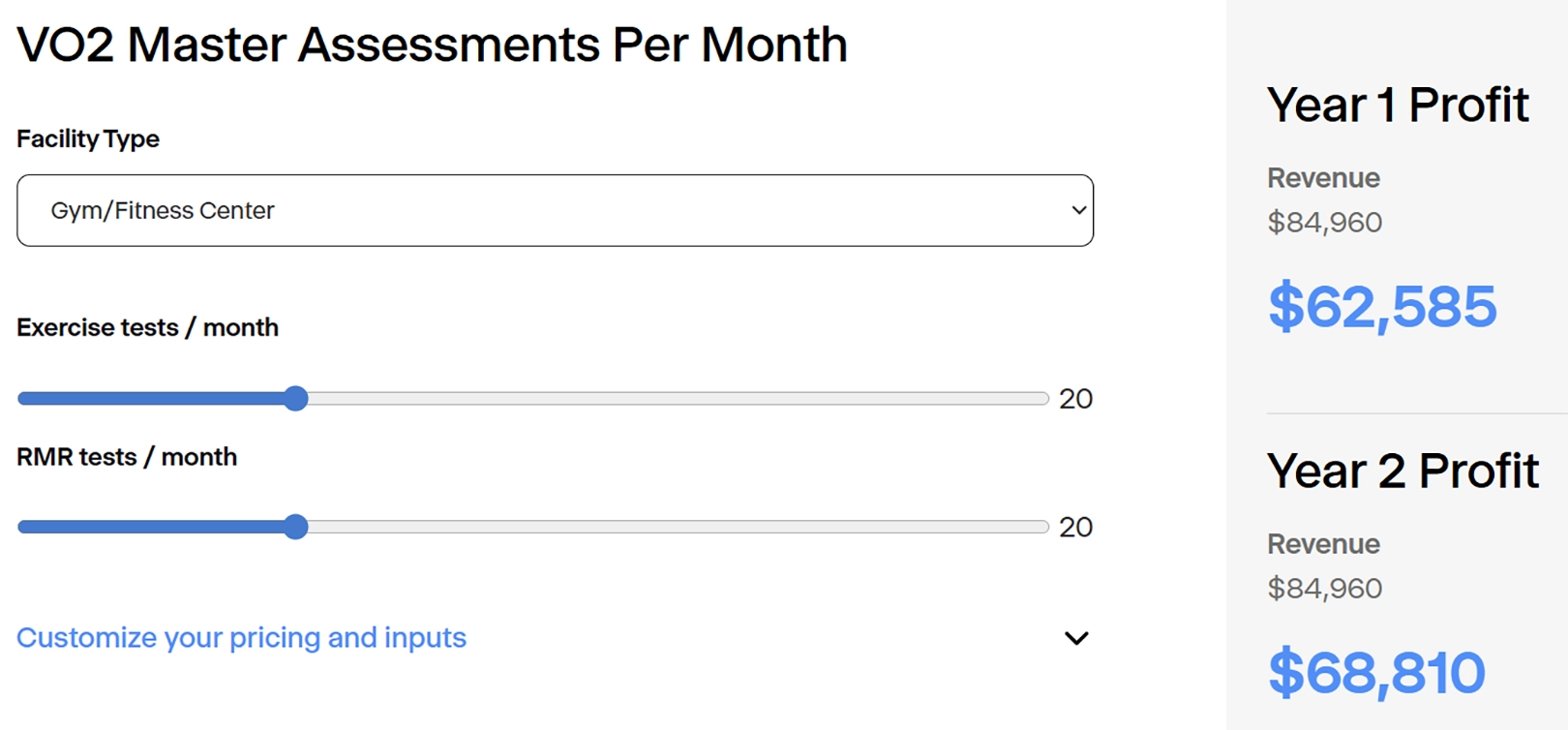
The Five Revenue Levers of Metabolic Testing
The business case for metabolic testing is built on five connected levers:
Paid Assessments: The test itself generates direct revenue.
Program Conversion: The test results justify personalized programs. The personalized data becomes the motivating factor as clients can see their own results and want to beat them.
Retesting Cadence: Follow-up tests create recurring revenue and reinforce engagement and long-term coach-client business relationship.
Retention and Lifetime Value: Clients stay when progress is understandable and measurable.
New Client Acquisition: Word of mouth referrals create new client awareness, acquisition and conversion.
Discover what makes metabolic testing profitable
Conclusion: A Valuable Audience Deserves a Valuable Service
Longevity focused women are an important and historically underserved health and wellness audience with significant influence over personal and household decisions. Health and fitness professionals can build valuable long-term relationships with this audience by combining VO2 and metabolic testing with individualized programming, education and retesting.
Other industries have increasingly recognized their influence, purchasing power and interest in products and services that support health, wellness, appearance and quality of life, all of which impact their families and ultimately their community.
Fitness professionals have an opportunity to better serve these women by providing meaningful information about their bodies, helping them understand their results, developing training programs around their individual goals, and measuring their progress over time.
Above all, it means recognizing these women as capable, motivated individuals who are taking an active role in shaping their health, fitness, and quality of life for the decades ahead.
Metabolic testing creates an opportunity to move beyond generalized advice and build an ongoing relationship around individualized fitness, objective data and progress.
That can be good for the client, good for the coach and, when healthier behaviors spread through families and communities, good for society as well.
Shop VO2 Master or book a demo to discover how portable VO2 and Resting Metabolic Rate testing can help you build personalized fitness, wellness and longevity services.
Authoritative Sources
- McKinsey & Company, Unlocking Opportunities in Women’s Healthcare, 2022.
- McKinsey & Company, The Trends Defining the $1.8 Trillion Global Wellness Market in 2024, 2024.
- McKinsey & Company, Future of Wellness Trends, 2025.
- AARP Research, Research Insights on Women, including findings from the Mirror/Mirror research series.
Frequently Asked Questions
How can a coach make VO2 testing relevant to women who do not train to compete?
Start with the client’s own goal, such as walking longer, hiking comfortably, playing with family members or building aerobic fitness to successfully manage critical daily activities. Explain that an assessment establishes a baseline and can guide exercise intensity even when competition is not the aim. Choose a suitable exercise mode and discuss the result in terms of the activities she wants to do. Avoid treating an age-based comparison as her entire fitness story. Submax testing can be used, the test does not need to go to a max effort to be valuable.
Does a woman over 40 need a maximal VO2 Max test to begin a fitness program?
No. The protocol should reflect her goals, exercise experience, screening results, and willingness to perform hard exercise. A submaximal test can document oxygen use, breathing mechanics and responses at completed workloads without requiring a maximal effort. VO2 Max is not measured if the person never reaches a valid maximum often considered a 10/10 effort. A qualified professional should explain that distinction and refer health concerns outside their scope.
How should a coach explain a VO2 Max result without reducing a client to an age norm?
Use a relevant reference range only as context, then focus on what was measured, how the test was performed, and which finding can guide training. Discuss the client’s goal and the workload or intensity she can sustain. A single score does not summarize strength, mobility, or overall health. the baseline is established with the first test, comparing to her own numbers is the most valuable method to track progress. The next step should be an appropriate training decision.
What does RMR testing add to VO2 testing in a women’s longevity fitness service?
RMR and exercise VO2 answer different questions. An RMR assessment estimates caloric balance including calories burned and goal caloric intake at rest. An exercise test measures oxygen use during the chosen activity and provides key metabolic insights to inform precise training and more optimal results in an efficient way. A coach can offer them together when both results serve the client’s goals.
Can a metabolic test show whether menopause has changed a client’s metabolism?
No. VO2 and RMR testing can describe measured responses at a point in time, but they cannot diagnose menopause, measure hormone levels, or establish what caused a change. Training, effort, test conditions, diet and other factors can affect results. Coaches can use the data to guide fitness decisions within their scope and direct questions about symptoms or hormonal health to a qualified healthcare professional.
How can coaches compare metabolic test results as a client’s goals change?
Keep the exercise mode, protocol, equipment setup, and reporting method as consistent as possible. Record any important difference before interpreting a change. Know the question you want to answer with the metrics going into the test. Compare the metrics relevant to the new goal, such as oxygen use, ventilation, ventilatory thresholds and training zones or submax running pace.
How can a facility turn a first assessment into a useful ongoing service?
Build the offer around a result review, an agreed exercise plan, coaching check-ins, and a later reassessment when the tracked progress can inform training modification. Choose follow-up timing around the training program and client goals. The value lies in precise decisions, tracking progress and knowledgeable coaching and support over time.