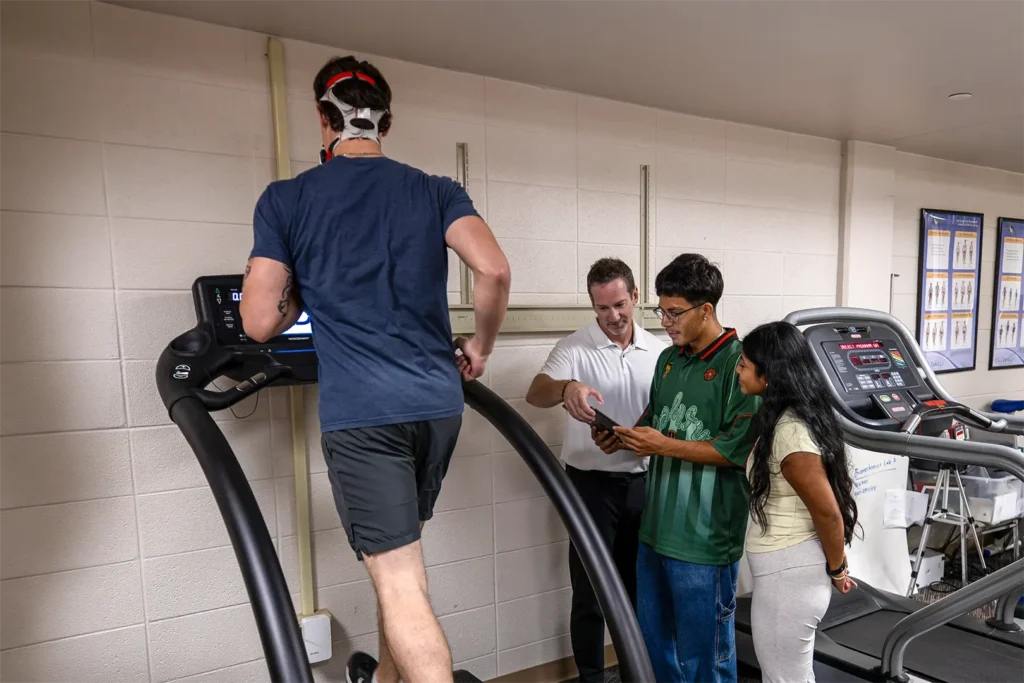
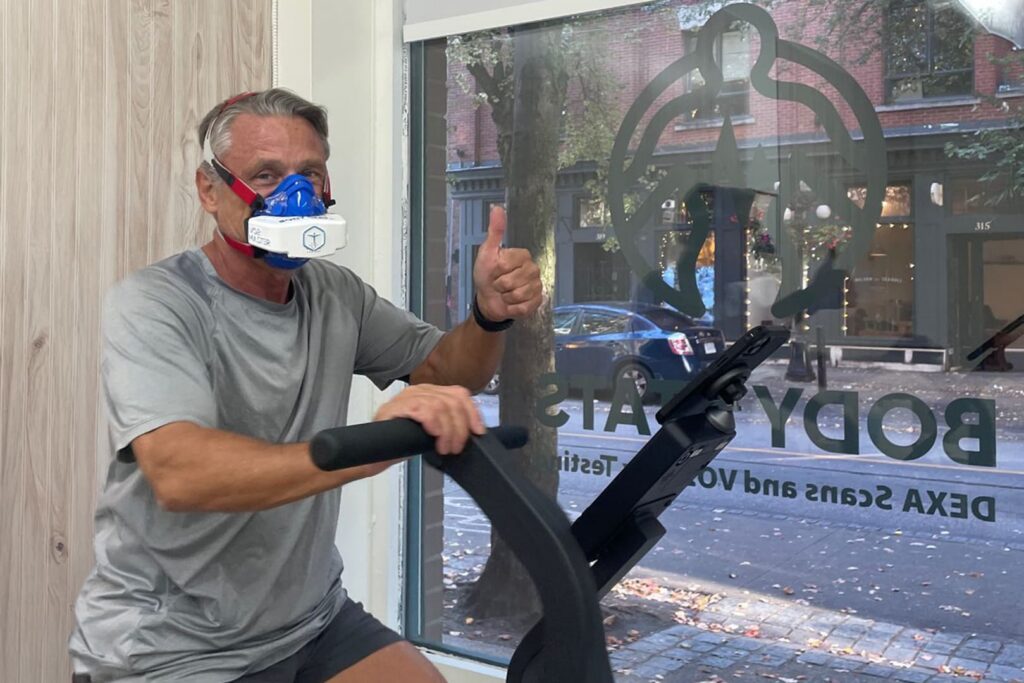
Coach Sean Seale explains why the future of endurance coaching isn’t about chasing a single number. It’s about combining metabolic data, like real-time VO2 and breathing data, field testing and critical thinking to make better decisions for the individual.
For coaches, access to data has never been greater. Heart rate, power, pace, lactate, muscle oxygenation and VO2 can all provide valuable information about an athlete.
But more data doesn’t automatically create better coaching.
For coach Sean Seale, the real advantage comes from understanding what the numbers mean for the individual in front of you and then translating those insights into better decisions in training.
That philosophy has led Seale to use the VO2 Master analyzer not simply as a testing device, but as a coaching tool that allows him to observe physiology and breathing in real time.
The Coaching Problem: Making Decisions Without Individual Data
One of the biggest challenges Seale sees is coaches having to make decisions without enough objective information.
Without individual field data, programming can quickly become dependent on assumptions or population averages.
“Coaches get stuck when they don’t have access to solid field data, because they don’t know what to base their decision-making on.”
Sean Seale
Population averages can provide useful reference points, but they don’t necessarily describe the physiology of the athlete standing in front of the coach.
That distinction becomes particularly important when establishing training intensities, identifying physiological limiters or deciding what an athlete actually needs to improve.
For Seale, metabolic testing helps replace that uncertainty with measurable, individual information.

Don’t Chase VO2 Max. Understand the Athlete.
VO2 max has become one of the most recognized metrics in performance and longevity. Seale sees that increased awareness as positive because it puts greater attention on endurance and aerobic fitness.
The danger comes when improving the VO2 max number becomes the objective rather than using it as one piece of a larger physiological picture.
“Where I see a problem with VO2 Max is chasing the number instead of the goal.”
Sean Seale
An athlete’s VO2 Max can be important, but Seale also considers breathing patterns, submaximal VO2, VO2 at thresholds, movement economy and other indicators.
A low VO2 Max relative to an age group, for example, does not automatically mean VO2 Max intervals should be prescribed.
Instead, coaches need to ask a more useful question:
What is actually limiting this athlete?
Performance + Physiology + Perception
Seale uses Stephen Seiler’s three Ps—performance, physiology and perception—as a framework for endurance testing and training.
That means examining the relationship between:
- Internal load: oxygen consumption, lactate, heart rate and muscle oxygenation
- External load: speed and power
- Perception: how hard the athlete feels they are working, including RPE
Those metrics then need to be considered alongside the athlete’s training history, goals, strengths, weaknesses and individual characteristics.
“Any decision based on a single metric or indicator is bound to fail at some point.”
Sean Seale
This is also where Seale believes young coaches can get into trouble. The attraction of a single metric, algorithm or predefined answer can oversimplify a complex coaching decision.
Technology should provide coaches with better information, not replace their judgment.
Why Standard Training Zones Can Miss the Individual
Traditional training zones often rely on population-derived formulas. The problem, according to Seale, is that those boundaries may not correspond closely enough with an individual’s actual physiological response.
His preferred approach is to use metabolic testing to establish individualized information, interpret it in context, and then validate those findings through subsequent field sessions.
That last step matters.
A metabolic assessment captures physiology at a particular point in time. Recovery, fatigue and other factors can influence the result, so coaches should continue evaluating whether the prescription matches what they see during training.
Seale recalls working with a female CrossFit athlete whose laboratory assessment placed her second threshold at approximately 320 watts. Based on Seale’s subsequent assessment, it was closer to 260 watts.
The difference had major implications.
Trying to complete four eight-minute threshold intervals around 300 watts wasn’t simply difficult, it was based on an intensity that did not appropriately reflect her physiological profile.
This is where portable metabolic measurement can extend beyond the initial test.
“By using the metabolic information we have and applying it contextually in training, using a tool like the VO2 Master to monitor a session, we can make sure the prescription is actually correct for that client or athlete.”
Sean Seale

Seeing What Other Metrics Can Miss
One of Seale’s most compelling examples involved a competitive 1500-meter runner.
On paper, the athlete looked strong. His thresholds were good, lactate clearance was strong and heart-rate recovery between intervals was very good. Yet he struggled to maintain the desired intensity.
Using the VO2 Master revealed something that the other metrics hadn’t clearly exposed: his breathing mechanics.
The runner was breathing rapidly and shallowly, limiting his ability to express the fitness he already possessed.
“Without seeing his breathing patterns in real time, it would have been much harder to figure out what was going on and properly tailor the training to his needs.”
Sean Seale
Seale prescribed deeper, slower breathing during easy and long runs before progressively incorporating the improved mechanics into tempo, threshold and harder sessions. He also incorporated specific respiratory training.
The goal wasn’t simply to make a number on a report better. It was to identify the athlete’s limiter and change the training accordingly.
When Testing Becomes Coaching
For Seale, some of the most useful metabolic testing doesn’t happen as a standalone assessment at all. It happens during training.
“I’ve conducted hundreds of tests across dozens of different sports, and while individual testing has its place, I believe the most useful tests are done in training.”
Sean Seale
That is where portability changes the role of metabolic analysis.
With the VO2 Master, Seale can observe what’s happening physiologically while the athlete performs and provide feedback based on the response he is seeing.
One example came from an entirely different sporting environment: equestrian competition.
Seale worked with a horse rider who experienced panic during competition. Using VO2 Master’s breath-by-breath data, he observed that once intensity exceeded a certain range, she struggled to control her breathing. Hyperventilation followed, contributing to loss of control and panic.
The real-time data allowed Seale to show the athlete what was happening and coach her breathing mechanics as it occurred.
After several sessions, Seale reported that she was better able to control her breathing, manage competition stress and improve her connection with the horse.
The example demonstrates an important distinction for coaches:
Testing can tell you what happened. Real-time data can help you coach what is happening.
A Tool for the Coach’s Kit
Portability and practicality are central to how Seale uses VO2 Master. Rather than restricting metabolic measurement to a laboratory environment, the portable analyzer enables coaches to bring VO2 and breathing data right to actual training.
The VO2 Master Manager platform also allows metabolic information to be considered alongside other metrics, supporting the multi-metric approach Seale advocates.
“It’s a reliable piece of kit that gives information in real time, which is directly actionable.”
Sean Seale
For Seale, that makes metabolic measurement part of the coaching process rather than simply an occasional physiological assessment.
“I think the VO2 Master metabolic units should be part of any serious coach’s kit, to complement their coaching and their decision-making. The great coaches in the coming years will seamlessly blend the science and the art of coaching.”
Sean Seale
That may ultimately be the biggest advantage of better metabolic data. It doesn’t replace the coach. It gives a great coach more information with which to coach.