Challenge
From textbook to hands-on learning
Cardiopulmonary exercise testing is the gold standard for cardiorespiratory assessment, and it is a skill that requires technical experience and practice. At Monmouth University, they prepare future health and wellness leaders and believe in hands-on training as the most effective means to provide undergraduate students with skills ready for graduate school and the workforce.
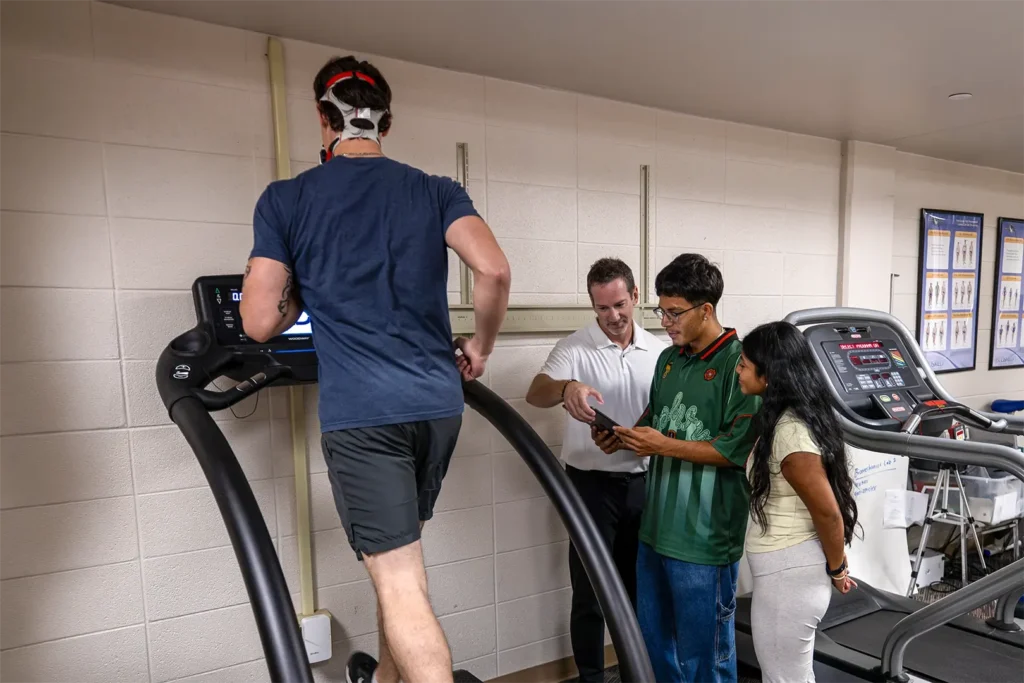
With a traditional laboratory metabolic cart system, students may spend much of a class observing one person operate the equipment rather than participating in preparation, testing, data collection, and interpretation.
Solution
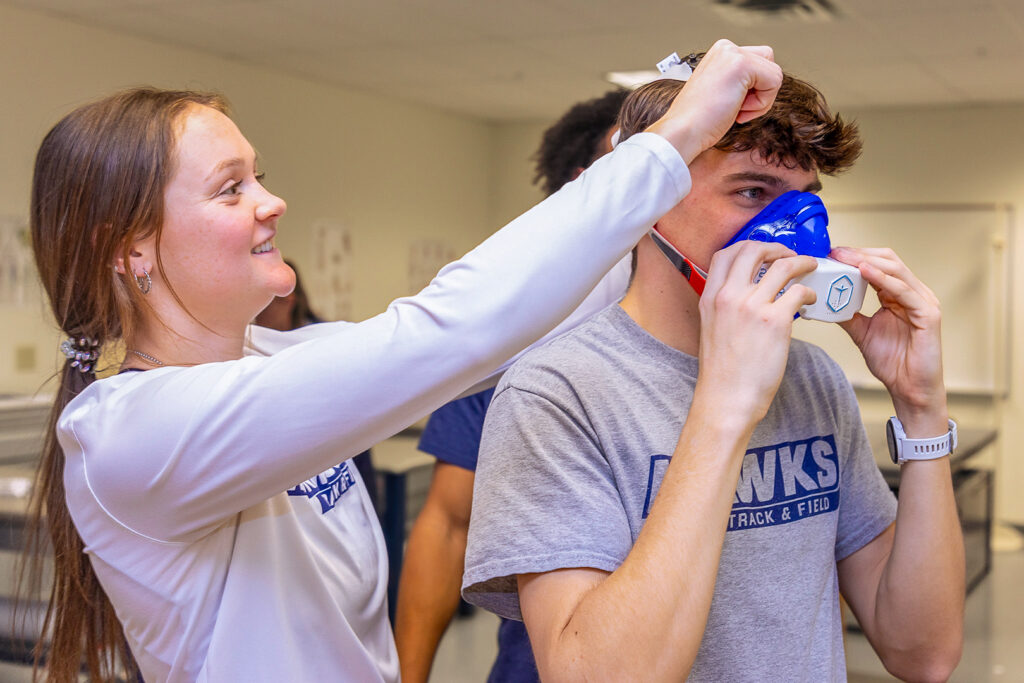
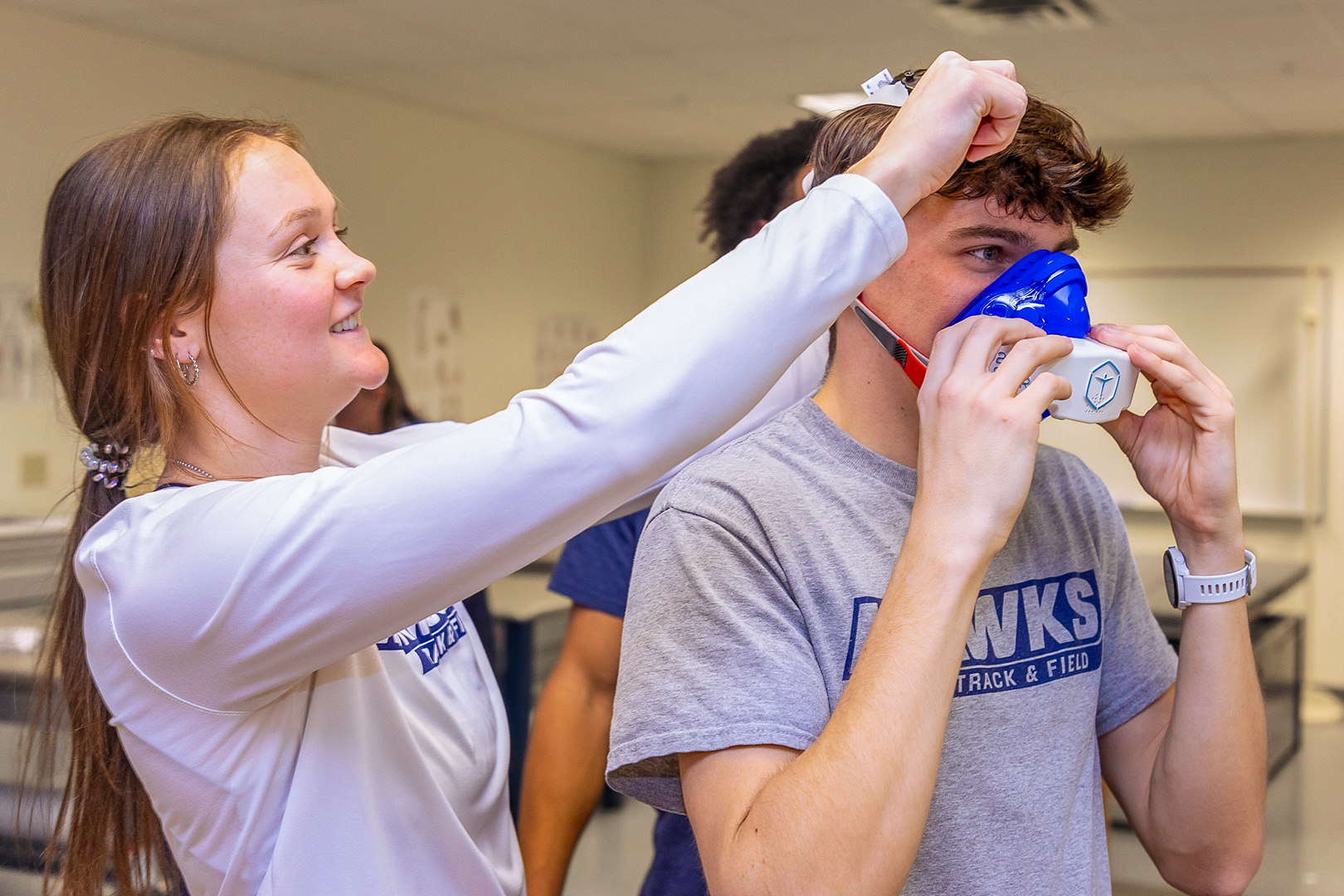
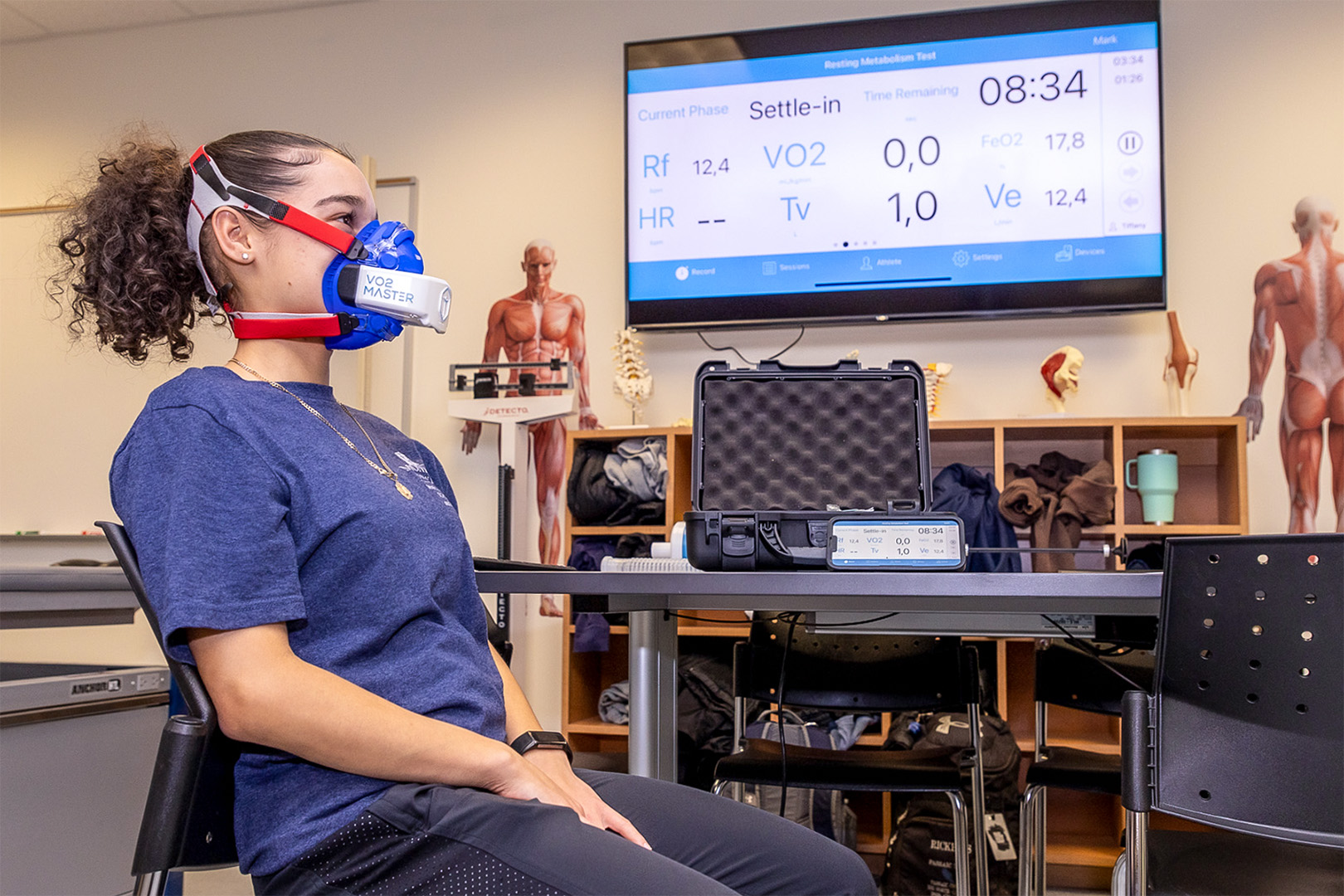
A wireless portable analyzer like the VO2 Master allows students to become part of the process and watch metabolic variables change in real time as they connect those responses to concepts learned in class.
“The objective is not simply to show students what a VO2 test looks like, we want them to understand what the numbers mean because they helped collect them and are learning how to administer the test themselves. The biggest advantage is what happens with the students, they become part of the testing process and begin to see how classroom learning can lead directly to research questions.” Dr. Tamara Rial
What Happens When Metabolic Testing Moves Off the Treadmill? Unprecedented Research
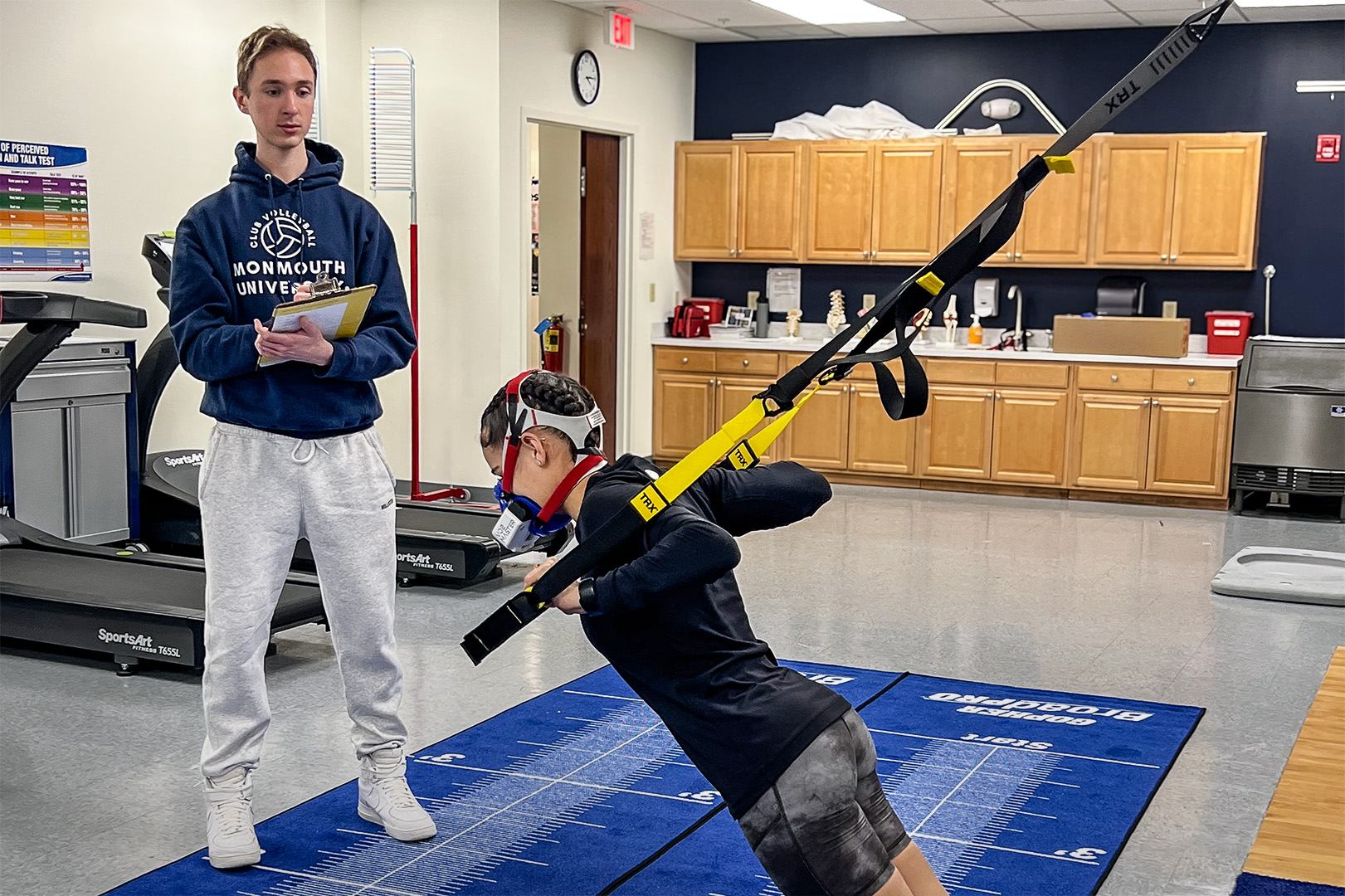
Traditional CPET is usually associated with a treadmill or cycle ergometer. Yet many questions in exercise science involve movement before, during, or around an exercise test. Portable metabolic testing gives the team at the Monmouth University Human Performance Lab greater freedom to study those questions. In one project, they compared six minutes of treadmill walking with six minutes of dynamic suspension training using multi-joint upper- and lower-body TRX exercises before a maximal CPET. These types of movements can be difficult or impossible to study when participants must remain physically connected to a stationary metabolic system.
The study included 15 highly active young adults who completed both conditions in a randomized crossover design. The suspension warm-up produced a greater immediate physiological and perceptual demand, while VO2 peak remained comparable between conditions and met the study’s predefined criterion for equivalence. The study was published in the Journal of Functional Morphology and Kinesiology: Effects of a Suspension Training Warm-Up on Maximal Cardiopulmonary Exercise Performance in Highly Active Adults: A Randomized Crossover Trial (DOI: 10.3390/jfmk11040385)
Can Slow Breathing Influence the Exercise Test?
The Monmouth team are currently using the VO2 Master analyzer in another student-led project examining slow, paced breathing, often referred to as coherence breathing, as a priming strategy before cardiopulmonary exercise testing. The project is led by Gisena Scotto Diclemente, a pre-physical therapy student and research assistant, working alongside faculty researchers. Gisena explains, “The VO2 Master analyzer allows us to measure cardiopulmonary responses while participants move through different phases of the protocol without being tethered to a stationary metabolic cart. That portability makes it possible to study breathing, maximal exercise, and recovery within the same experimental session.”
The Impact: From Learning Exercise Physiology to Doing Physiology
The most important outcome is not simply that they can perform metabolic testing more efficiently, it is what students can do because of it.
“Our goal is for students to be able to apply the knowledge and skills acquired in class, as opposed to just memorizing definitions or concepts. Students learn indirect calorimetry by conducting it. They see physiological responses develop breath by breath as exercise intensity changes, compare different exercise and pre-exercise strategies, and begin asking questions that can evolve into research projects. In some cases, those projects progress from an undergraduate laboratory experience to conference presentation and scientific publication.”
Dr. Jaime Pigman, Chair of the Department of Health and Physical Education
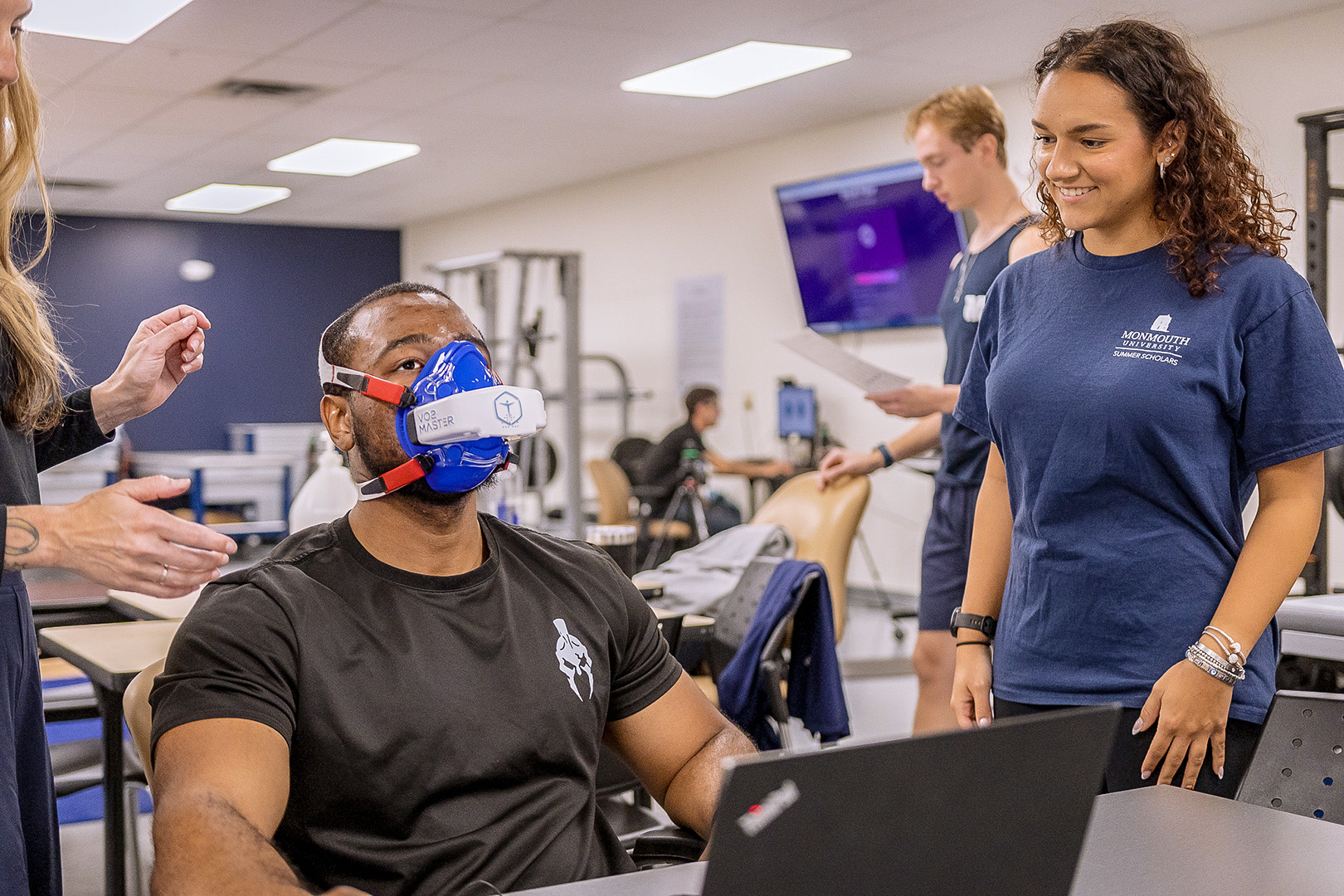
At Monmouth, the VO2 Master analyzer is helping the Human Performance Lab leadership team move metabolic testing beyond demonstration and into hands-on learning. For students entering exercise physiology, physical therapy, occupational therapy, athletic training, medicine, strength and conditioning, and other health professions, that experience can make the physiology they study in the classroom tangible.
For our research team, portability opens the door to a much broader question: What else can we measure when human movement is no longer tethered to the metabolic cart?