More clients are walking through your door on GLP-1 medications. Here’s how metabolic testing empowers you to help these clients long-term.
Weight-loss medications such as Ozempic®, Wegovy®, and Zepbound® are changing the fitness and wellness landscape.
More clients are arriving at gyms, wellness studios and longevity centers having already lost weight, or planning to lose it, with the support of GLP-1 medications.
For coaches, this presents a significant opportunity to help.
Clients don’t simply need someone to count reps or prescribe cardio. They need guidance on preserving muscle, improving fitness, building healthy habits, and maintaining long-term results.
Medication may support weight loss, but it doesn’t answer questions like:
- Am I eating enough to support my training?
- How is my metabolism changing?
- How hard should I be exercising?
- Am I becoming healthier, or just lighter?
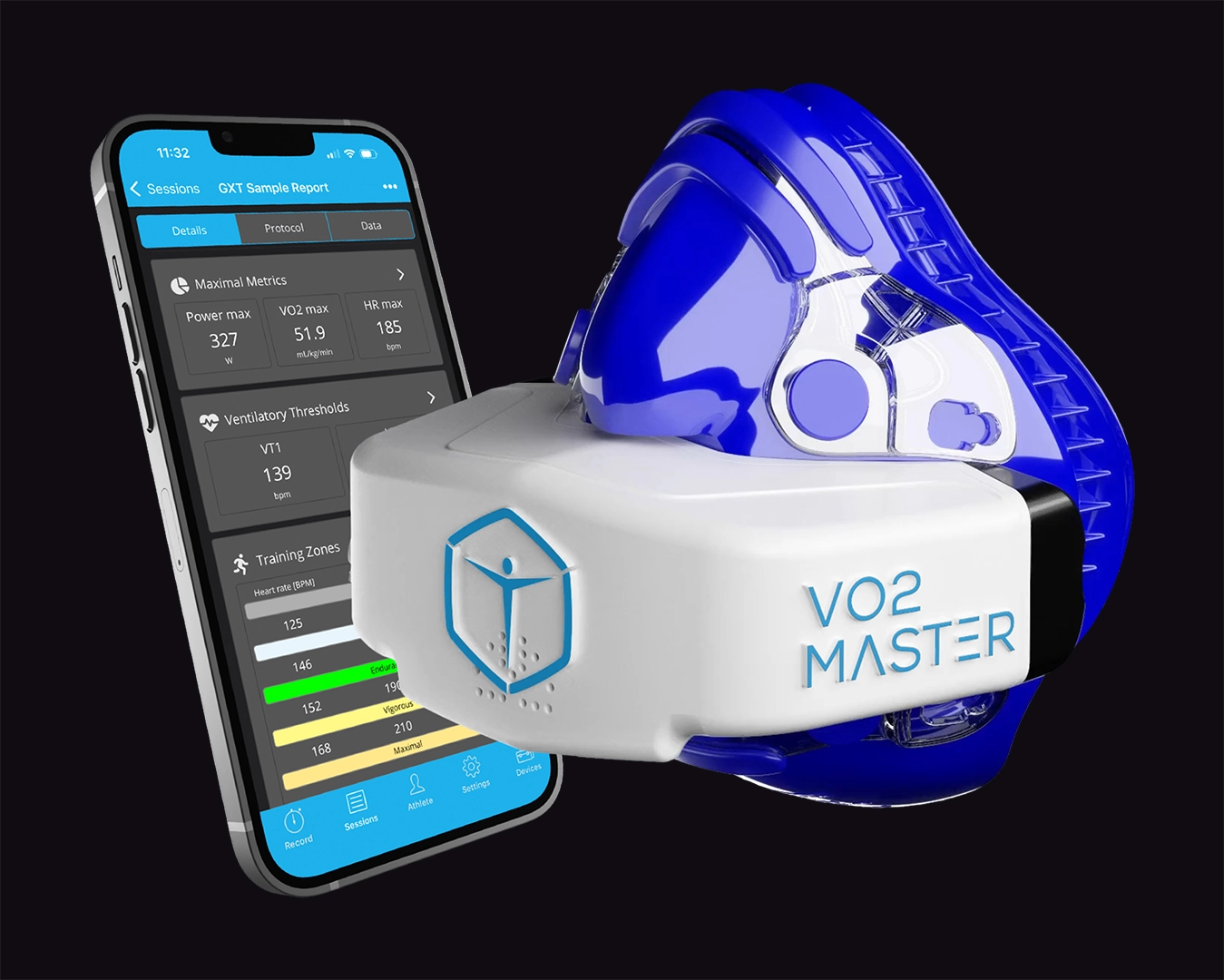
Coaches help clients improve their health for the long term. Measuring Resting Metabolic Rate (RMR) and VO2 Max gives fitness and wellness professionals’ objective physiological data to personalize coaching, track progress, and keep clients engaged beyond the number on the scale.
Table of Contents
Why GLP-1 Creates a New Coaching Opportunity
GLP-1 medications are helping millions of people lose weight, but lasting success and long term health depends on much more than medication.
As clients lose weight, they often begin exercising, increasing activity levels, and looking for guidance on maintaining their results. This is where coaches, trainers, and wellness professionals become essential.
Your role shifts from helping clients just lose weight to helping them become healthier, stronger, and more physically capable over time.
Objective physiological data makes those coaching decisions more precise and effective.
Why Weight Alone Doesn’t Tell the Whole Story
The scale is one measurement.
It doesn’t tell you:
- whether a client is preserving lean muscle
- how efficiently they’re producing energy
- whether aerobic fitness is improving
- how many calories they actually burn at rest
A client may lose 30 pounds while dramatically improving cardiovascular fitness.
Another may lose the same amount while becoming less active and losing valuable muscle.
The scale cannot distinguish between those outcomes. Metabolic testing helps fill in those gaps.
Why Traditional Coaching Methods Fall Short
Many coaching decisions still rely on estimates.
Examples include:
- Age-predicted heart rate formulas
- Generic calorie calculators
- Wearable calorie and VO2 estimates
- Body weight alone
While these tools have value, they don’t reflect each client’s unique physiology and metabolism.
As clients lose weight, their metabolism and exercise capacity change. Continuing to coach using the same assumptions can lead to less effective recommendations.
Metabolic testing replaces assumptions with objective measurements.
Traditional Coaching vs. Metabolic Testing
| Traditional Approach | Metabolic Testing |
|---|---|
| Estimated calorie needs | Measured Resting Metabolic Rate |
| Generic heart rate zones | Personalized training zones |
| Scale weight | Objective physiological progress |
| General recommendations | Individualized coaching decisions |
Help Clients Understand Their New Metabolism
One of the biggest changes during a weight-loss journey is metabolism itself.
As body weight changes, energy needs often change too.
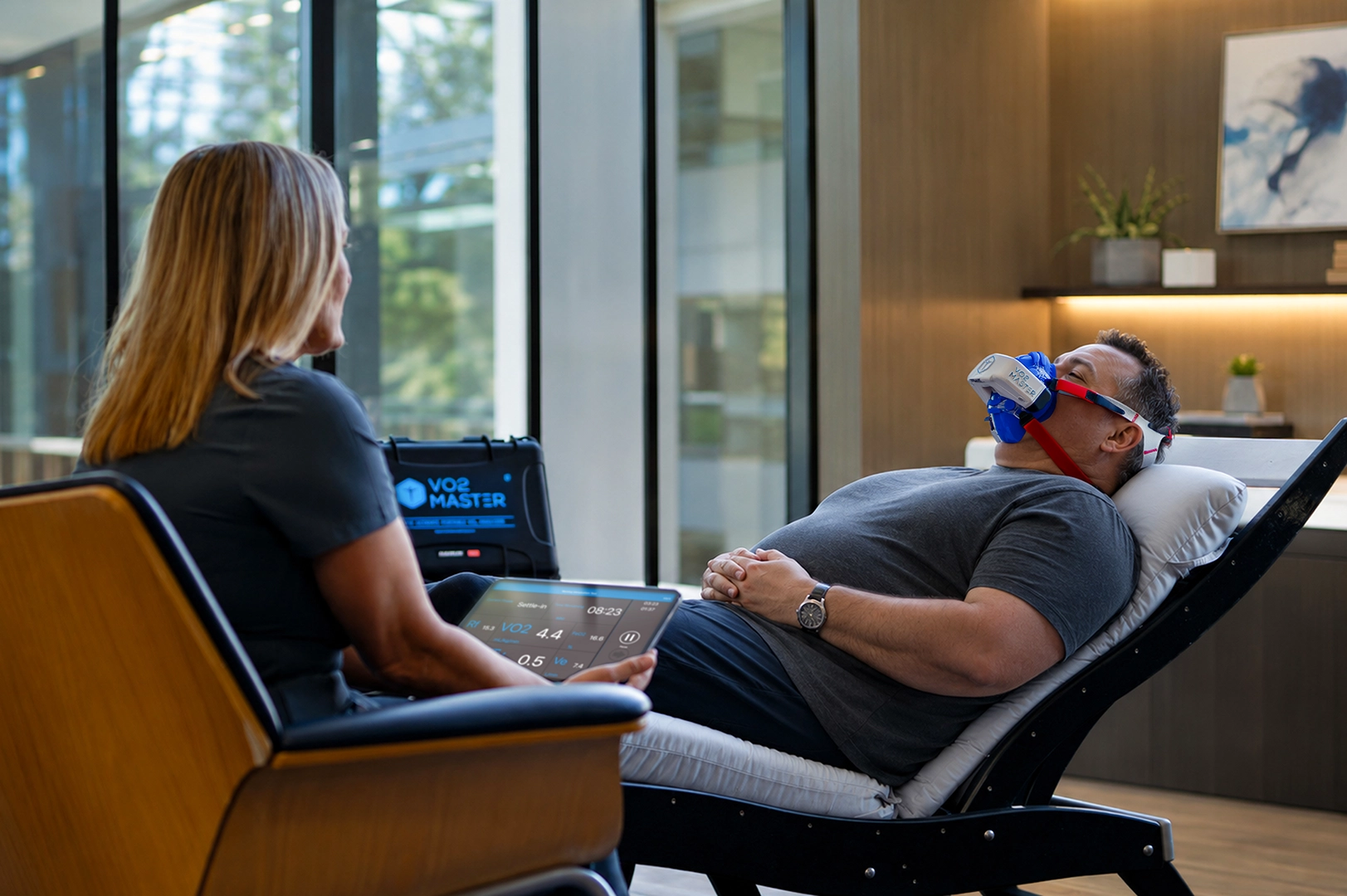
Resting Metabolic Rate (RMR) testing measures how many calories the body uses at rest to support essential functions such as breathing, circulation, and organ function. Establishing an RMR baseline before or early in a client’s journey also creates a valuable benchmark for future comparisons.
Rather than relying solely on predictive equations, coaches and wellness professionals can use measured RMR to have more informed conversations about energy needs.
Take the Guesswork Out of Exercise Programming
Many GLP-1 clients are new to structured exercise, others are returning after years away from training.
Age-based heart rate formulas don’t account for differences in fitness, conditioning, or metabolic efficiency.
VO2 Max testing provides objective information about how a client’s body responds to exercise.
It allows coaches to personalize:
- Training zones
- Exercise intensity
- Aerobic conditioning
- Progression over time
Instead of asking clients to train based on generalized recommendations, coaches can build programs around measured physiology and track changes over the long-term giving clients a health profile.
Measure Progress Beyond the Scale
Weight loss rarely follows a straight line, and progress can often slow over time.
This is often when motivation begins to decline.
Metabolic testing provides additional markers of success that clients can celebrate, including improvements in:
- VO2 Max
- Aerobic efficiency
- Exercise capacity
- Training zones
- Resting metabolism
- Overall metabolic health
When clients see measurable improvements in fitness, they’re more likely to stay engaged even when body weight changes more gradually.
Ready to elevate your coaching?
Whether you’re a personal trainer, wellness clinic, or longevity facility, the VO2 Master analyzer helps you deliver personalized metabolic assessments that guide smarter coaching decisions.
Book a Demo to see how portable metabolic testing can fit into your workflow, or Shop Now to explore the VO2 Master Analyzer.
A Better Coaching Framework for GLP-1 Clients
The most successful coaching programs don’t rely on a single assessment, they build an ongoing cycle of measurement, coaching, and reassessment.
Before Training Begins
- Measure VO2 Max
- Measure Resting Metabolic Rate
- Establish personalized training zones
During the Program According to Client Goals (quarterly, or before and after a training block)
- Repeat RMR testing
- Repeat VO2 testing
- Adjust training intensity
Long-Term (annual)
- Track improvements in aerobic fitness
- Compare metabolic changes over time
- Demonstrate progress beyond body weight
- Keep clients engaged through objective data
Why Repeat Testing Matters
Metabolic testing isn’t just valuable at the beginning of a program; its greatest value comes from tracking change over time.
Repeat testing allows coaches to answer questions such as:
- Has aerobic fitness improved?
- Should training zones change?
- Has resting metabolism changed?
- Is the current training program producing meaningful physiological progress?
This transforms testing from a one-time assessment into an ongoing coaching process.
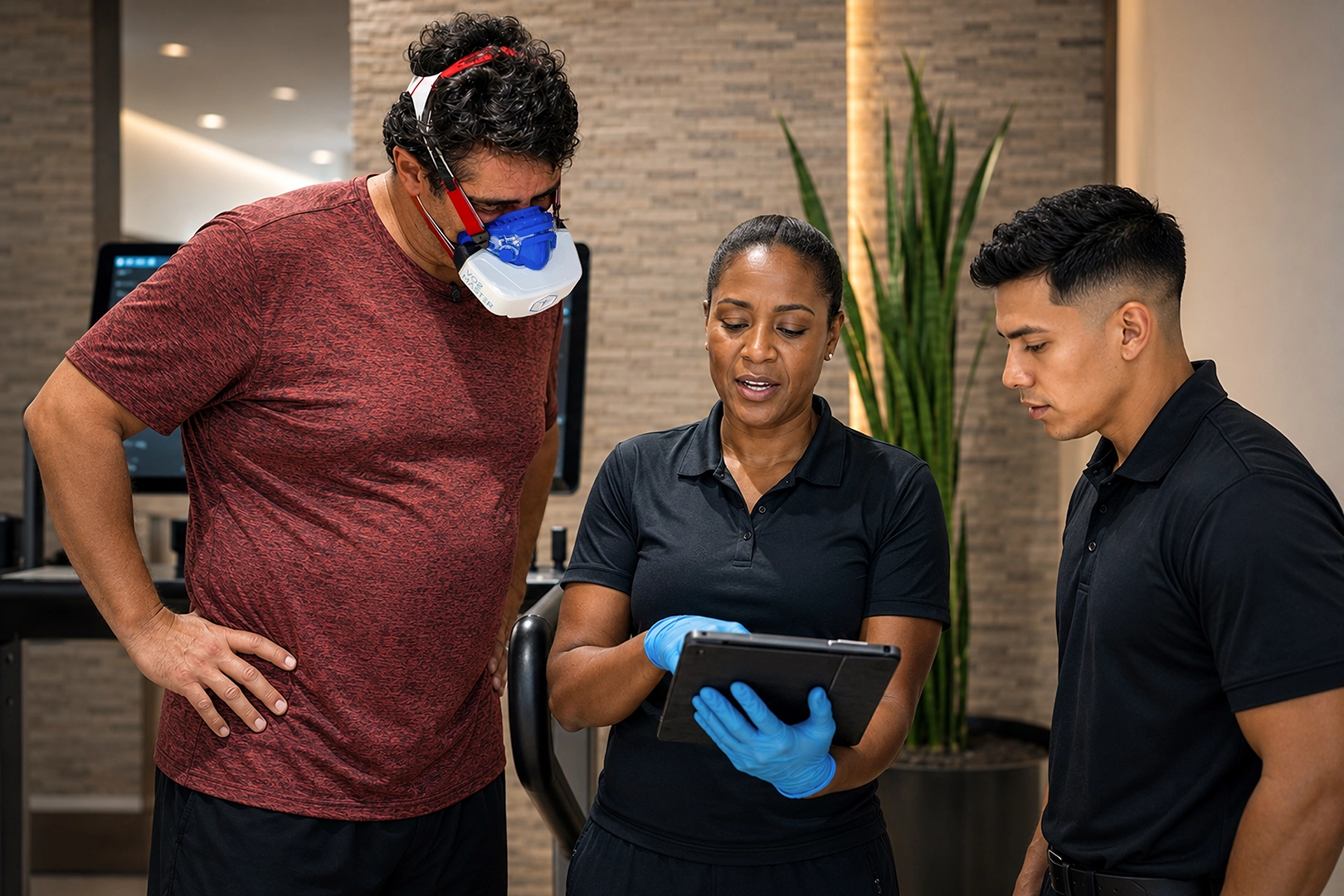
Why Metabolic Testing Creates Better Coaching Conversations
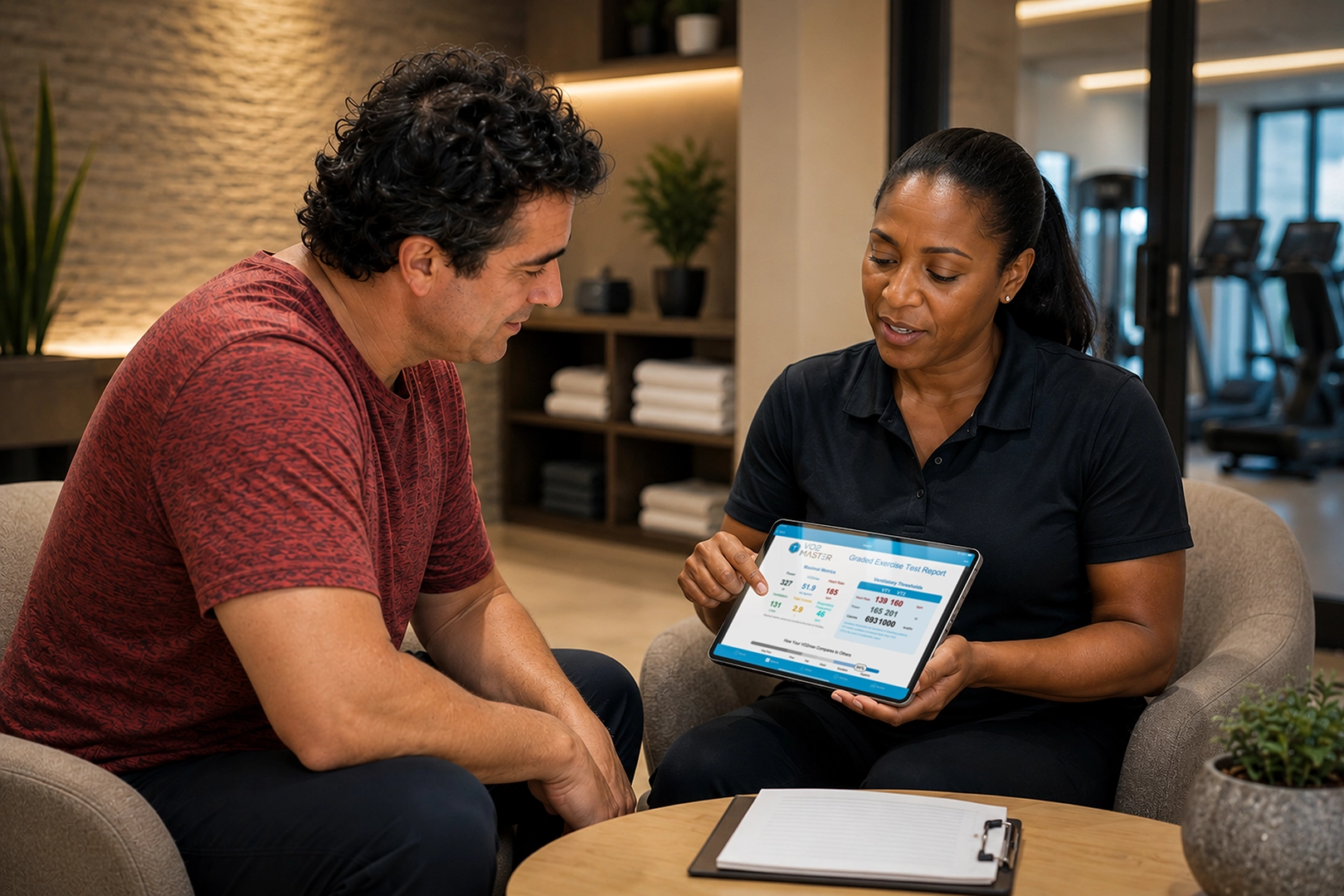
Clients now know they can learn much more about their health through data, and metabolic testing gives direct, precise insights for each individual, something that cannot be measured through the skin or heart rate estimates.
Metabolic testing helps coaches explain:
- Why workouts feel easier or harder
- Why heart rate changes over time
- How aerobic fitness is changing
- How progress extends beyond body weight
Those conversations build confidence, trust, and long-term engagement.
Instead of simply reporting results, coaches become educators who help clients understand their physiology and make informed decisions throughout their health journey.

Conclusion
GLP-1 medications are creating one of the biggest shifts the fitness and wellness industry has seen in years.
As more clients begin weight-loss journeys, the opportunity for coaches to help educate and share important fitness and health information has never been greater.
Medication may support weight loss, but coaches help clients preserve muscle, improve fitness, build healthy habits, and stay engaged for the long term.
Metabolic testing bridges those two worlds.
By measuring Resting Metabolic Rate (RMR) and VO2 Max, fitness and wellness professionals can personalize exercise, support informed conversations about caloric balance, and demonstrate meaningful progress beyond the number on the scale.
The future of coaching isn’t simply helping clients lose weight. It’s helping them build healthier bodies, stronger fitness, and long-term health through objective, personalized data.
Help your clients optimize their results.
Discover how VO2 Master can strengthen your services and deliver greater value to clients. Book a Demo to speak with our team or Shop Now to get started.
Authoritative Sources
- American College of Sports Medicine (ACSM)
- Obesity Medicine Association
- National Institute of Diabetes and Digestive and Kidney Diseases (NIDDK)
- The Obesity Society
Frequently Asked Questions
Should every client taking a GLP-1 medication have metabolic testing?
Metabolic testing can provide valuable baseline and follow-up information for many clients pursuing weight-loss goals. It helps coaches personalize exercise programming and monitor physiological changes over time.
What’s the difference between RMR and VO2 Max testing?
RMR measures the calories a person burns at rest. VO2 Max testing measures aerobic fitness and helps establish personalized training zones for exercise.
How often should clients be retested?
Many fitness and wellness professionals incorporate repeat testing every 12-16 weeks, allowing them to evaluate changes and adjust coaching strategies based on objective data and then test annually. It depends on the client’s goals, for individuals training for specific athletic events, they may base the testing around training for that event.
Can metabolic testing replace body composition assessments?
No. These assessments provide different information. Body composition measures changes in fat and lean mass, while metabolic testing gives insights into how the heart, lungs and cells function at rest and during exercise. Together, they provide a more complete picture.
Is metabolic testing only for athletes?
Not at all. Anyone beginning or progressing through a fitness journey can benefit from personalized physiological insights, particularly when building long-term exercise habits.