Actual VO2 Max vs Wearable Estimate: Why the Difference Matters for Everyday Humans
Wearables estimate fitness metrics. Metabolic testing measures them. Learn why knowing your direct metabolic numbers matters for training, health, and longevity.

Actual VO2 Max vs Wearable estimates is an important distinction as wearables have made health and fitness data mainstream, but it’s important to understand most of those numbers are still estimates. Metabolic testing complements better decision-making because it measures what your heart and lungs are doing in real time, providing clarity that matters for fitness progress, metabolic health, and long-term longevity. Wearables are great for tracking trends over time, while metabolic testing provides the direct physiological data behind those trends.
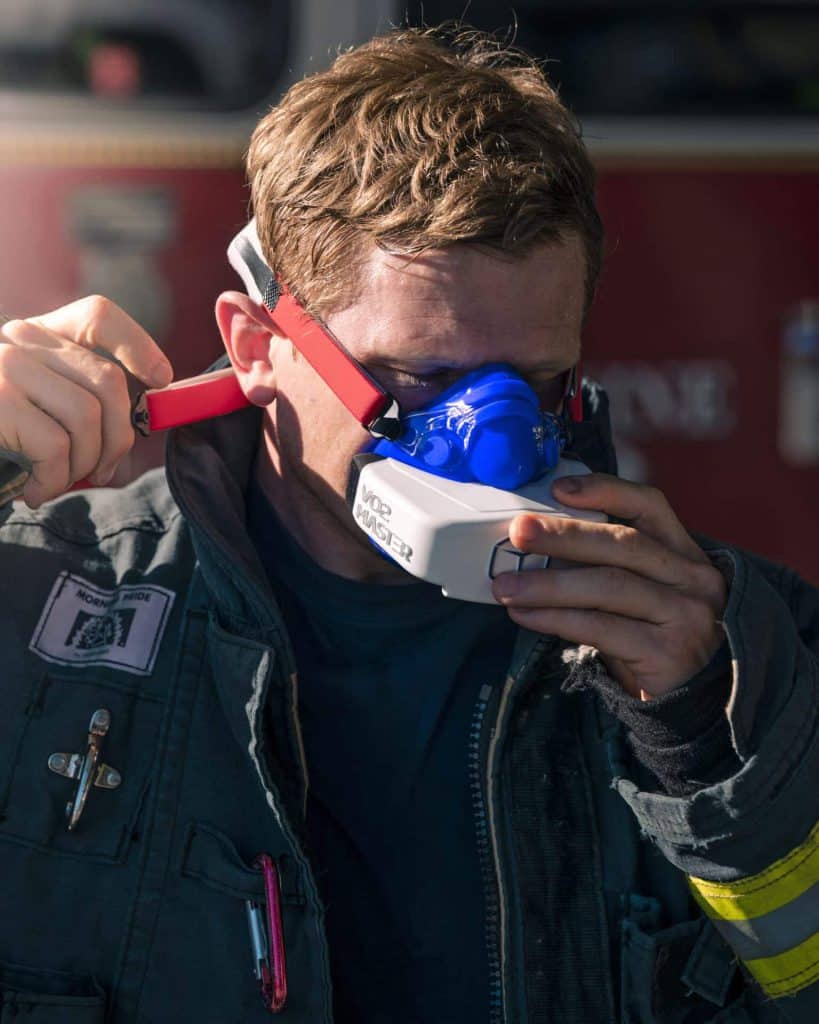
VO2 max is often called the gold standard of aerobic fitness—but how you get that number matters more than most people realize. Wearables estimate VO2 max using various data including heart rate, weight, and activity calculations. VO2 max is not specifically known unless your oxygen consumption is measured. Portable metabolic testing measures it directly during activity, and that difference can meaningfully impact your resulting training, health decisions, and long-term outcomes.
Table of Contents
What Metabolic Testing Really Measures
Metabolic testing is the direct measurement of how your body uses oxygen and energy at rest and during exercise, the metrics you receive do not rely on population averages.
At its core, metabolic testing answers a simple question:
How hard is your body actually working?
Indirect Calorimetry Explained
Metabolic testing uses indirect calorimetry, the same method used in clinical cardiopulmonary exercise testing (CPET).
Indirect calorimetry measures:
- Oxygen concentration of inhaled air
- Oxygen concentration of exhaled air
From this, oxygen consumption (VO₂) and energy expenditure are calculated breath by breath. This method is widely accepted as the gold standard for assessing aerobic capacity and metabolic function.
VO2, Energy Expenditure, and Fuel Utilization
With metabolic testing, you can directly measure:
- VO2 max, submax and aerobic capacity
- Resting metabolic rate (RMR)
- Energy expenditure during exercise
For fitness enthusiasts and coaches, these numbers provide a foundation for smarter programming and efficient training.
See live VO2 Max testing with VO2 Master

What VO2 Max Represents (Beyond a Fitness Score)
VO2 max is the maximum amount of oxygen your body can use during intense exercise. It reflects how effectively your heart, lungs, blood, and muscles work together to produce energy.
Unlike steps, calories, or heart rate, VO2 max is not just a performance metric—it’s also one of the strongest predictors of long-term health and longevity, in many cases surpassing traditional risk factors such as smoking, blood pressure, and cholesterol.
How Wearables Estimate Your Numbers
Wearables do not measure oxygen consumption. Instead, they estimate metabolic metrics using indirect signals and algorithms.
The Data Behind Wearable Estimates
Most wearables rely on:
- Heart rate
- Speed, pace, or power
- Age, sex, height, and weight
- Large population-based models
No wearable watch or ring measures how much oxygen you inhale or use. These models assume how much oxygen someone like you would be using under certain conditions.
Why Wearable Estimates Can Drift
Wearable estimates are influenced by:
- Heat, altitude, and dehydration
- Stress and poor sleep
- Heart rate sensor noise
- Stop-start movement and pacing variability
- Artifact noise and inaccuracy due to device movement on wrist
- Strength-trained or efficiency outlier individuals
For many users looking to track trends, wearables are found directionally useful. For understanding direct, live data showing one person’s actual physiology, they are limited.
Why the Difference Matters for Real People
If VO2 max informs your fitness and health decisions, accuracy matters. Secondly, everyone wants more efficient training and results for their invested time.
Metabolic health affects far more than athletic performance. It plays a central role in energy levels, weight regulation, cardiovascular health, and long-term disease risk.
Metabolic testing identifies where this flexibility breaks down and how training can improve it.
Training zones built from estimated VO2 max of other people don’t have your ventilation and breathing metrics and often miss:
- True ventilatory thresholds
- Individual efficiency differences
- Accurate zone identification
Measured VO2 data allows training zones based on how your body actually responds, not averages.
If VO2 max informs your health decisions, accuracy matters.
Health, Risk, and Longevity Insights
VO2 max is increasingly recognized as a key health metric people of all ages and fitness levels are paying attention to.
Errors of even 10–15% can:
- Misclassify cardiovascular fitness levels
- Mask real improvements or decline
- Delay meaningful lifestyle and wellness decisions
Reducing Plateaus and Guesswork
Many people train harder but see limited progress because:
- Intensity is mis-prescribed
- Recovery needs are underestimated
- Wearable estimates fluctuate without explanation
Direct measurement provides clarity—and confidence.
Early Insight Beyond Wearables
Wearables often detect change after it happens. Metabolic testing can reveal inefficiencies and adaptations earlier, allowing proactive adjustments in training and lifestyle.
Key Metrics Fitness Enthusiasts and Coaches Should Care About
VO2 Max and Aerobic Capacity
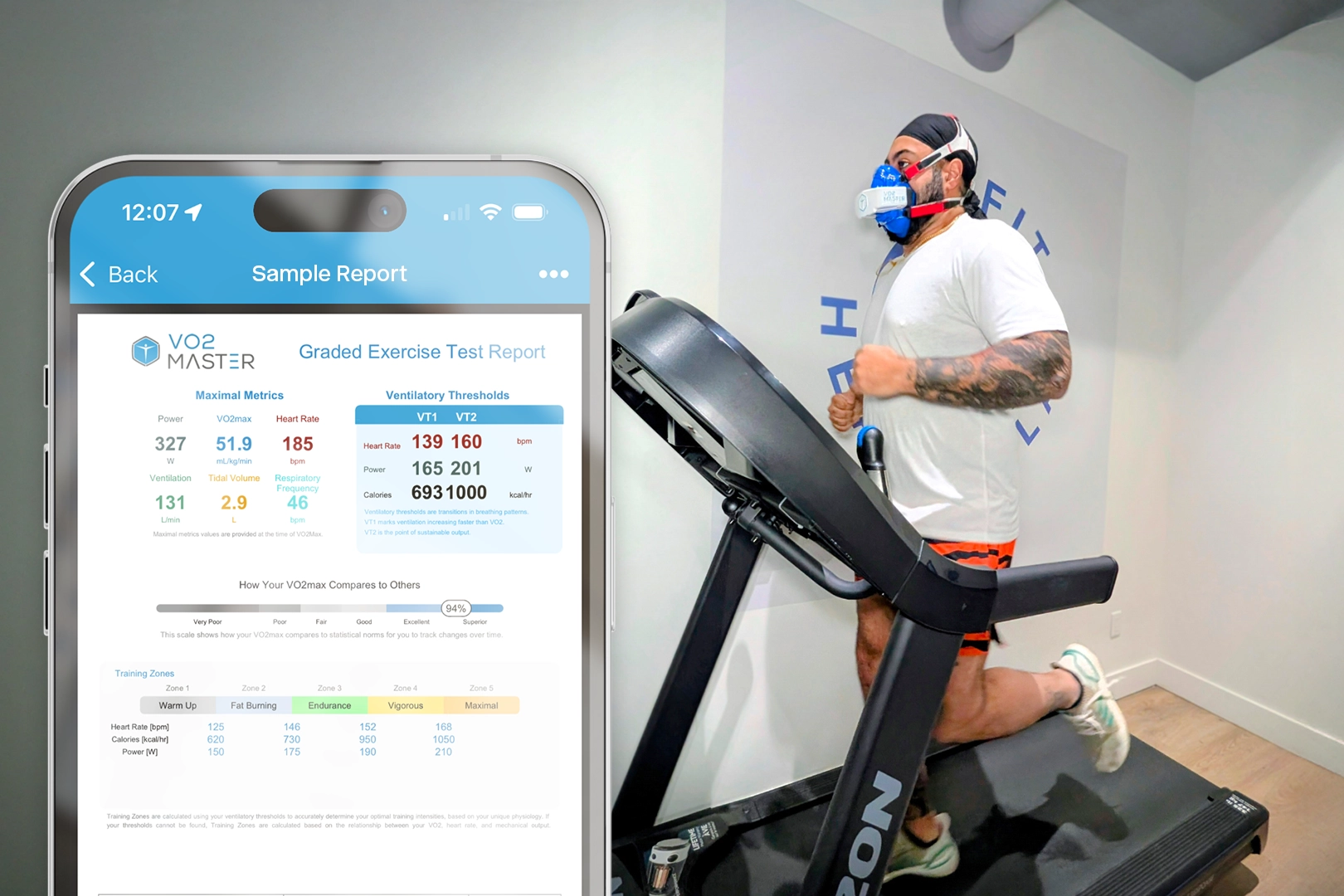
VO2 max represents the maximum amount of oxygen your body can use during intense exercise. It reflects the integrated performance of the heart, lungs, blood, and muscles.
VO2 max is also one of the strongest predictors of long-term health and mortality, often ranking above traditional risk factors.
Wearables estimate VO2 max. Metabolic testing measures it.
Resting Metabolic Rate and Daily Energy Needs
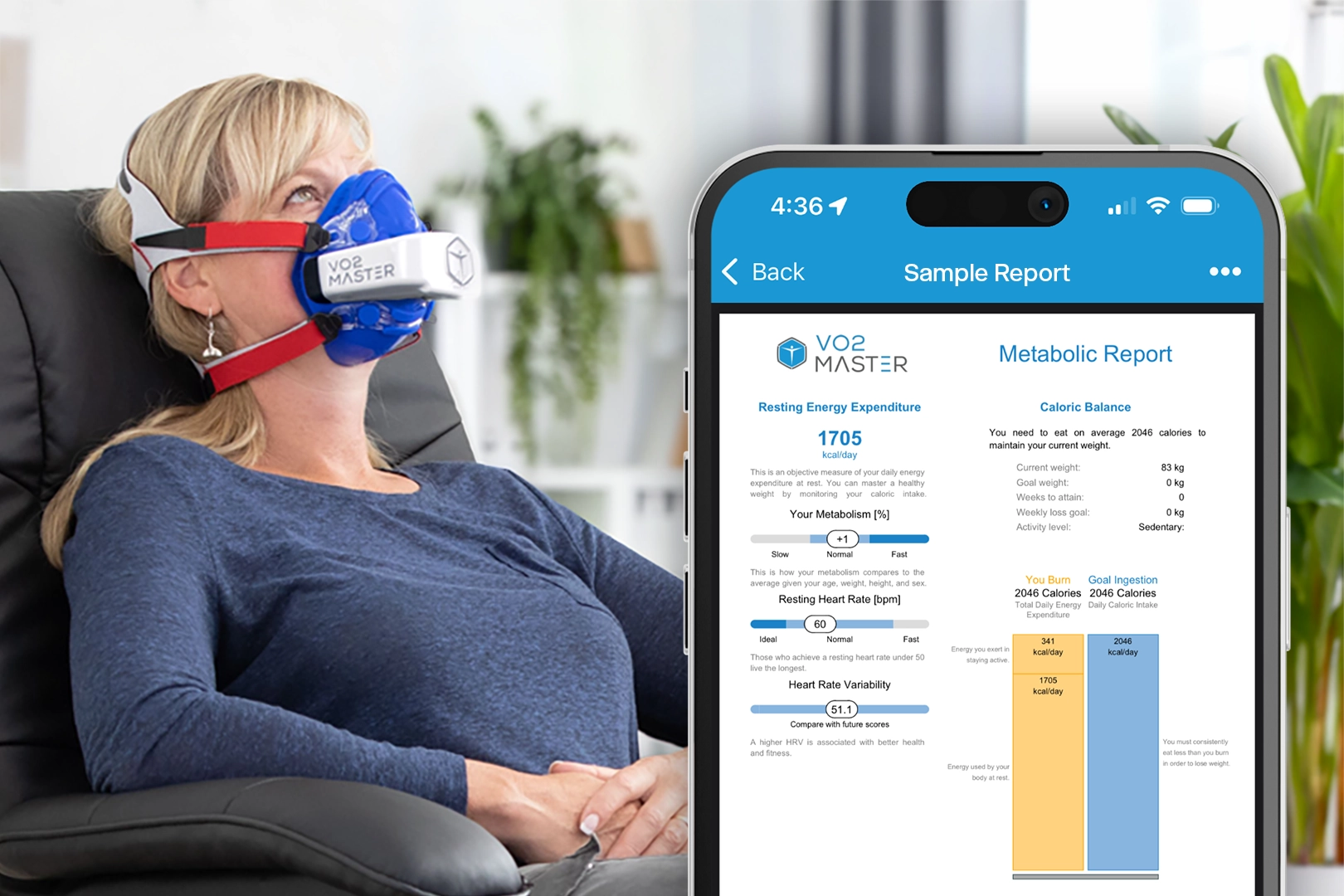
Resting metabolic rate (RMR) testing measures how many calories your body requires at rest to maintain basic function.
For coaches and fitness enthusiasts, RMR testing helps:
- Prevent chronic under-fueling
- Support recovery and hormonal health
- Guide sustainable nutrition strategies
Estimated vs Measured VO2 Max: Key Differences
| Factor | Wearable Estimate | VO2 Master Analyzer |
|---|---|---|
| Measures oxygen directly | ✗ No | ✓ Yes |
| Uses population assumptions | ✓ Yes | ✗ No |
| VO₂ max accuracy | Estimated | Measured |
| Individual thresholds | Modeled | Measured |
| Sensitivity to change | Low-Moderate | High |
| Personal health relevance | Limited | Strong |
| Usable for metabolic testing (RMR) | ✗ | ✓ |
This difference matters when training decisions, health insights, and long-term fitness profile and tracking are involved.
Why Booking a VO2 Max Test Matters
If you’re using VO2 max estimates to make health and training decisions, the next step is simple:
Book an actual VO2 max test to confirm your personal result.
A professionally administered VO2 max test:
- Establishes your true aerobic capacity, VO2 max, ventilatory thresholds, heart rate, tidal volume, respiratory frequency, ventilation and power.
- Allows meaningful tracking of your personal profile over time

Where to Get Tested
VO2 Master testing facilities are located globally across:
- Gyms, fitness and performance centers
- Chiropractic, physiotherapy, naturopathic and health and wellness clinics
Find a VO2 Master testing facility near you
When to get Tested
This depends on if you are training for something specific and want to determine results. For general well-being and health you could look at doing it ac couple of times per year. If training for a specific event, it will be most helpful to test before and after a major training block.
VO2 Master and Garmin Devices Compatibility
Many people ask how VO2 Master fits into an existing Garmin-based ecosystem.
What Works Well
VO2 Master integrates with:
- Garmin heart rate straps (via Bluetooth)
- Garmin watches to see live VO2 Master testing results (compatible Garmin models only)
- Equipment such as the Garmin Tacx Bike
Important Clarification
Garmin devices do not ingest raw VO2 breath-by-breath data from the VO2 Master Analyzer. If connected to the analyzer, your device will show your VO2 reading.
Portable testing supports:
- Repeatable assessments over time
- Testing in realistic training environments
- Sport-specific protocols
Instead of inferring oxygen use, it quantifies actual oxygen consumption breath by breath.
Why Portability Changes Access
Historically, VO2 testing required a laboratory, large metabolic cart and specialized staff.
Today, portable analyzers allow VO2 max testing to be performed in:
- Gyms and fitness centers
- Physical therapy and wellness facilities
- On bikes, treadmills, or sport-specific equipment
Now this high-quality metabolic testing is accessible to everyday people—not just elite athletes.
Who Benefits Most from Metabolic Testing?
Fitness Enthusiasts and Longevity-Focused Individuals
- Understand current cardiovascular fitness profile
- Personalize training intensity
- Support long-term metabolic health
Athletes and Competitive Recreational Enthusiasts
- Improve aerobic efficiency
- Optimize competitive season performance and recovery strategies
- Reduce training methodology guesswork
Coaches and Fitness Facilities
- Deliver objective, science-backed insights for fitness enthusiasts and competitive athletes
- Differentiate coaching services
- Build client trust through measurable, optimized outcomes
Turning Metabolic Data into Action
From Measurement to Decisions
Metabolic testing translates physiology into clear and efficient actions around:
- Training zones
- Caloric expenditure
- Recovery management
Why Accuracy and Repeatability Matter
When tracking fitness and health over months or years, accuracy matters. Repeatable metabolic testing ensures that changes are real, not artifacts of estimation.
Review published academic research and validation using VO2 Master
The Takeaway
Wearables are excellent for tracking trends.
Measured VO2 max provides the personal and specific values that makes those trends meaningful.
For everyday humans—not just athletes—the difference between estimated and measured VO2 max is the difference between guessing and understanding.
Ready to Know Your Real Numbers?
Fitness Enthusiasts: Find a metabolic testing facility near you
Coaches: Shop the VO2 Master analyzer now
FAQs
Is metabolic testing only for elite athletes?
No. Metabolic testing is increasingly used by fitness enthusiasts, coaches, and health-focused individuals.
How often should metabolic testing be done?
Every 8–12 weeks for training blocks, or 1–2 times per year for general health tracking.
Can metabolic testing replace wearables?
No. It complements wearables by anchoring their data to real physiological measurements.
Is metabolic testing safe?
Yes, when administered by trained professionals using standardized protocols.
Can metabolic testing be done outside a lab?
Yes. Portable analyzers allow indoor and outdoor testing.
Authoritative Sources
- ACSM Guidelines for Exercise Testing and Prescription
- Ross et al., Cardiorespiratory Fitness as a Clinical Vital Sign
- Bassett & Howley, Limiting Factors for VO₂ Ma