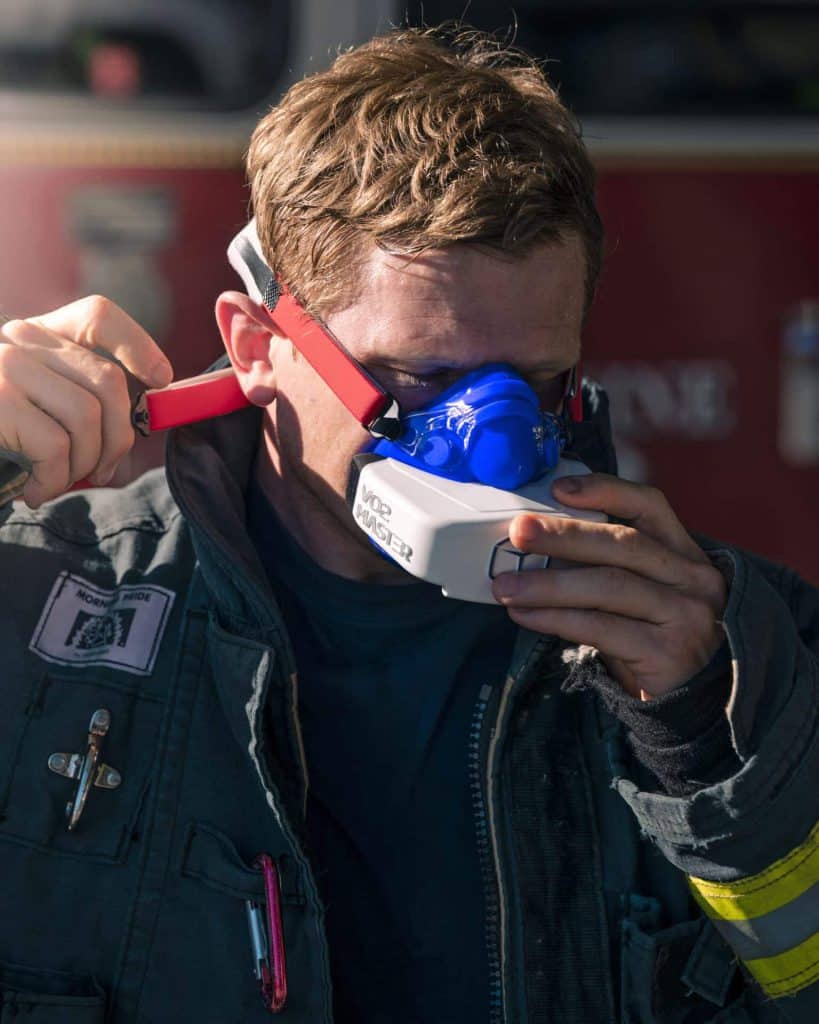
VO2 Testing for Client Retention: Why Spring Is Where Fitness Businesses Win or Lose
January brings new fitness client sign-ups. Spring decides who stays. Discover how VO2 testing helps fitness and wellness professionals improve client retention with measurable progress and smarter follow-up.
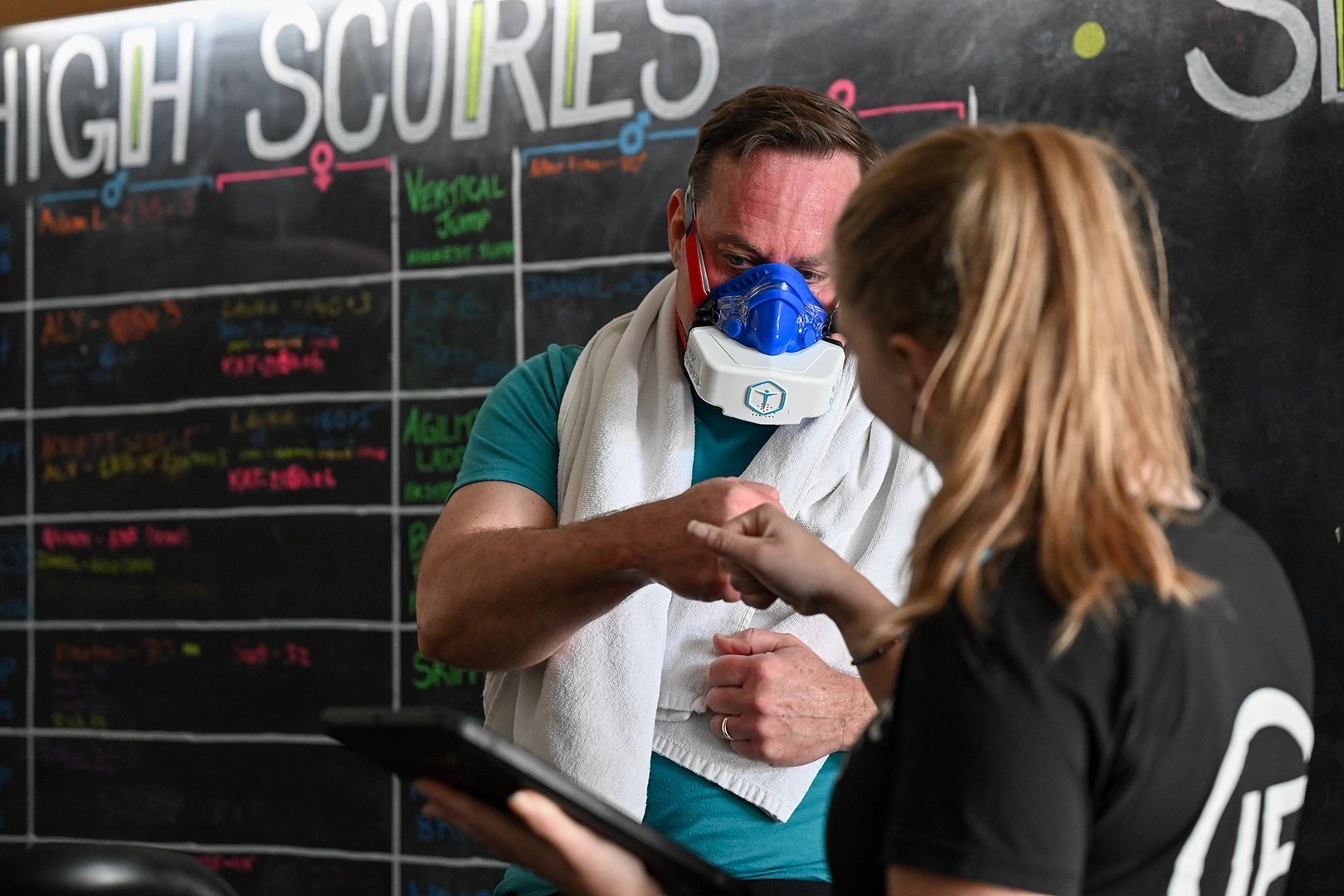
January brings motivation. Spring reveals commitment. VO2 and RMR testing give fitness and wellness professionals objective client data – driving motivation for results, engagement, metabolic health, and long-term retention when clients are most likely to drop off.
New Year’s energy fills calendars, but February and March quietly determine whether new clients become long-term members with consistent habits, or disappear after a few missed visits. Industry data consistently shows churn risk peaks between weeks four and six, when habits are fragile and progress feels unclear.
The difference between retention and attrition isn’t louder motivation.
It’s clear measurement, effective training decisions, and progressive results.
That’s where VO2 testing for client retention becomes a powerful strategic tool.
Table of Contents
Why Spring Matters More Than January for Retention
As early motivation fades, clients begin asking deeper questions:
- Is this working?
- Why am I at the same plateau I was at before the holidays?
- Am I training the right way?
- Why do I feel tired but not fitter yet?
This is especially true for clients focused on wellness, metabolic health, longevity, and preventive health, not just weight loss.
Top-performing facilities shift focus after January. Instead of relying on generic check-ins, they monitor leading indicators:
- Gaps in attendance (7–10 days without a visit)
- Confusion around training zones and recovery
- Missed onboarding milestones
When clients don’t understand why they’re training or how progress is being measured, and training habits aren’t fully in place, momentum can easily halt.
The Real Reason Clients Drop Off
Clients rarely quit because training is hard.
They quit for a few key reasons including: they aren’t feeling or seeing anything different and their progress feels invisible.
Motivation Fades Without Measurement
Traditional metrics – scale weight, generic heart rate zones, often fail to reflect early physiological change. When improvements in aerobic capacity, strength, or metabolic efficiency go unseen, uncertainty creeps in.
That uncertainty leads to skipped sessions. Skipped sessions lead to attrition.
Clear metabolic measurement turns effort into focus.
Why VO2 Testing Is a Retention Tool, Not Just an Assessment
VO2 testing is often viewed as a performance tool for athletes. In reality, it is part of a broader indirect calorimetry framework that supports coaching insights and good decision making which enhances results and thus retention across fitness and wellness settings.
Indirect calorimetry allows professionals to measure:
- VO2 Max (aerobic capacity)
- Ventilatory thresholds and training zones
- Energy expenditure
- Recovery trends
This reframes training from “working harder” to training smarter: a key shift for long-term engagement.

Creating an Early Physiological Anchor
VO2 testing provides a clear, objective baseline early in the client journey and they can see their data live during the test. This is highly motivating to the client as they see direct accurate physiologic data of not just their VO2 and heart rate but also ventilation, respiratory frequency and more.
Instead of relying on:
- Scale weight
- Predicted heart rate formulas
- Subjective effort
Clients see:
- Their aerobic capacity
- Ventilatory thresholds and training zones
- How efficiently their body uses oxygen
Aerobic capacity is one of the strongest predictors of long-term health and longevity. Anchoring training to this metric builds trust and purpose early in their fitness journey with you.
Discover why measured VO2 data, not smartwatch predictions, drives better programming, clearer progress, and stronger client retention.
RMR Testing: Retention Starts at Rest
When VO2 testing is paired with resting metabolic rate (RMR testing), personal fitness insights become even deeper.
RMR testing helps clients understand:
- Their baseline energy needs
- Whether under-fueling is impairing recovery
- Calories burned and ideal calories ingested
For many wellness clients, this is the missing link between effort and results, especially in spring, when fatigue often rises.
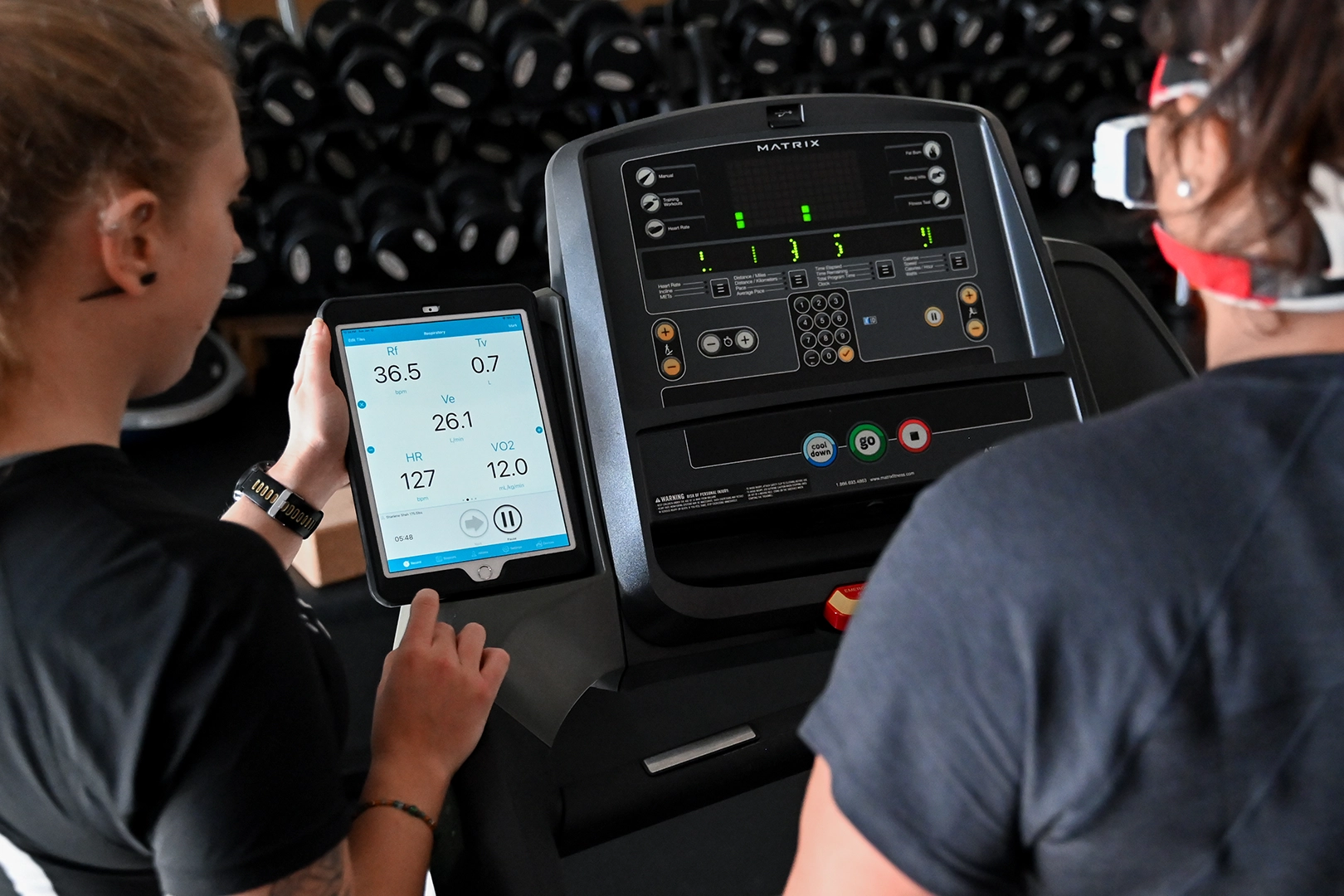
See what actual results look like after a VO2 Master test
Get a real VO2 Master sample report and discover how clear, data-driven insights improve client understanding, motivation, and long-term retention.
Built-in Follow-Through Moments that Keep Clients Engaged
Retention thrives on effective structure and clear goals. VO2 and RMR testing naturally create it.
Reassessments align perfectly with:
- Post-onboarding reviews
- Spring challenges or training blocks
- Quarterly wellness check-ins
Each reassessment becomes a reason to re-engage and a milestone to work toward
People are highly motivated to improve numbers they understand, especially when those numbers reflect metabolic health, not aesthetics alone.
Why Real-World Testing Builds Trust
Portable metabolic testing allows assessments to happen where clients actually train, which has numerous advantages for the client and business owner.
With VO2 Master, testing can occur:
- On the gym floor
- On treadmills or bikes
- Outdoors
This allows clients to test doing movements and sports they prefer such as biking or running, and other members get interested and inspired by the testing.

Turning VO2 Data into a Spring Retention Engine
Forward-thinking facilities use VO2 Master to create optimal client engagement and commitment to their success.
Effective spring strategies include:
- Bundling VO2 and RMR testing into paid onboarding or “spring reset” packages
- Using training zones to personalize intensity and prevent burnout
- Race training groups for runners or cyclists with testing before and after training blocks
When clients see personal progress, they stay engaged.
Considering Adding Metabolic Testing? See the Results First.
Review real implementation examples, pricing models, and retention outcomes from facilities using portable VO2 testing.
VO2 & RMR Testing vs Traditional Retention Metrics
| Metric | Traditional Tracking | VO2 + RMR Testing |
|---|---|---|
| Calorie Burn | Estimated | Measured |
| Training Zones | Predicted | Based on measured data |
| VO2 Max | NA | Measured |
| Metabolic Health | Assumed | Quantified |
Why Portable Metabolic Testing Fits Modern Fitness & Wellness
VO2 Master removes traditional barriers to metabolic testing:
- No fixed lab required; no wires, hoses or backpacks
- Validated against gold-standard systems
- Designed for gyms, studios, and wellness centers
- Significantly lower cost per unit
This makes metabolic testing practical for preventive health, longevity, and personalized fitness models.
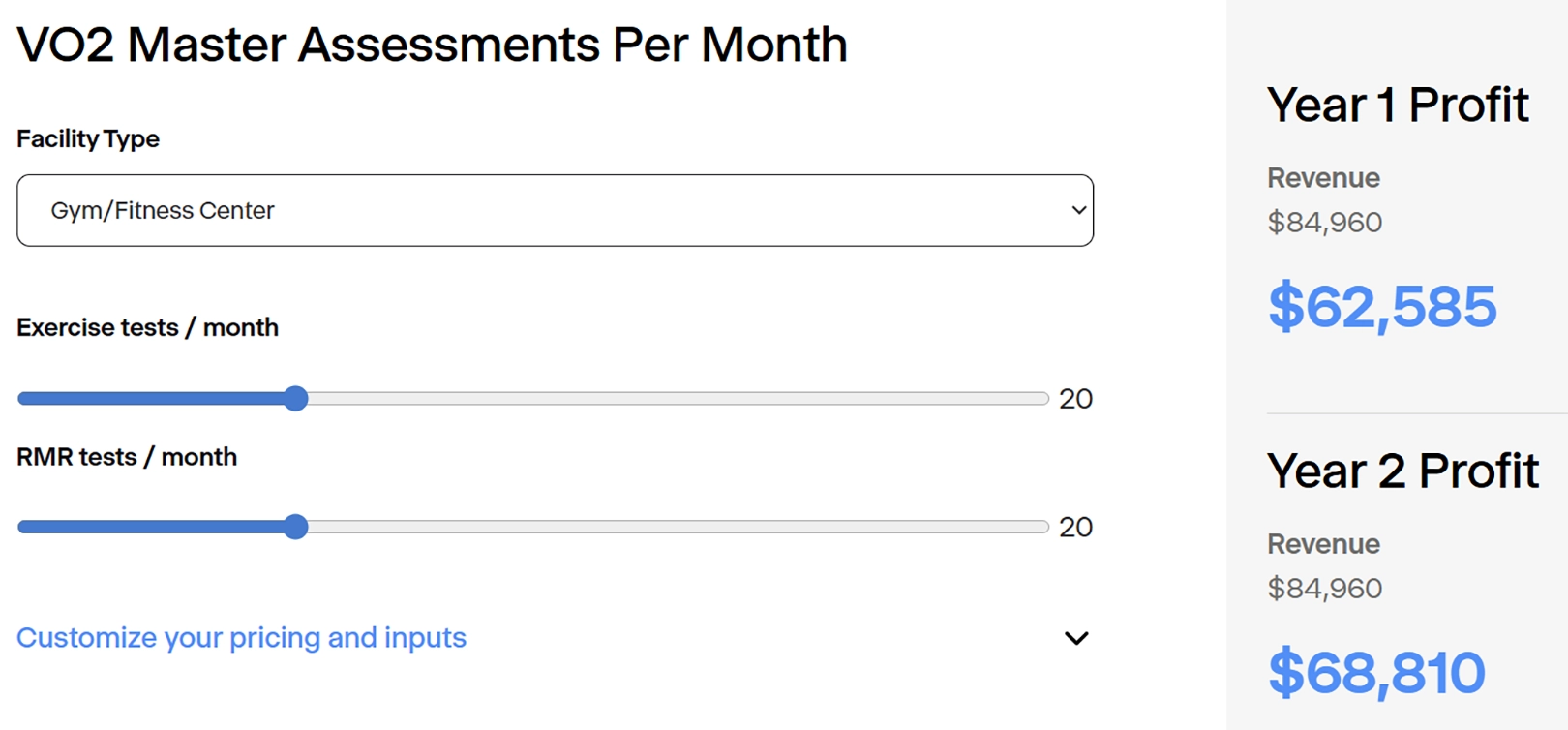
How Fast Could VO2 Testing Pay for Itself in Your Facility?
Use our ROI calculator to model the revenue impact of adding VO2 and RMR testing.
Make This The Spring Your Clients Don’t Drop Off
Give your facility the tools to measure what matters, personalize training, and build long-term retention with portable VO2 and RMR testing.
Featured Photo Credit: Innovative Fitness
Frequently Asked Questions
Is VO2 testing only for athletes?
No. It’s highly relevant for general fitness, wellness, metabolic health, and longevity.
How often should VO2 and RMR testing be repeated?
It depends on the goal of the client. 8–12 weeks can align well with training blocks and longevity clients depending on their desired rate of progress. Many athletes do submax testing while endurance training frequently throughout the year.
How long does it take to run a test?
Most protocols take 10-20 minutes plus warm up.
How fast is ROI?
Most coaches earn back the device cost in 2-3 months. It’s all dependent on how many tests you run and your pricing structure.