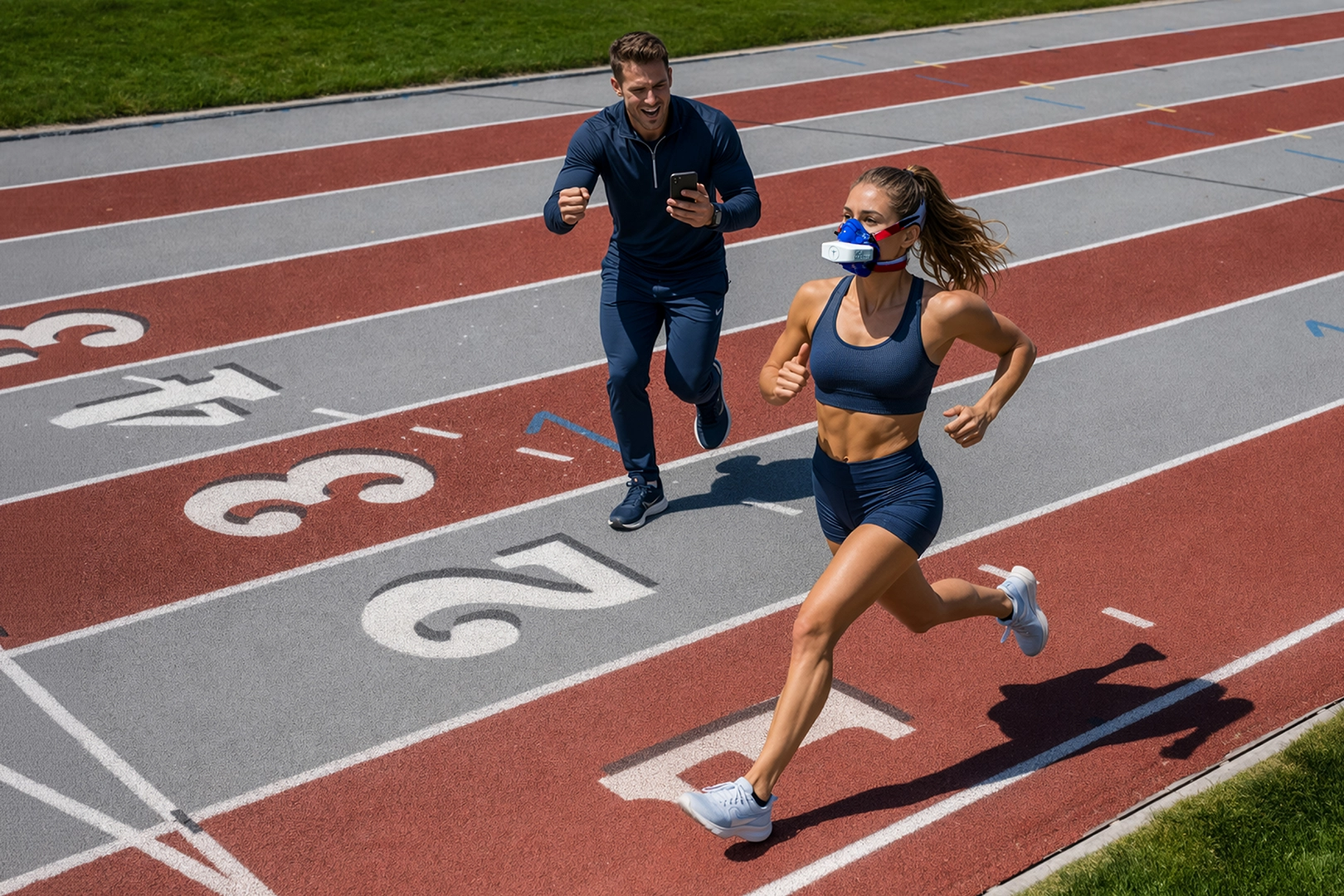
Why runner efficiency at race pace, not peak capacity, is driving modern endurance performance.
Introduction
At the highest levels of endurance sport, marginal gains determine outcomes. Increasingly, those gains are not necessarily coming from raising VO2 Max, but from improving efficiency at submaximal intensities.
Submax VO2 testing quantifies the oxygen cost of race-relevant workloads. For elite runners, this is often more actionable than VO2 Max for identifying limiters and optimizing performance.
Table of Contents
What is Submax VO2 Testing?
Submax VO2 testing measures oxygen consumption at fixed, repeatable workloads below maximum effort, typically aligned with:
- Ventilatory thresholds
- Race pace
- Environmental and sport specific training
For elite runners, these intensities represent the majority of both training volume and competitive output.
The key variable is not capacity, but oxygen cost per unit of speed.

VO2 Max vs Submax VO2 Training in Runners
Capacity Has a Ceiling, Efficiency Scales
VO2 Max has long been used as a benchmark of aerobic potential. Among elite runners, VO2 Max may be similar yet their race results can vary widely. Running economy and threshold performance can outweigh VO2 Max when it comes to race performance which is why submax (a fixed % of a threshold) metrics are so valuable.
Submax VO2 training focuses on insights derived from runner testing in real world circumstances thus preparing them more effectively for achieving their potential during competition.
In simple terms:
- Lower oxygen cost at a given pace = better efficiency
- Higher oxygen cost = more energy required
| Metric | What it Measures | Why it Matters |
|---|---|---|
| VO2 Max | Maximum oxygen capacity | Demonstrates maximum capacity |
| Submax VO2 | Oxygen cost at a pace | Determines efficiency |
When competing, improvements in running economy and metabolic efficiency can have a greater impact on race outcomes than increases in VO2 Max.
Why Running Coaches are Shifting Focus
Modern endurance coaching is increasingly data-driven, but not all data is equally actionable. VO2 Max is limited for training modifications if it’s the only data point a coach measures.
Submax VO2 training provides:
- Direct measurement of efficiency at race pace
- Insight into metabolic adaptations across a training cycle
- Early detection of maladaptation or fatigue
This aligns with the demands of racing, tactical pacing and long-duration efforts where outcomes depend on:
- Efficiency
- Fuel use
- Breathing patterns
- Movement economy
Submax VO2 training captures these factors directly during sport-specific movement which increases ecological validity and usefulness during decision-making.
Limitations of Wearables for Training Insights
Wearables provide modeled insights based on:
- Pace
- Heart rate
- Population data
These models break down for training decisions and a runner’s physiologic adaptation due to:
- No direct measurement of VO2 and breathing mechanics over time
- Individual variability
- Environmental and tactical factors
Because wearables do not directly measure oxygen consumption, ventilation dynamics or breathing efficiency they cannot clearly identify physiologic limiters of the cardiovascular system or accurately provide zone training insights.
Two elite level athletes can run the same pace at the same heart rate, but with very different metabolic costs. This gap becomes critical when optimizing marginal gains.
Identifying Performance Limiters with Submax VO2 Testing
Controlled submax testing allows coaches to isolate variables that are otherwise difficult to quantify and gain practical insight into individual runner adaptation.
Key indicators:
- Elevated VO2 at fixed pace → reduced efficiency
- Increasing ventilation without pace change → potential respiratory limitation
- Drift in oxygen cost across sessions → accumulated fatigue
With portable metabolic testing, you can measure VO2 in real time, ventilation, respiratory frequency, tidal volume and more.
The test-retest capability provides a clearer picture of what is limiting performance such as biomechanical or anaerobic inefficiencies, respiratory limitations and even environmental and equipment factors.
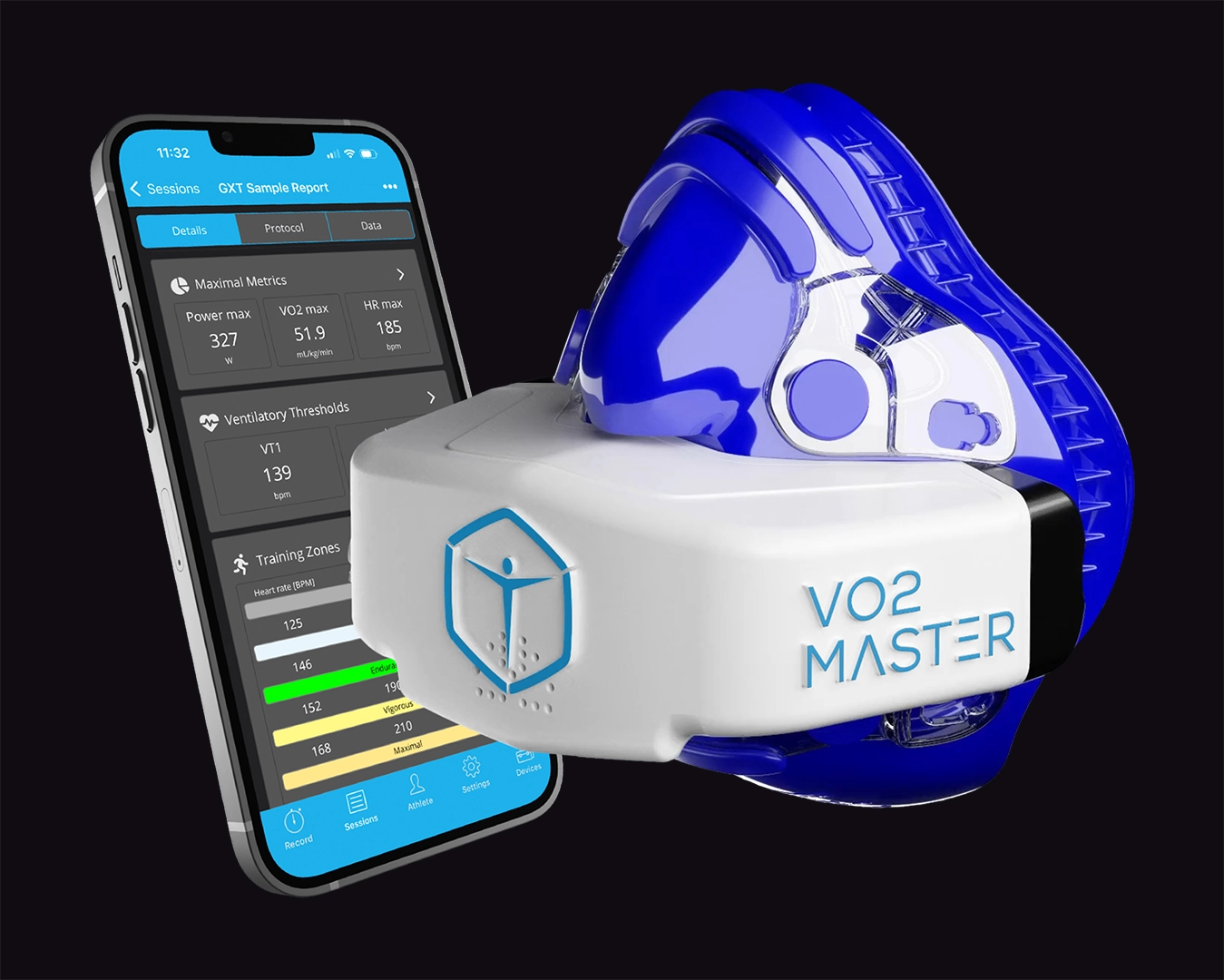
Using a system such as the VO2 Master analyzer, these variables can be captured in real time during sport-specific movement while training rather than annually in a lab. This allows greater understanding of the runner’s individual adaptations and ideal training zones.

Why Submax Testing is More Repeatable
Submax testing has lower physiological cost and can be integrated into training cycles due to the flexibility of using it indoors or outside with Bluetooth enabled connectivity.
This makes it more suitable for longitudinal monitoring across:
- Pre-season
- Competitive season
- Recovery from injury
Optimize Race Execution
Understanding oxygen cost at race pace allows for:
- Better athlete pacing decisions
- Improved energy management
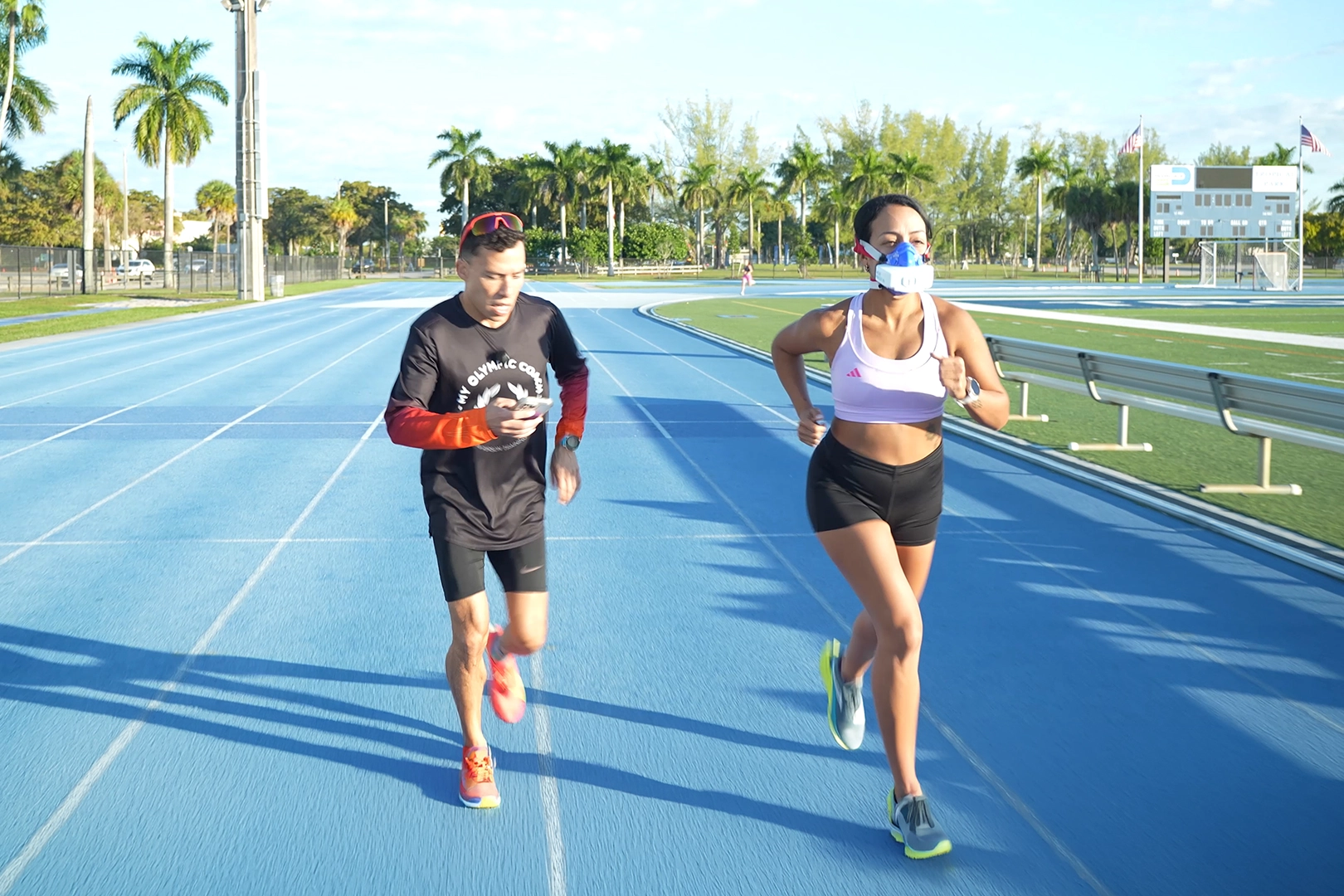
Case Example from Running Coaching Luis Orta
22 athletes, 22 personal bests, a reflection of data-informed coaching trends.
Olympian and marathon coach Luis Orta recently reported that 100% of his running clients competing in a recent marathon achieved personal bests.
While outcomes depend on multiple variables, this reflects a broader shift in elite coaching toward:
- Individualized data
- Continuous monitoring
- Specificity of training inputs
Submax VO2 race pace testing supports this model by providing repeatable, actionable metrics aligned with race demands.
Read more about Luis Orta’s Case Study
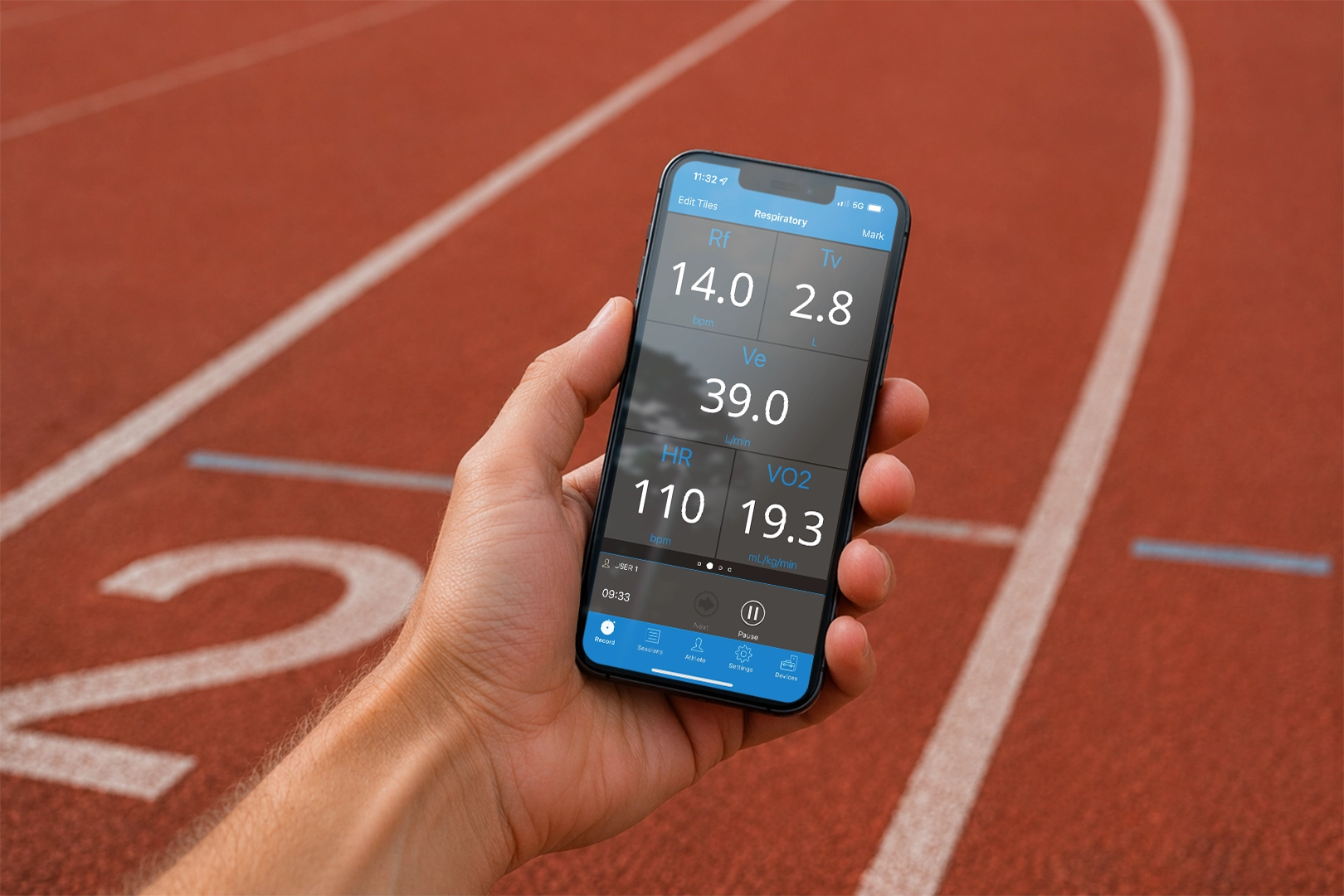
How Metabolic Testing Enables Submax VO2 Training
Portable systems like VO2 Master allow measurement:
- During real runs
- At controlled paces
- In training environments on tracks, roads or paths
This enables:
- Immediate feedback
- Repeatable testing
- Individualized insights
Instead of estimating performance, coaches can measure it directly. Metabolic testing has moved out of the lab and into daily training environments. For high-performance programs, this represents a shift from periodic testing to regular performance insights and adaptations.
Interested in integrating submax VO2 testing into your coaching program?
Book a demo to see how real-time metabolic data can optimize your coaching results.
Applications in NCAA and Pro Sports
Training Prescription Validation
Submax VO2 testing allows programs to verify whether:
- Aerobic development is progressing
- Interventions are producing measurable changes
Monitoring Athlete Readiness
Tracking oxygen cost at standardized workloads provides a consistent metric for:
- Readiness
- Recovery status
- Adaptation trends
Refining Training Zones
Traditional zones based on heart rate or pace can lack precision.
Submax VO2 training enables:
- Physiologically anchored zones
- More consistent intensity distribution
- Enhanced awareness of athlete to physiologic changes during their training and racing
In-Season Adjustments
Because submax testing occurs during training, it is low-disruption and can be integrated:
- During competitive phases
- Between races
- Without excessive fatigue
Read more about VO2 applications in NCAA and pro sports here.
Conclusion
As coaching continues to evolve toward precision and athlete individualization, submax VO2 testing is becoming essential for optimal decision making for athlete training and recovery. While VO2 Max has been a critical measurement for decades, it is limited due to its “one point in time” all out measurement in a lab on a treadmill. With submax portable testing now possible on the track, road or trails, repeatable testing can be conducted to more accurately determine ideal training methodologies for individual runners.
As athletes adapt to training, some improvements show up in efficiency or thresholds well before seeing VO2 Max change. This means improvements in running economy and threshold performance can precede and outweigh changes in VO2 Max when it comes to race performance. This is why submax metrics are so valuable and being implemented globally by thought leading coaches. Book a demo and explore how the VO2 Master can support submax VO2 training in your coaching environments.
Measure efficiency, monitor adaptation, and have deeper insights for your coaching decisions.
Read More about Submax VO2 testing and protocols
Frequently Asked Questions
What is submax VO2 training?
It is the practice of measuring and improving athlete performance efficiency at submaximal intensities.
Is submax VO2 data more relevant than VO2 Max for elite athletes?
In many cases, yes. VO2 Max establishes capacity, but submax VO2 determines efficiency at race-relevant intensities.
How often should elite programs test?
Submax testing can be performed regularly, often every 3–6 weeks, depending on the training phase and athlete adaptation to training modifications.
What makes this actionable for coaches?
It provides direct feedback on efficiency, allowing adjustments to training to optimize performance.
Can wearables replace metabolic testing?
No. Wearables estimate trends but do not directly measure oxygen consumption or breathing mechanics during sport specific movements.