Metabolic Testing: The Competitive Edge Shaping Training for the 2026 Olympics
As the road to the 2026 winter Olympics nears completion, more coaches have turned to portable metabolic testing more than previous Olympic games to individualize training, improve efficiency, and protect athlete health while striving for gold.
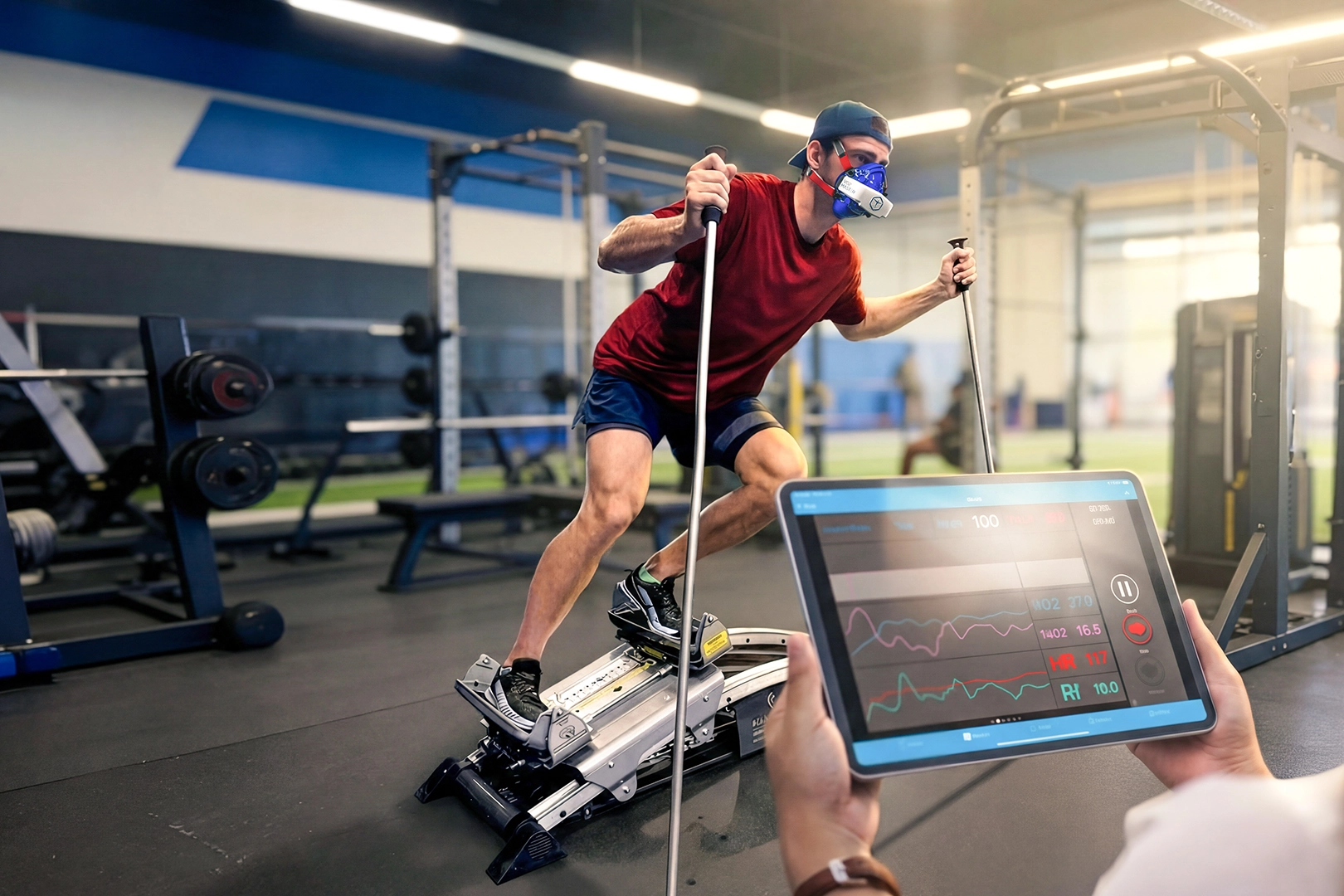
The road to the 2026 winter Olympics is nearer completion, and the winning edge isn’t just harder training—it’s smarter training. Portable metabolic testing is redefining how forward thinking coaches and federations are individualizing training, optimizing VO2, and protecting athlete health into and through the Olympic games.
As Olympic qualification timelines tighten and margins of victory shrink, leading coaches are turning to sport specific testing to make physiology—not assumptions—the foundation of performance training.
Table of Contents
Why the 2026 Olympic Cycle Demands a New Training Standard
Every Olympic cycle raises the bar—not just athletically, but scientifically. Athletes are stronger, faster, and better prepared than ever. What separates medalists from finalists is often how precisely training and recovery is prescribed and managed over months and years.
Traditional models still rely heavily on:
- Heart rate zone algorithms
- Power or pace thresholds
But these proxies don’t provide all the necessary details. Two athletes can share the same heart rate or wattage—and experience very different metabolic stress. This is also true for the same athlete testing on a stationary bike tethered to a cart indoors versus training on their racing bike outdoors.
That’s where portable metabolic testing changes the equation for optimal training methodologies.
By directly measuring oxygen consumption and ventilation, coaches gain insight into how the athlete is actually producing energy, not just what the output looks like. This way coaches can achieve a deeper understanding of what matters in their sport and each individual athlete.
What Metabolic Testing Really Measures (And Why It Matters)
At its core, metabolic testing measures how efficiently the body converts oxygen into energy during rest and exercise. This includes:
- VO2 max (maximum aerobic capacity)
- Fractional utilization of oxygen at race pace and associated energy cost
- Ventilatory response to intensity
- Energy expenditure at different workloads
Unlike estimates, this data reflects the athlete’s true physiological response and can be completed during actual training sessions. This allows you as the coach to create athlete performance profiles over time through repeat testing, invaluable information for training efficacy.
For Olympic-bound athletes, this matters because:
- Training errors compound over long cycles
- Small inefficiencies can lead to overtraining
- Limiters can be hard to identify such when dysfunctional breathing begins
- Recovery capacity is just as critical as intensity
Metabolic data gives coaches a biological feedback profile which helps assess structural versus functional capacity, key information for decision making.
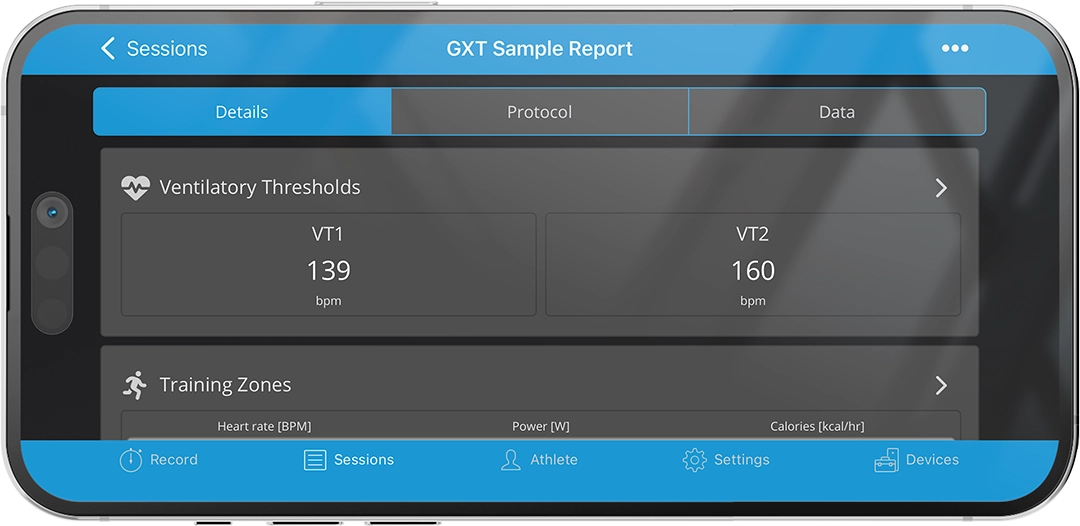
From VO2 Max to Training Zones: Turning Physiology into Performance
Aerobic Capacity vs. Sport-Specific Efficiency
VO2 max is often treated as the gold standard—but elite performance depends just as much on how efficiently athletes operate below max.
Sub max metabolic testing reveals:
- Oxygen cost at race pace
- Changes in aerobic economy across the season
- Optimal biomechanical positioning for efficiency and performance
- Whether performance gains come from fitness or efficiency
This is especially valuable in endurance, hybrid, and team sports where repeated efforts define outcomes and breathing awareness, self-regulation and efficiency can make or break success.
The VO2 Master analyzer allows you to regularly assess the efficiency of breathing through minute ventilation, tidal volume and breathing frequency. It will also allow you to determine which patterns of breathing result in a lower energy cost by assessing the fractional utilization of oxygen and how different breathing patterns can impact energy consumption.
Learn more about the importance of the data before VO2 max and the value of sub max testing.
Resting Metabolic Rate in Elite Training
Understanding caloric balance and use helps coaches:
- Optimize long-duration sessions
- Reduce glycogen depletion
- Improve training density without added stress
Instead of guessing, coaches can anchor strategies to measure physiology.
Why Portability Is the Breakthrough Coaches Have Been Waiting For
Historically, metabolic testing lived in the lab—expensive, time-consuming, and disconnected from real sport specific movement.
The VO2 Master portable analyzer changes that.
Coaches can now perform metabolic testing:
- Indoors or outside
- In the weight room or rehab space
- During sport-specific protocols
This portability improves ecological validity—the data reflects how athletes actually train and compete.Learn more about the value of sport specific metabolic testing
VO2 Master vs. Traditional Lab Testing
| Feature | VO2 Master Analyzer | Traditional Metabolic Cart |
|---|---|---|
| Portability | Fully portable | Fixed laboratory |
| Setup Time | Minutes | 30-60+ minutes |
| Field Testing | Yes | No |
| Athlete Throughput | High | Limited |
| Validation | Peer-reviewed | Peer-reviewed |
| Cost & Accessibility | $7,595 | $40,000-60,000 |
Validated against traditional systems, VO2 Master delivers lab-grade insight—without lab constraints.
Learn more about recent published studies featuring the VO2 Master analyzer.
3 Reasons Coaches of Elite Athletes are Testing in the Field
1. Enables frequent, sport-specific field performance testing:
Coaches can directly measure real time physiological responses in the field—during actual training, competition simulations, and sport-specific movements (e.g., sprints, shuttles, intervals, swimming, outdoor endurance). This reveals performance limiters, recovery capacity, and energy cost in settings a lab-based metabolic cart cannot replicate.
2. Provides unique insight into breathing strategy, autonomic control, and recovery
Beyond VO2 max, coaches can assess breathing frequency, tidal volume, minute ventilation, and oxygen utilization to identify dysfunctional breathing, stress responses, and poor self-regulation. These insights directly inform interventions that improve recovery speed, resilience, consistency under pressure, and injury risk—key differentiators at the elite level.
3. Optimizes efficiency, pacing, and fueling for elite performance
By tracking fractional oxygen utilization and energy cost at race- or game-specific intensities, coaches can fine-tune training zones, pacing strategies, biomechanics, equipment choices, and fueling plans over time. Small reductions in energy cost or improved recovery between efforts translate into meaningful performance gains that lab testing alone cannot uncover.
Because testing integrates seamlessly into existing sessions, data collection doesn’t disrupt training flow—it enhances it.
Learn how the VO2 Master works as the portable metabolic standard for elite training.
How Coaches Are Using Metabolic Testing by Sport
Portable metabolic testing becomes most powerful when applied within the specific physiological demands of each Olympic sport. Below are real-world examples of how coaches are using the VO2 Master Analyzer to individualize training and improve performance outcomes across disciplines.
Skiing (Nordic & Alpine): Managing Extreme Demands and Recovery
Olympic skiing places unique metabolic stress on athletes due to altitude exposure, cold environments, and variable terrain.
How ski programs benefit:
- Measure aerobic capacity and efficiency during roller-ski or treadmill sessions
- Monitor metabolic cost of uphill vs. flat efforts
- Support in relation to altitude camp objectives
- Adjust training intensity to avoid excessive fatigue during competition blocks
Portable testing allows coaches to collect meaningful data during sport specific movement in a variety of training locations even when athletes travel.
Book a VO2 Master Demo to learn how Olympic coaches apply metabolic data in the field.
Team Sports: Repeated Efforts, Recovery, and Load Management
Olympic team sports—such as hockey, basketball, and soccer—demand repeated high-intensity efforts layered on an aerobic foundation.
Metabolic testing helps coaches:
- Establish individualized aerobic benchmarks beyond heart rate
- Monitor conditioning progress during congested match schedules
- Support return-to-play decisions after injury or illness
- Identify players who require aerobic development vs. recovery focus
Rather than applying one-size-fits-all conditioning, VO2 Master enables player-specific metabolic profiling—a major advantage in high-performance team environments.
Learn more about team sport testing to manage fatigue and optimize athlete recovery
Why Sport-Specific Metabolic Data Matters in an Olympic Cycle
Across all Olympic sports, the common thread is this: training decisions compound over time. When intensity, volume, and recovery are anchored to measured physiology, athletes arrive at major championships healthier, more efficient, and more resilient.
Portable metabolic testing allows coaches to:
- Individualize without increasing complexity
- Confirm adaptations before increasing load
- Reduce guesswork during long preparation phases
This is why metabolic testing is becoming a core pillar of Olympic-cycle planning, not just a periodic maximal assessment the way it was in the past.

Integrating Metabolic Data into Daily Training Decisions
Metabolic testing is about gaining insights for better decision making.
With VO2 Master data, coaches can:
- Adjust intensity before fatigue accumulates
- Confirm whether adaptations are occurring
- Personalize training without adding volume
- Reduce training risks after injury or illness
This aligns perfectly with long-term Olympic preparation, where consistency and durability matter as much as peak fitness.
Preparing Athletes for Peak Performance—Without Guesswork
Training smart is key in all Olympic sports, otherwise the risk of fatigue and injury is high.
Portable metabolic testing gives coaches:
- Confidence in training prescriptions
- Objective insight into athlete readiness
- A scalable way to individualize performance
VO2 Master empowers coaches to move from assumption-based training to physiology-driven performance.
Shop VO2 Master or Book a Demo to see how metabolic testing fits into your Olympic-coaching strategy.
FAQ: Metabolic Testing for Elite Training
Is metabolic testing only for endurance sports?
No. Team, power-endurance, and hybrid sports benefit from understanding aerobic efficiency and recovery demands.
How often should elite athletes be tested?
Typically 2–4 times per season, aligned with key training phases, methodology changes and camps. Additional testing may be done for return to play after injury or illness.
Is portable testing accurate enough for elite sport?
Yes. VO2 Master is validated against laboratory metabolic carts in peer-reviewed research.
Does testing disrupt training sessions?
No. VO2 Master integrates directly into normal training environments.
Authoritative Sources
- ACSM Guidelines for Exercise Testing and Prescription
- Scandinavian Journal of Medicine & Science in Sports
- European Journal of Applied Physiology