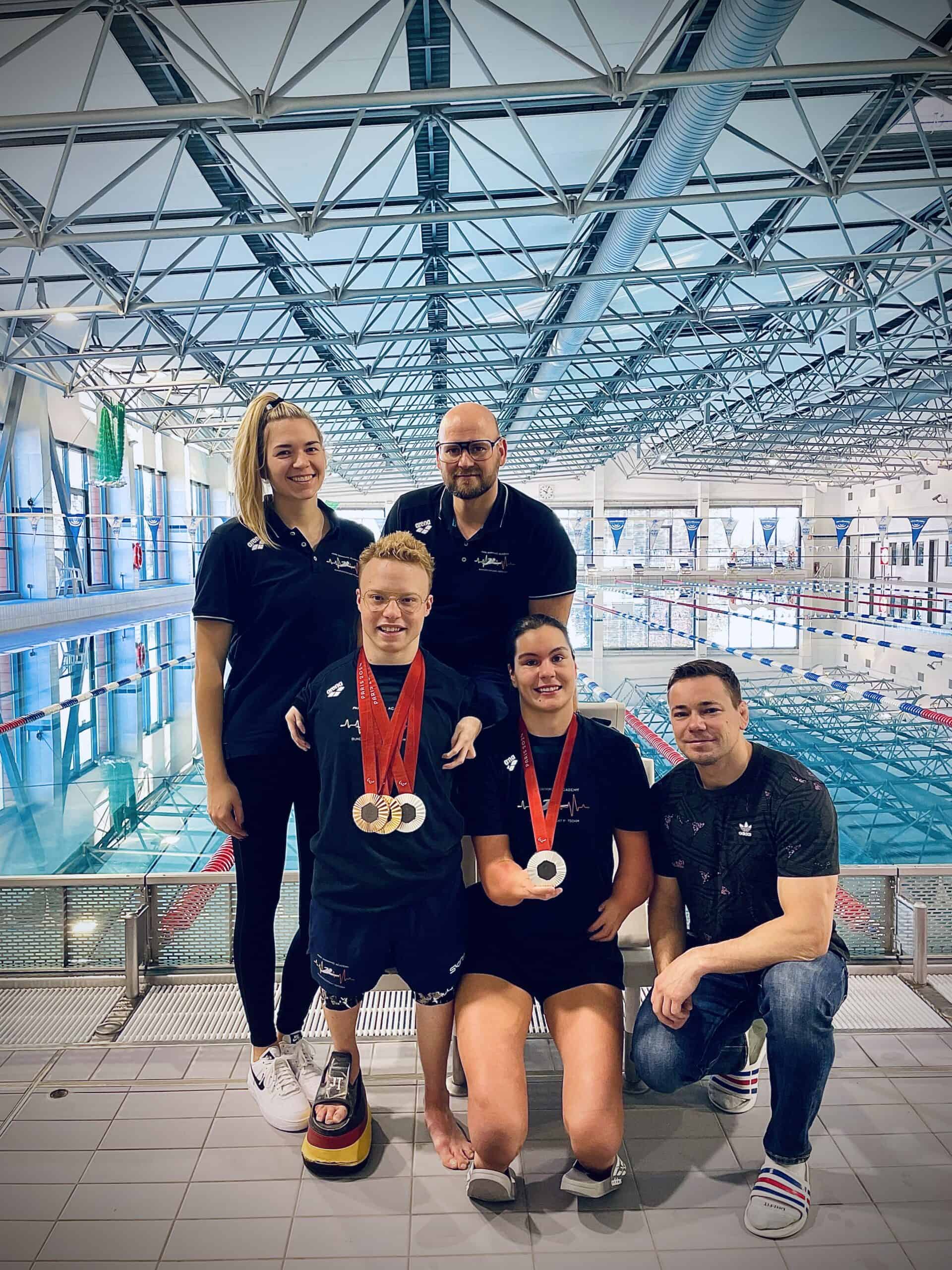
At the Para Swimming Academy in Potsdam, the German Paralympic Swim Team has been using VO2 Master to optimize athlete training.
Guided by Coach Maik Zeh, two exceptional athletes, Verena Schott and Gina Böttcher, have been harnessing portable metabolic analysis and in-depth data to refine their approach and enhance performance.
Here’s a closer look at how VO2 Master has played a role in their journey.
Verena Schott: A Multi-Stroke Talent with an Aerobic Edge
Verena is a three-time Paralympic bronze medalist from Tokyo 2021 and an 11-time world championship medalist.
Her versatility across backstroke, breaststroke, and individual medley events has earned her numerous international accolades.
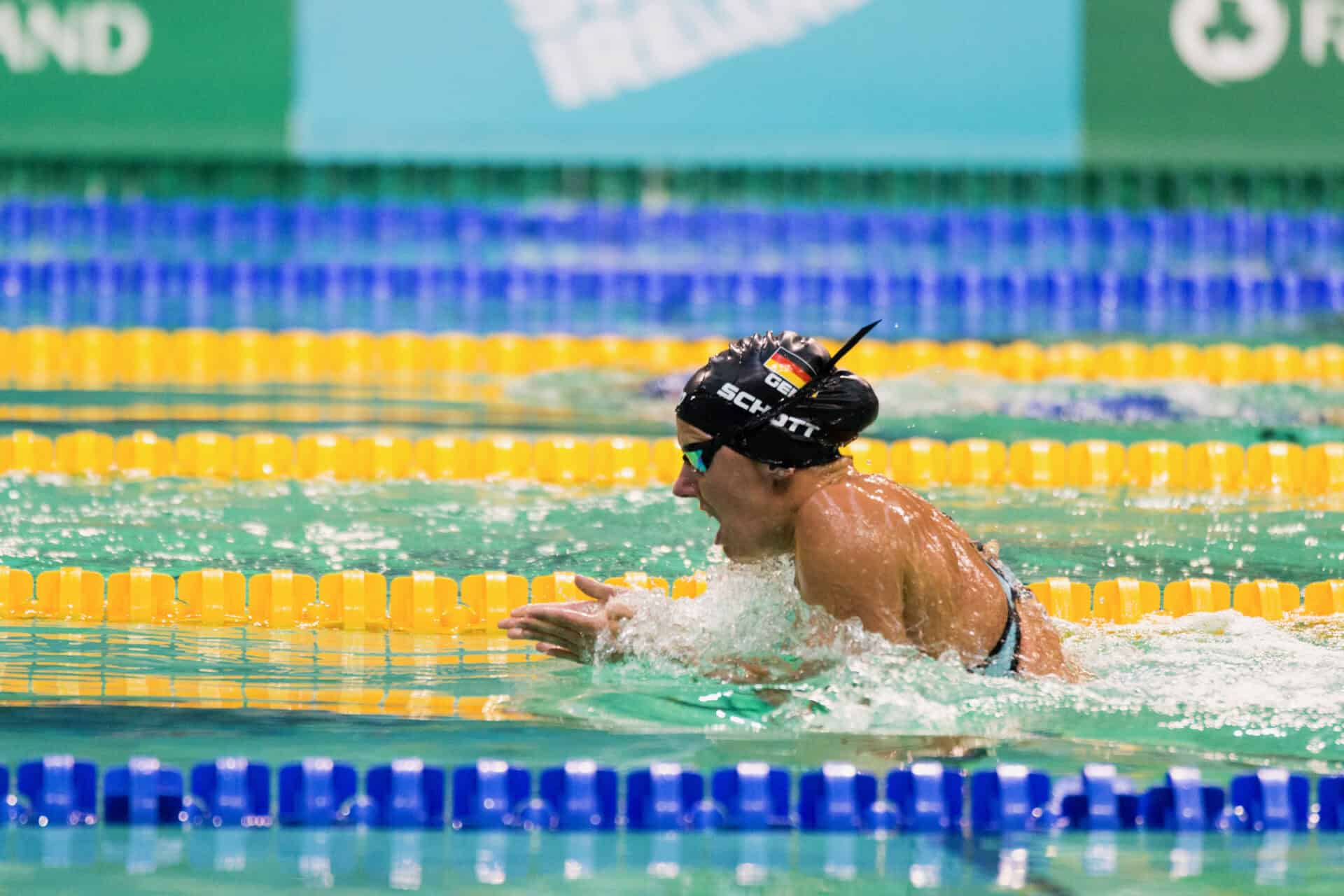
Despite facing incomplete paralysis due to a cycling accident at a young age, she continues to dominate in the pool.
This year, at the European Championships in April, Verena clinched two gold medals (100m breaststroke, 50m butterfly), one silver (200m individual medley), and one bronze medal (200m individual medley).
Challenges and Insights
At the Paris Paralympic Games, Verena placed 5th in the 100m breaststroke after limited preparation.
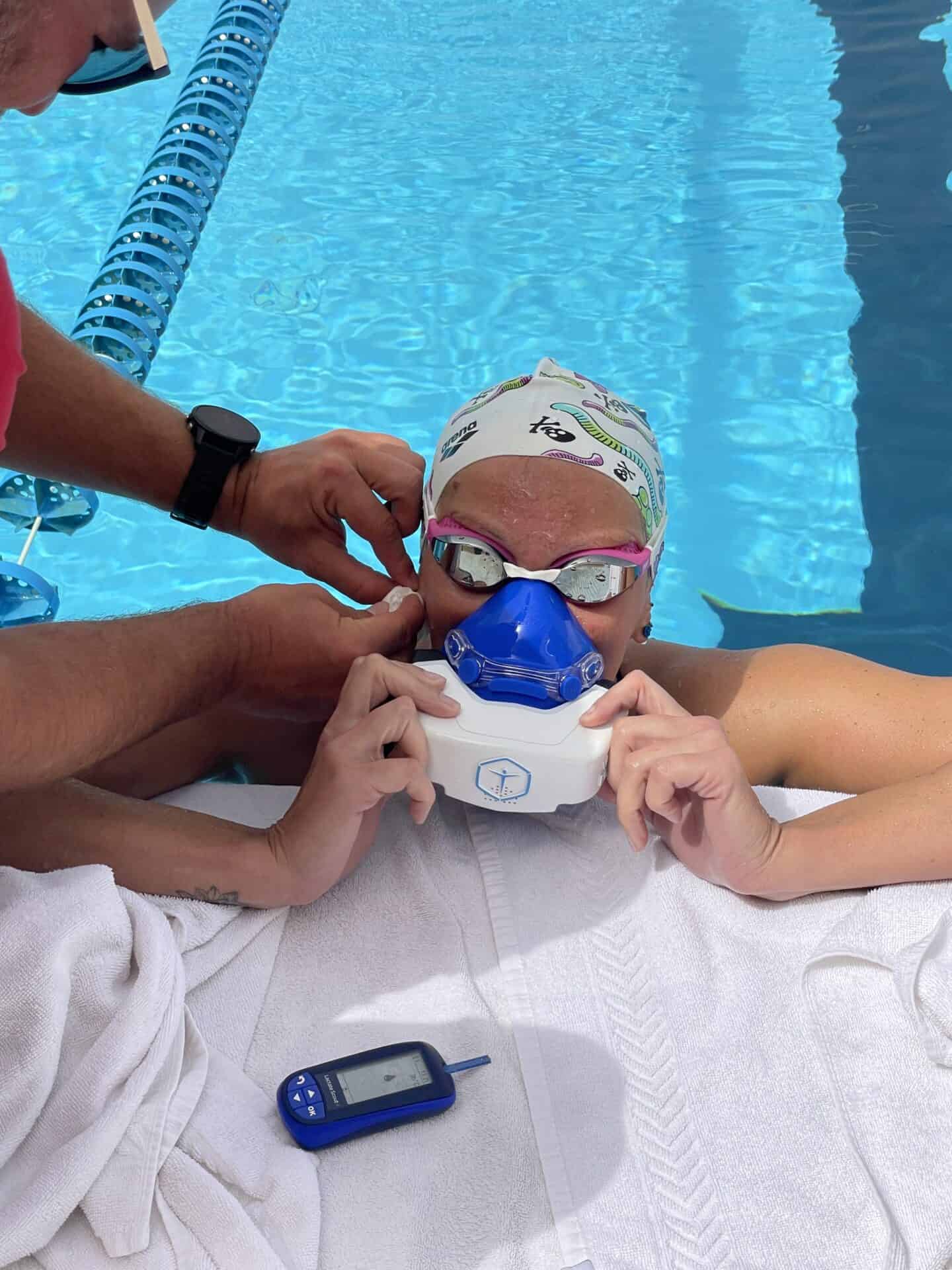
To better understand her fitness levels and optimize her training, Coach Maik and the team employed VO2 Master during two key sessions:
- Test 1: 8 x 200m backstroke step test followed by a 100m all-out effort
- Test 2: 3 x 4 x 50m race-pace backstroke
These tests measured VO2 levels, heart rate, and lactate multiple times throughout her training weeks.
The primary goal was to provide precise recommendations for her training intensity across various speeds and energy systems.
Findings and Adjustments
Verena’s aerobic capacity and endurance base are remarkable, making standard lactate-level guidelines less applicable to her unique physiology.
Her events range from the short, high-intensity 50m butterfly to the endurance-heavy 200m individual medley.
Each stroke and distance demands specific focus. By using VO2 Master, the team identified nuanced insights to tailor Verena’s training to her needs, improving her performance potential across all events.
Gina Böttcher: A Rising Star in Paralympic Swimming
Gina is a 2024 Paralympic silver medalist in the 50m backstroke and a three-time gold medalist at the 2024 European Championships.
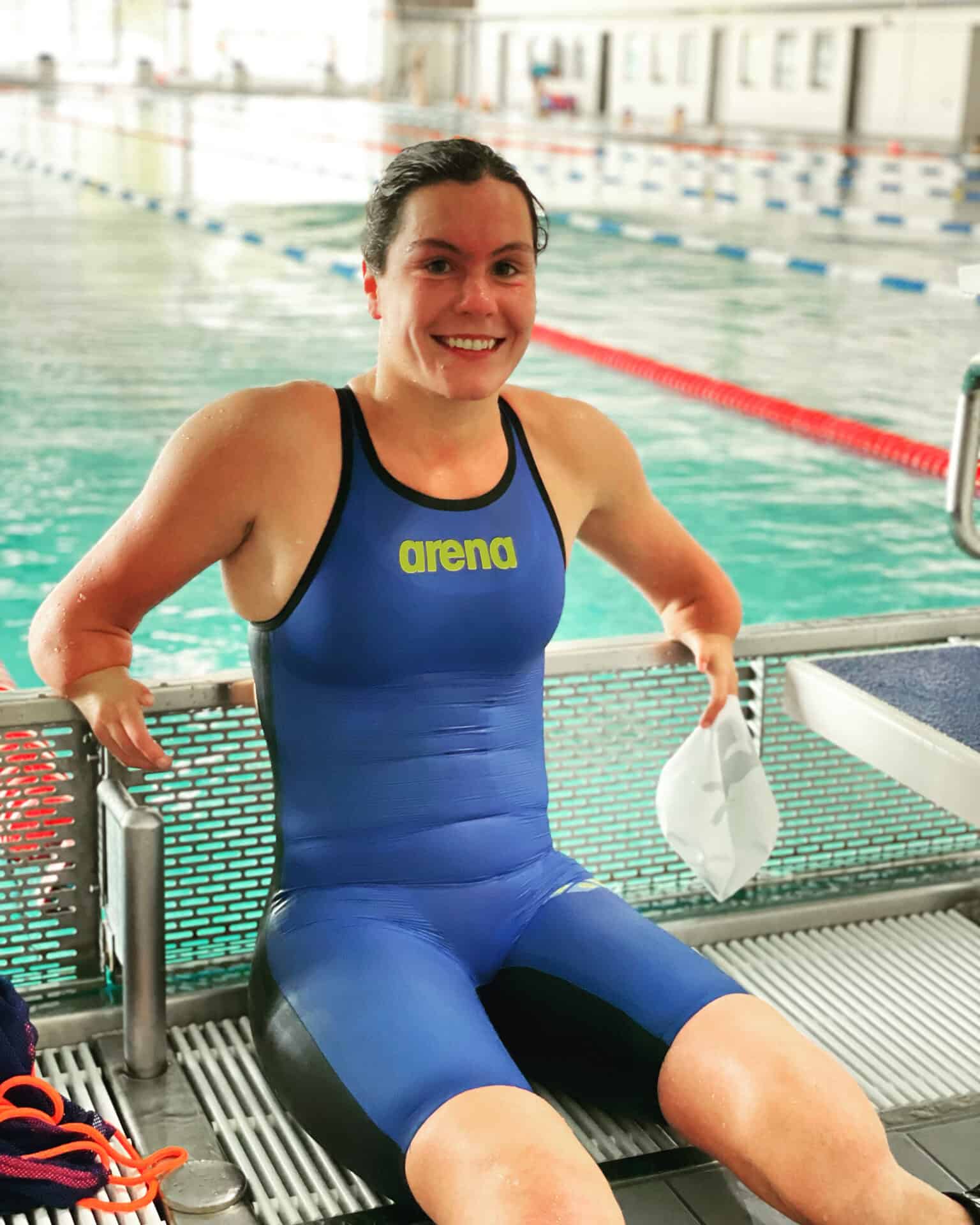
Born with a longitudinal malformation in all four extremities, Gina excels in events such as the 50m backstroke and 150m individual medley. Her unique classification excludes the butterfly lap in the 200m individual medley.
Using VO2 Master to Conduct Testing for Improvement
To assess her fitness and establish a foundation for future preparations, Gina underwent two focused testing sessions with VO2 Master:
- Session 1: Two 150m individual medley efforts (one sub-maximal and one maximal)
- Session 2: 3 x 50m for each stroke in her medley (backstroke, breaststroke, freestyle) with 30-second rests, measuring VO2
Impact and Progress
The key objective with these tests was to analyze the impact of each stroke on her overall performance, particularly her breaststroke, which was identified as an area for improvement.
Over five weeks of targeted training leading up to the Paralympic Games in Paris, Gina’s breaststroke split improved by 2%, and she shaved over two seconds off her total time from trials.
Despite narrowly missing a medal by just three tenths of a second, her progress showcased the effectiveness of the tailored approach.
By integrating VO2 Master into their training regimen, Verena and Gina achieved significant insights into their fitness and performance.
From enhancing stroke-specific training to fine-tuning energy systems, VO2 Master has proven to be an invaluable tool for optimizing Paralympic-level preparation.
For these athletes, it’s not just about competing—it’s about pushing boundaries and achieving their personal bests.
Photo credits © Signe Ungernand
Frequently Asked Questions
Why is metabolic assessment challenging for swimmers?
Swimming is one of the more difficult sports in which to collect metabolic data because the athlete’s breathing pattern, body position, stroke mechanics, turns, and interaction with the water all influence performance. Traditional laboratory tests on a treadmill or bike remove many of those sport-specific demands. For Para swimmers, the challenge is even greater because different impairments can change propulsion, body position, muscle recruitment, and breathing mechanics. That makes it especially valuable to assess athletes as close to their actual swimming environment as possible. Research in Paralympic swimmers supports this approach. One study found substantially higher VO2 peak values during pool-based testing than during arm-ergometer testing, suggesting that sport-specific field testing may provide a more representative picture of a swimmer’s aerobic capacity.
How can Paralympic swimmers be assessed safely and practically?
The protocol should be built around the individual athlete rather than forcing every swimmer into the same test. Coaches need to consider the athlete’s classification, mobility, preferred stroke, ability to transfer in and out of the pool, starting method, fatigue profile, and any assistance required.
A practical option is to incorporate metabolic measurements into controlled swim sets. The German Para Swimming program, for example, used stroke- and event-specific sessions such as an 8 × 200 m step test, race-pace 50 m repeats, and medley-specific efforts. This allowed metabolic information to be collected within training tasks already relevant to each swimmer.
What can direct metabolic measurement reveal for a Paralympic swim program?
Direct measurement of oxygen consumption gives coaches information that pace and heart rate alone cannot provide. It can show how much oxygen an athlete requires to sustain a particular swimming speed, how aerobic demand changes between strokes or intensities, and whether the athlete is becoming more economical at the same pace.
For a Para swimmer, this can be particularly useful because two athletes swimming at the same speed may achieve that performance through very different physiological and biomechanical strategies. Tracking VO2 alongside heart rate, breathing variables, lactate, pace, and stroke data can help distinguish whether improvement is coming from greater aerobic capacity, improved efficiency, better pacing, technical changes, or a combination of factors.
In the German program, testing was used to investigate stroke-specific demands and identify areas where targeted training could have the greatest impact.
How transferable are treadmill or cycle VO2 results to swimming?
They can provide useful information about general cardiorespiratory fitness, but they should not automatically be treated as equivalent to swimming performance.
Swimming recruits the body differently from running or cycling and introduces unique factors such as horizontal body position, water resistance, stroke technique, restricted breathing opportunities, and upper-body contribution. These differences can become even more pronounced for adaptive athletes.
In a study involving Paralympic swimmers, pool-derived VO₂ peak was significantly higher than VO₂ peak measured using an arm ergometer, with individual differences ranging from approximately 22% to 60%. That finding reinforces the value of measuring swimmers in the environment in which they actually compete.
How should breathing data be interpreted for adaptive swimmers?
Breathing data should be interpreted in the context of the individual athlete rather than compared blindly with population norms.
VO2 Master can measure respiratory frequency, tidal volume, and minute ventilation in addition to oxygen consumption. For adaptive swimmers, those variables may be influenced by impairment, stroke selection, trunk stability, respiratory muscle function, coordination, and the breathing restrictions inherent to swimming.
The most useful comparison is therefore often the athlete against themselves. Coaches can examine whether ventilation or breathing frequency changes at the same pace, whether a swimmer adopts a different ventilatory strategy as intensity rises, and whether those patterns change following training. Trends across repeated standardized tests are generally more actionable than comparing one swimmer’s breathing pattern with another athlete who has a very different impairment or classification.
How should protocols be adapted for different Paralympic athletes?
The overall testing framework can remain consistent while the exercise itself is individualized.
Distance, stroke, starting intensity, progression, recovery period, and maximal effort should reflect the athlete’s event demands and physical capabilities. A distance swimmer might benefit from progressively faster 200 m or 400 m repetitions, while a sprint swimmer may require shorter race-pace efforts. A medley swimmer may need each stroke examined independently to identify where physiological cost is greatest.
That individualized approach was evident in the German Para Swimming Team testing. Verena Schott completed an 8 × 200 m backstroke step test followed by an all-out effort and a separate race-pace session, whereas Gina Böttcher completed 150 m individual-medley efforts and stroke-specific 50 m repetitions.
The goal is not to make every athlete perform the identical workout. It is to standardize the conditions that matter so each athlete can be compared reliably with their own previous results.
How should a Paralympic swim-testing protocol be standardized?
Consistency is critical if the objective is to track change over time. Coaches should record and reproduce variables such as stroke, distance, target pace, recovery duration, pool length, warm-up, timing of metabolic measurement, equipment setup, calibration procedures, and where possible the athlete’s training and recovery status.
VO2 Master has also published a pool-testing approach in which swimmers complete controlled intervals and begin breathing into the Analyzer immediately after touching the wall. The time between wall touch and the first recorded breath is measured, and the post-exercise VO2 decline can then be used to estimate oxygen consumption at the end of the swim.
Whatever protocol a program selects, the most important principle for longitudinal testing is repeatability: use the same procedure each time so changes are more likely to reflect the athlete rather than changes in the test.
How can coaches use the results in swim training?
Metabolic data becomes valuable when it leads to a training decision. Coaches can use the results to help:
establish athlete-specific intensity zones and training targets;
compare physiological cost at different swimming speeds;
evaluate stroke-specific efficiency;
identify intensities where oxygen demand or ventilation rises sharply;
assess whether technical changes reduce the metabolic cost of a given pace;
monitor the effectiveness of a training block; and
combine VO2 with pace, heart rate, lactate, and technical metrics to build a more complete athlete profile.
For example, the German team used Gina Böttcher’s testing to investigate the physiological demands of the different strokes in her individual medley and identify breaststroke as an important area for improvement. Following five weeks of targeted preparation, her breaststroke split improved by approximately 2%, contributing to a more than two-second improvement from trials.
When should Paralympic swimmers be reassessed?
There is no single reassessment interval that is appropriate for every swimmer. Testing should be frequent enough to influence training decisions but not so frequent that testing itself interferes with preparation.
Useful checkpoints can include the beginning of a training block to establish a baseline, after a meaningful period of targeted training, during preparation for a major competition, and following significant changes in technique, training status, injury, or rehabilitation.
For many programs, repeating the same standardized assessment every several weeks during key training phases can provide more useful information than conducting isolated tests once or twice per year. The priority is to compare equivalent conditions and look for meaningful longitudinal trends rather than reacting to small changes from a single session.
How does VO2 Master fit into a Paralympic swim-testing workflow?
VO2 Master gives coaches and sport scientists a portable way to bring metabolic assessment closer to the athlete’s actual training environment. Rather than moving every athlete into a traditional exercise physiology laboratory, the analyzer can be used poolside as part of a broader testing system.
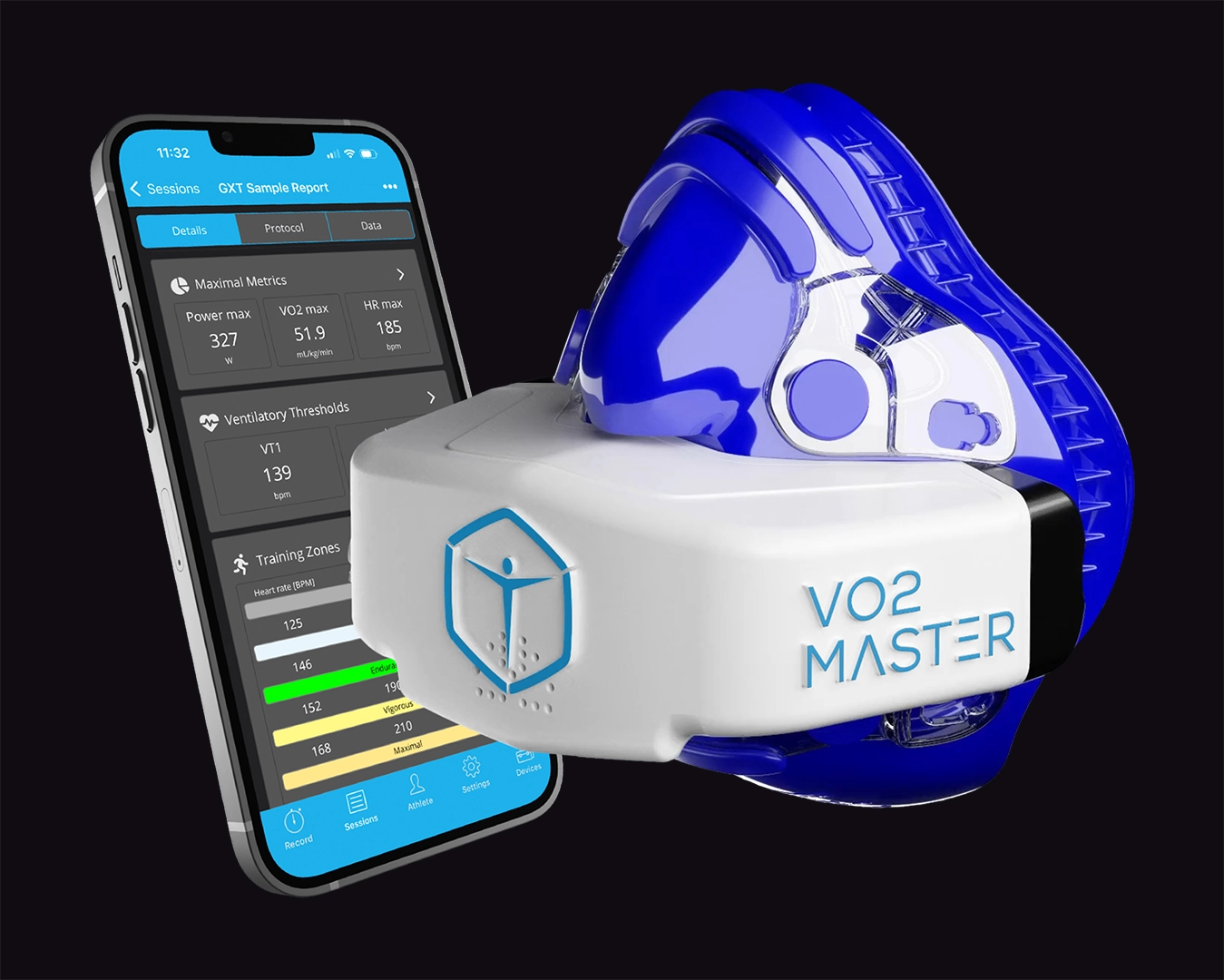
The current VO2 Master Analyzer provides VO2, ventilation, tidal volume, respiratory frequency, heart rate when paired with a compatible monitor, and access to raw data for further analysis.
In swimming, it can be combined with pace, lactate, heart rate, stroke metrics, and coach observations. The German Para Swimming Team demonstrates the value of that approach: metabolic testing was not treated as a standalone VO2 max number, but as another layer of information used to understand individual athletes, evaluate stroke-specific demands, and guide targeted training.