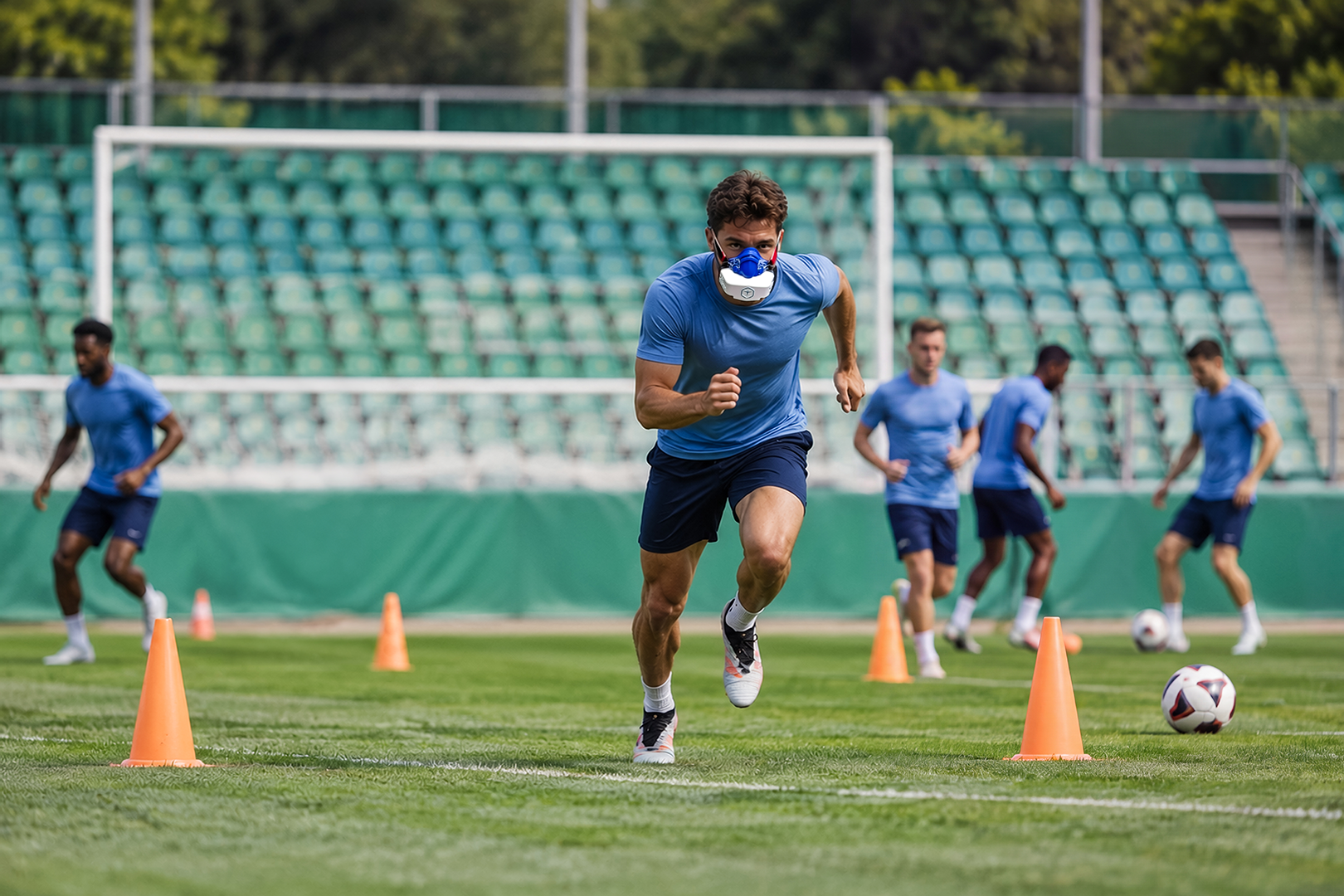
Learn how professional teams, universities, performance centers and tactical programs can build a practical high-throughput VO2 testing workflow for large groups without sacrificing testing consistency or data quality.
High-throughput VO2 testing is not simply a matter of running athletes through an analyzer as quickly as possible. Successful team testing requires advance planning around roster size, test duration, analyzer availability, staffing, calibration, athlete handoffs, sanitation and reporting so that efficiency does not come at the expense of consistency.
Table of Contents
Why Team VO2 Testing Requires Capacity Planning
Testing one athlete is a physiological assessment. Testing 20, 40 or 80 athletes becomes an operational process that needs to be planned.
For coaches and performance directors, the question is therefore not simply, “Can we perform VO2 Max testing?”
A better question is:
How can we collect useful metabolic data across the athletes we need to test, with the time, staff and equipment available?
That is the basis of high-throughput VO2 testing.
Portable metabolic analyzers have expanded where testing can take place. The VO2 Master analyzer allows teams to collect respiratory data in the gym, on a treadmill or cycle ergometer, on a track and in other indoor or outdoor training environments without requiring athletes to be tethered to a traditional metabolic cart.
But portability alone does not solve the planning involved in squad testing.
A full-squad program requires a defined protocol, realistic testing windows, prepared equipment, trained staff and a plan for moving athletes through the process. These factors become even more important as the number of athletes increases.
Start with the Purpose of Testing
Before calculating how many athletes can be assessed in a day, determine what information the coaching or performance team actually needs.
Are you ranking, monitoring or prescribing?
Team testing can serve several purposes:
- Establish preseason aerobic fitness baselines
- Identify individualized training zones
- Monitor changes across a season
- Compare positional or training groups
- Evaluate responses to conditioning programs
- Support return-to-performance decisions post-injury
- Collect data for research or education
- Recruitment assessments
The NSCA recommends considering whether a test contributes to ranking, monitoring or prescription, ideally serving at least two of those purposes.
That distinction matters.
If the objective is detailed individual exercise prescription, direct metabolic testing across the roster may be appropriate. If the objective is broader screening or research, a team may choose a different approach, including testing a representative subgroup.
Do not start with the question, “How many athletes can we test?” Start with, “What decisions will this data help us make?”
How to Plan High-Throughput VO2 Testing Capacity
Daily testing capacity depends on the protocol, athlete population, warm-up, calibration procedures, sanitation, staff experience and operating conditions.
A practical capacity model is:
Available testing time ÷ total athlete cycle time = theoretical daily capacity
But “total athlete cycle time” should include more than the exercise portion of the assessment.
Account for the complete athlete cycle
For your schedule consider:
- Athlete check-in and preparation
- Mask fitting
- Heart rate or additional sensor setup
- Analyzer preparation and calibration
- Warm-up
- The assessment itself: VO2 Max, RMR
- Cool-down or athlete exit
- Equipment handoff
- Cleaning and sanitation
- Data confirmation and athlete naming
- Contingency time
For a VO2 Master Graded Exercise Test, for example, the practitioner determines the warm-up, starting intensity, stage duration, increases in speed or wattage and cool-down according to the athlete and protocol. VO2 Master recommends a calibration check before testing, with the documented calibration process taking approximately four to five minutes.
Build buffer time into the schedule
Athletes arrive late. Heart rate straps occasionally need adjustment. A mask may need to be refitted. A schedule operating at 100 percent theoretical capacity has no room for normal test-day variability.
Plan around a realistic operational capacity rather than the mathematical maximum.
One Analyzer or Multiple Analyzers?
Analyzer quantity is one of the most important decisions in VO2 testing capacity planning.
The right testing model depends on roster size, testing frequency, available staff and how quickly results are required.
| Testing Model | Best Suited For | Key Consideration |
| One analyzer, one testing station | Smaller groups or flexible testing schedules | Tests can be distributed across multiple sessions or days |
| One analyzer, multiple testing days | Larger rosters without a one-day deadline | Reduces equipment requirements but extends the testing window |
| Multiple analyzers, parallel stations | High-throughput team VO2 testing | Requires sufficient trained staff and duplicate testing infrastructure |
| Position or training-group testing | Teams that do not need the full roster tested simultaneously | Allows testing to be integrated into the training calendar |
| Representative subgroup | Research, pilot projects or selected performance questions | Results should not automatically be generalized to athletes who were not tested |
When does adding another analyzer make sense?
The operational benefit of additional analyzers is the ability to create parallel testing lanes.
If an organization has two analyzers but only one treadmill, one trained practitioner or one suitable testing area, throughput may still be constrained.
Think of capacity as a system:
Analyzers + exercise equipment + staff + space + protocol + sanitation + reporting = testing capacity.
That framework helps organizations avoid purchasing decisions based only on analyzer count.
Planning metabolic testing for a team or performance program?
Shop VO2 Master or Book a Demo to discuss the analyzer and workflow that best matches your roster and testing objectives.
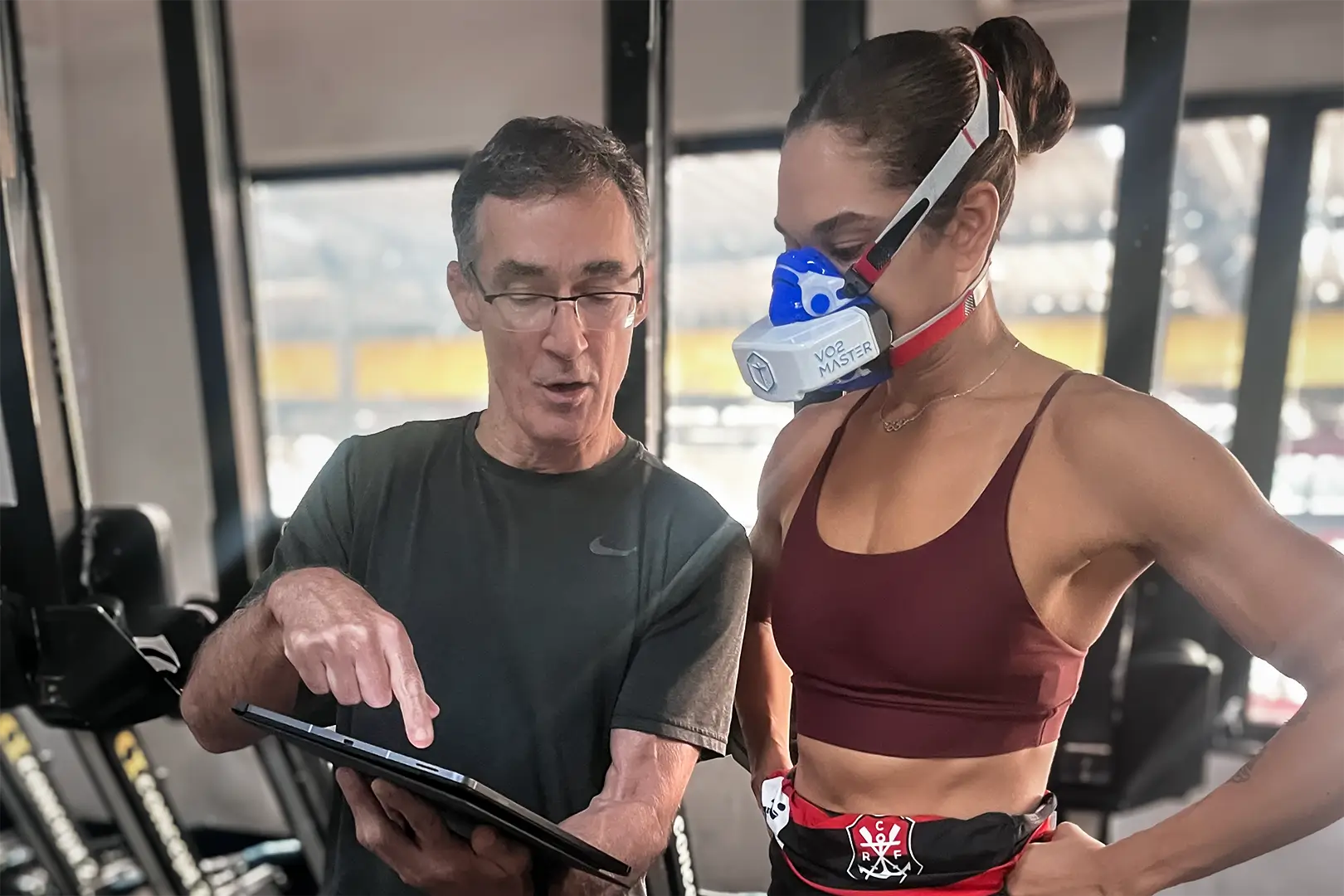
Build an Efficient Testing Station
An efficient testing day should feel a lot like a well-designed training circuit.
Create defined stations
Depending on staff and equipment, a team could establish:
Station A: Check-in and preparation
Confirm athlete identification, readiness and required pre-test information.
Station B: Mask sizing, fitting and equipment preparation
Select the correct mask size, prepare heart rate or other sensors and perform calibration.
Station C: Testing
Conduct the standardized assessment protocol in the app.
Station D: Data confirmation
Verify athlete name, test information and successful report generation before moving on.
Station E: Athlete exit and equipment handoff
Remove equipment and direct used components into the established cleaning area.
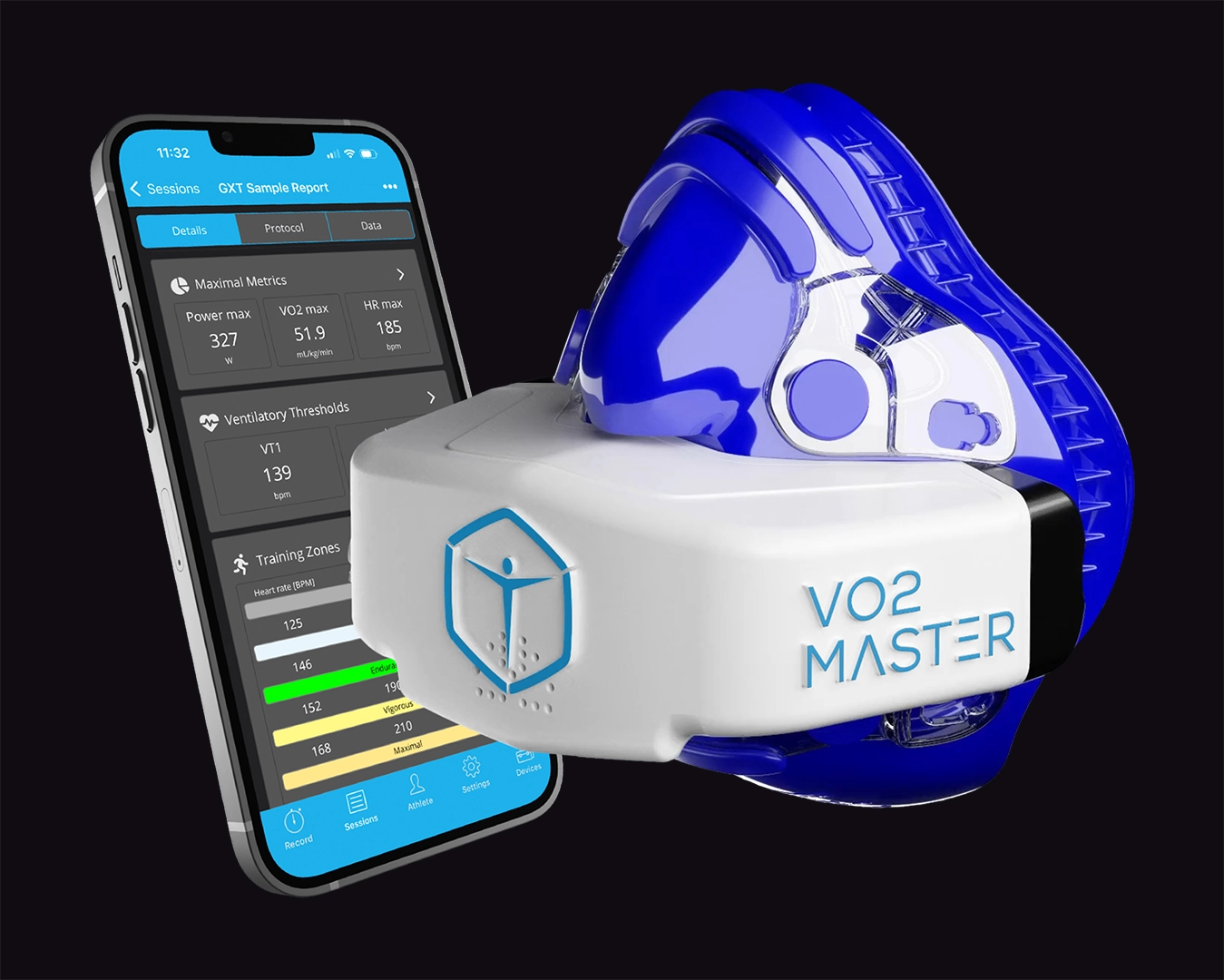
VO2 Master’s mobile workflow guides users through connection, calibration and protocol selection. During testing, live respiratory data can be monitored on the connected device, and a report is generated when the assessment ends.
Separating these tasks helps prevent the person conducting the assessment from becoming responsible for every operational step.
Standardize Your Team VO2 Testing Protocol
Increasing throughput is of little value if every athlete completes a different assessment.
Consistency matters when coaches intend to compare athletes or track changes over time.
Standardize what you can
Create an SOP covering:
- Pre-test instructions
- Time of testing where practical
- Warm-up procedure
- Exercise modality
- Starting workload
- Stage duration
- Workload progression
- Test termination criteria
- Coaching and encouragement
- Environmental conditions
- Equipment calibration
- Data naming
- Reporting procedure
The NSCA Essentials of Strength and Conditioning textbook specifically identifies equipment calibration, consistent testing conditions, standardized warm-ups, consistent test order and tester competency among factors that improve reliability in athlete testing.
For preseason VO2 testing, document the protocol so it can be repeated when athletes return for mid-season or post-season assessments.
Standardized does not mean identical
A 300-pound lineman and a 150-pound endurance athlete may not require the same starting workload or progression.
Standardization means creating clearly defined procedures that can be consistently applied to the appropriate athlete or position group.
VO2 Master allows practitioners to select guided assessment protocols or build custom protocols according to their testing requirements.
Plan Staffing Before Test Day
In many squad fitness testing programs, staff capacity becomes the bottleneck before analyzer capacity.
Define responsibilities before the day arrives, ensure appropriate training and practice has occurred beforehand so everyone is prepared and ready to go on test day.
Testing lead
The testing lead owns the protocol, quality control and final decision-making.
Equipment and athlete preparation
The lead or a second staff member can prepare athletes, fit masks and heart rate monitors, and ensure the next athlete is ready.
Data and reporting lead
For larger testing days, assigning someone to athlete identification, report verification and data organization can reduce administrative work for the practitioner conducting tests.
Sanitation support
When many athletes are being assessed, cleaning and equipment turnaround should be treated as part of the workflow, not something to figure out between tests.
For smaller groups, one practitioner can perform several of these functions and in many cases, all of them.
For a multi-station multi-athlete metabolic testing day, separating responsibilities can significantly improve flow.
Note each analyzer requires 30 minutes of downtime after 60 minutes max use to successfully manage the humidity in the analyzer.
Session Duration and Downtime
Maximum testing duration: 1 hour
Minimum downtime between sessions: 30 Minutes
Maximum sessions per day: 8 with downtime
Filter change time: every session, or 1 hour
Team VO2 Testing Example Capacity Planner
| Athlete setup time | 5 min | Mask fitting, HR monitor, preparation |
| Calibration/preparation allowance | 5 min | Enter according to actual workflow |
| Athlete testing | 15-20 min | Warm up and testing stages |
| Athlete report | 5 min | Share test results with athlete if desired |
| Athlete exit/handoff | 3 min | Remove equipment and move athlete out |
| Sanitation/turnaround time | 5 min | Cleaning and preparing next setup |
| Buffer allowance | 10% | Delays, refitting, technical issues |
Athlete Cycle Time ~ 45 minutes
Manage Athlete Handoffs and Equipment Cleaning
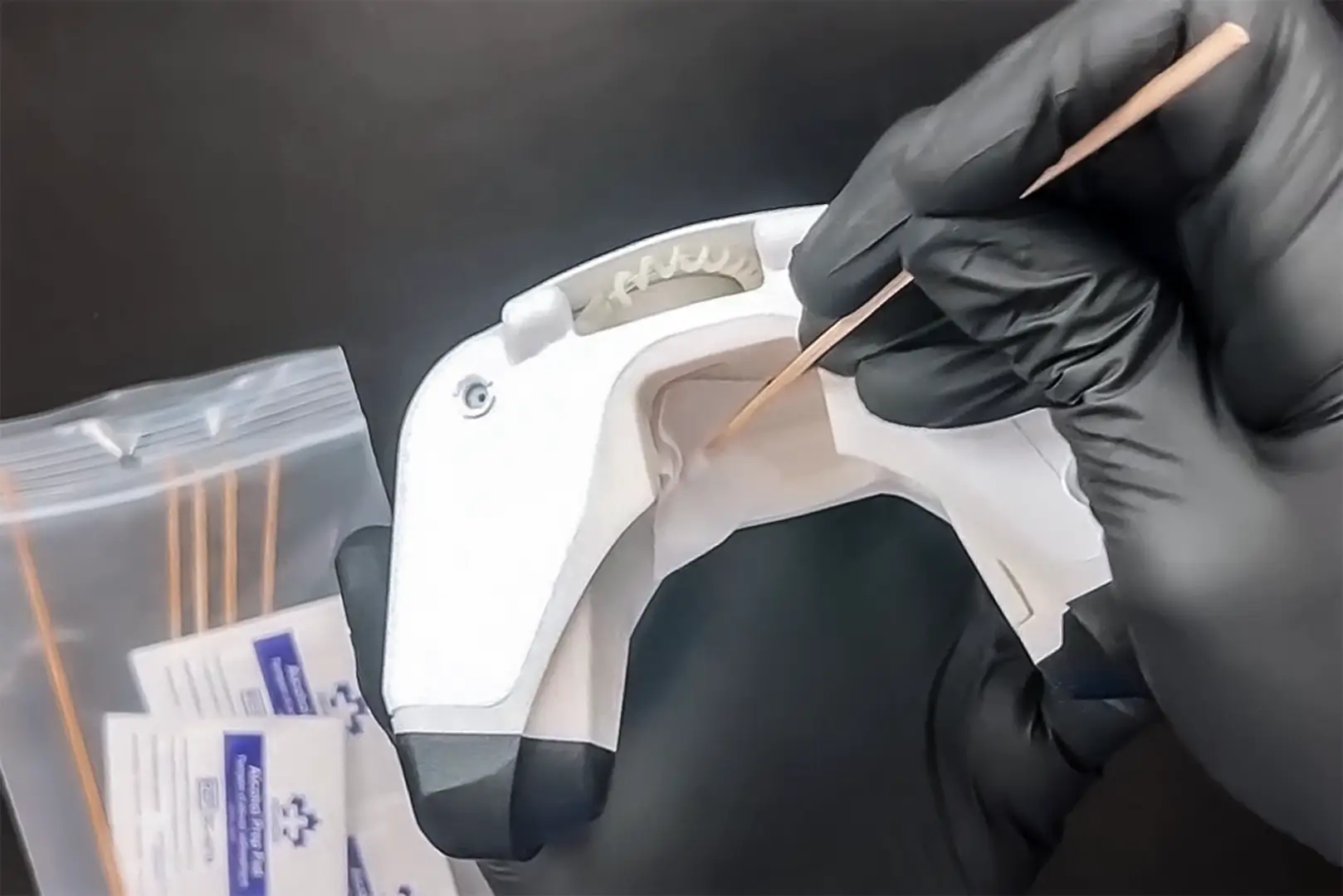
While only a few minutes is required, cleaning time needs to be included in capacity planning.
VO2 Master guidance requires the mask and headgear to be washed after use, while the analyzer itself is cleaned separately and is not washed in water. The headgear needs to dry and hanging the straps works well.
For a busy testing environment, consider maintaining enough appropriate masks and accessories to prevent sanitation from becoming the limiting step in the workflow.
Use a clean-to-used equipment flow
A simple layout can help:
Cleaned equipment → athlete setup → assessment → used equipment → cleaning →
Avoid mixing clean and used components.
Organizations should follow current VO2 Master product documentation when developing sanitation procedures.
Build Reporting into the Workflow
A successful team testing day does not end when the final athlete removes the mask.
You still need to make the data useful.
Establish a naming convention before testing
For example:
Team_AthleteID_Date_TestType
A consistent naming system becomes increasingly important when dozens of tests are collected across multiple dates or analyzers and even more so if repeat testing is planned for the future.
Decide what coaches actually need
A head coach may not need every breath-by-breath variable.
A sport scientist may.
Build reporting around the audience and intended decisions.
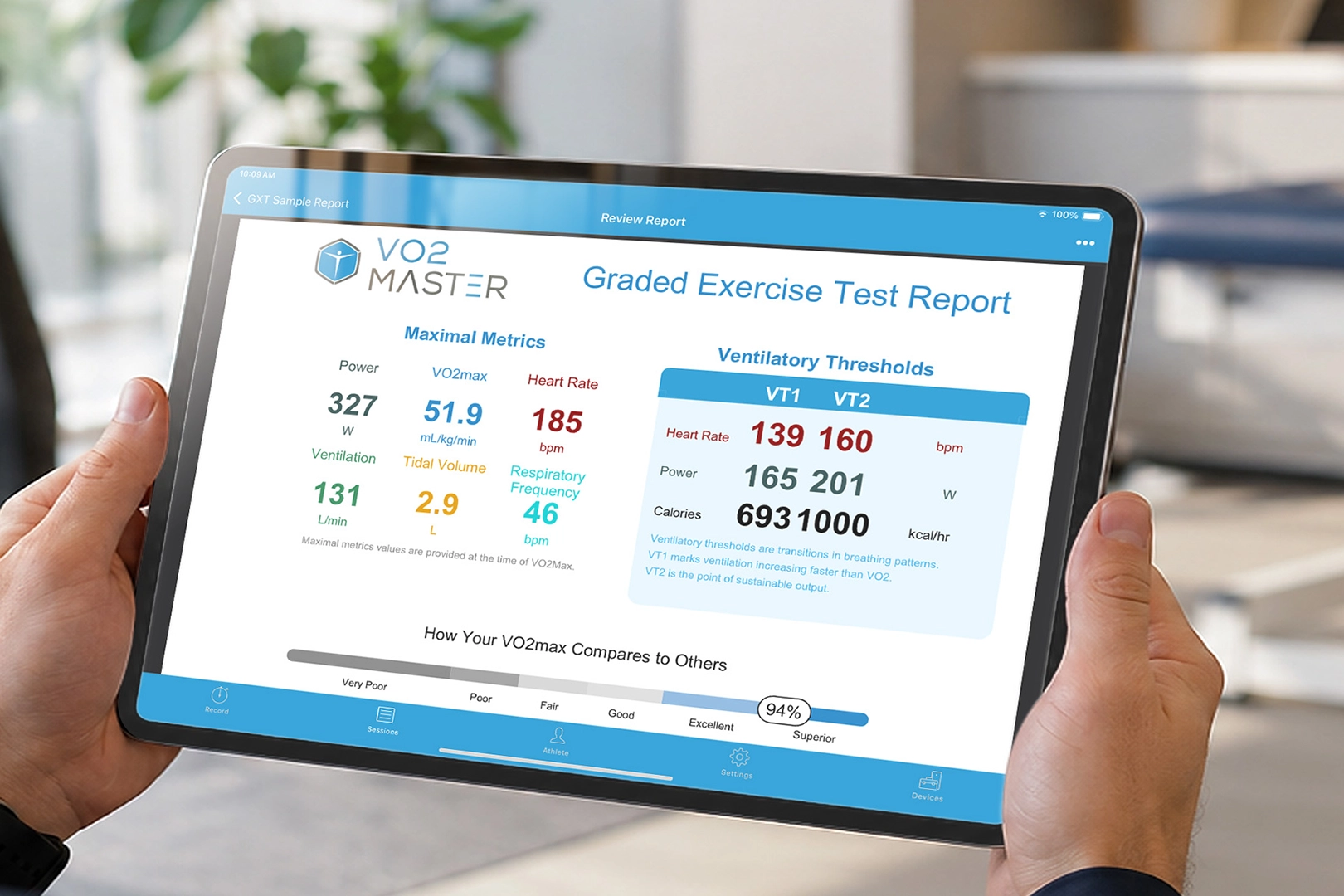
VO2 Master provides live measurements including VO2, ventilation, heart rate, tidal volume and respiratory frequency, with reporting available after the assessment and raw data accessible when required.
For larger datasets, VO2 Master also supports data table formats and mass file exports for further analysis.
Create the report before you create the test
Ask three questions during planning:
- Which metrics will we use?
- Who needs the results?
- What decision will each metric support?
This prevents teams from collecting large amounts of data without a clear plan for using it.
When a Full-Squad VO2 Max Test is not Practical
Sometimes the better operational decision is not aiming to do all the testing in one or two days.
Spread testing across several days
If the training calendar allows it, divide the roster by position, training group or schedule.
This can reduce staffing pressure and make the athlete experience less rushed.
Integrate testing into normal training
Portable equipment can allow teams to bring assessment closer to the athlete’s normal environment rather than moving every athlete through a dedicated laboratory.
Testing athletes in a modality that resembles their sport can also strengthen ecological validity, which is described as how well a test matches the athlete’s real sporting context.
Test representative groups when appropriate
Not every question requires metabolic data from every athlete.
A university research project, tactical program or performance department may determine that a carefully selected subgroup is sufficient for a particular objective.
That decision should be based on the purpose of the assessment, not simply convenience.
Use multiple analyzers when the business case supports it
If an organization repeatedly needs large rosters tested within short windows, parallel testing stations can become the more efficient model.
The question then becomes more about optimizing the testing process and acting on the results.
Build a Repeatable Testing System, Not Just a Testing Day
The greatest value of team metabolic testing may not come from a single preseason assessment.
It comes from creating a process that can be repeated.
Baseline → train → reassess → compare → adjust
When the same testing principles are applied across a season, practitioners can evaluate individual and group changes against established baselines.
This is also why documentation matters. The VO2 Master Manager App will store all the key athlete data but is important for the Lead to create an SOP for the staff.
Keep a testing SOP that records:
- Protocol to be used in the app
- Exercise modality
- Equipment configuration
- Athlete preparation instructions
- Staff roles
- Testing order
- Environmental considerations
- Calibration process, also shown in the app
- Sanitation workflow
- File naming convention
- Metrics reported
When the next testing block arrives, the steps are clear and concise.
Conclusion: Plan Capacity Around the Decision You Need to Make
High-throughput VO2 testing is possible, but high throughput should never mean rushing athletes through assessments or compromising protocol consistency.
Start with the performance question. Determine which athletes need to be tested, choose the appropriate protocol, calculate the complete athlete cycle time and identify the true bottleneck in your workflow.
For some organizations, the best solution will be one analyzer used across several days. For others, it will be multiple parallel testing stations. Some programs may only need selected position groups or representative athletes.
The better goal is a testing system that is repeatable, practical and appropriate for the organization’s performance objectives.
Building a team VO2 testing program?
Shop VO2 Master or Book a Demo to determine the analyzer, accessory and workflow configuration that fits your roster, staff and testing schedule.
Frequently Asked Questions
How do teams calculate VO2 testing capacity for a full squad?
Teams can estimate capacity by dividing the available testing window by the full athlete cycle time. That cycle should include check-in, mask fitting, sensor setup, warm-up, calibration or preparation, testing, cool-down, sanitation, data confirmation and reporting. The goal is not maximum speed. It is a repeatable workflow that protects data quality across the roster.
What should be included in athlete cycle time during team VO2 testing?
Athlete cycle time should include every step from arrival to report confirmation. Plan for check-in, athlete preparation, mask fitting, heart-rate or sensor setup, analyzer preparation, warm-up, the assessment itself, cool-down, equipment handoff, cleaning, file naming and buffer time. This gives a more realistic capacity estimate than only counting the exercise test.
How many athletes can one VO2 analyzer test in a day?
There is no single number because capacity depends on protocol length, staff experience, athlete readiness, sanitation flow, exercise equipment and required analyzer downtime. A team should build a schedule from the full athlete cycle time, then add buffer time. This prevents overbooking and helps maintain consistent testing quality across the day.
When should a team use multiple VO2 analyzers?
Multiple analyzers make sense when a team repeatedly needs to test large rosters in short windows and has enough staff, space, exercise equipment and cleaning support to run parallel testing stations. If those pieces are missing, another analyzer may not increase real throughput because the bottleneck may be workflow, not hardware.
What staff roles are needed for high-throughput VO2 testing?
A high-throughput testing day usually needs a testing lead, athlete-preparation support, data or reporting support and sanitation support. Smaller groups may use one practitioner for several responsibilities, but larger rosters benefit from separating roles. This keeps the practitioner conducting the assessment focused on protocol quality instead of every operational step.
How should teams manage mask fitting and sanitation between athletes?
Teams should treat mask fitting and sanitation as part of the planned workflow, not as an afterthought between tests. Prepare mask sizes, organize clean and used equipment separately, and assign a clear cleaning process before the day starts. If sanitation becomes the slowest step, testing capacity will drop even if the analyzer is available.
How can teams standardize VO2 testing across different positions?
Standardization does not mean every athlete needs the exact same workload. Teams can standardize pre-test instructions, warm-up structure, exercise modality, stage progression rules, calibration process, termination criteria, coaching language and reporting. Starting intensity or progression can still be adjusted for different position groups when the protocol is documented clearly.
What reporting workflow should teams set up before testing?
Teams should decide which metrics will be reported, who needs the results and what decision each metric will support before testing starts. A clear naming convention and reporting process help prevent data confusion when dozens of athletes are tested across multiple sessions, analyzers or dates. The report should support coaching decisions, not just store data.