Dynamic metabolic testing is reshaping how elite athletes and tactical professionals are evaluated, trained, and supported.
APS webinar insights show that measuring physiology during real performance—not just in the lab—leads to more accurate, actionable training decisions.
Table of Contents
Why Dynamic Metabolic Testing Matters
For decades, metabolic testing has prioritized precision under tightly controlled laboratory conditions. While lab-based metabolic carts are commonly used for validation and clinical diagnostics, they often lack ecological validity, particularly for elite athletes and tactical populations whose performance environments are task-specific and high stress.
During the APS webinar, Eva Piatriková, PhD and Mark Edward Jones PhD (c) emphasized a critical point: physiological data only becomes valuable when it directly informs recruitment, training, recovery, and readiness decisions.
Dynamic metabolic testing—enabled by portable systems—allows practitioners to measure oxygen consumption, ventilation, and energy expenditure during real movement, closing the gap between science and application.
VO2 as an Integrated Performance System
VO2 max is frequently treated as a standalone performance marker, but the webinar speakers reframed it as an integrated systems metric reflecting the combined capacity of:
- Pulmonary ventilation
- Cardiovascular oxygen delivery
- Muscular oxygen utilization
In elite and tactical settings, this integration determines how quickly fatigue accumulates and how sustainably performance can be repeated. Two individuals may achieve identical field-test outcomes while operating at very different relative intensities—a difference that dynamic metabolic testing makes visible.
“VO2 Master allows me to measure real physiology in real environments, without disrupting technique—finally bridging the gap between scientific testing and practical training decisions.”
Dr. Eva Piatriková, PhD
Exercise Physiologist & Performance Scientist (Applied Sport & Swimming)
Recovery Kinetics Under Repeated Stress
Why fixed rest intervals fail athletes
Group-based training often assumes uniform recovery needs. Portable metabolic testing consistently shows this is false.
Athletes with slower VO2 recovery:
- Accumulate fatigue earlier
- Drift into unintended aerobic zones
- Miss the intended stimulus of “speed” or “power” sessions
By adjusting rest intervals based on real recovery kinetics, physiologists can preserve session intent and improve training quality.
Why recovery defines performance
In both sport and tactical contexts, success depends on repeatability under incomplete recovery. Dynamic metabolic testing enables assessment of:
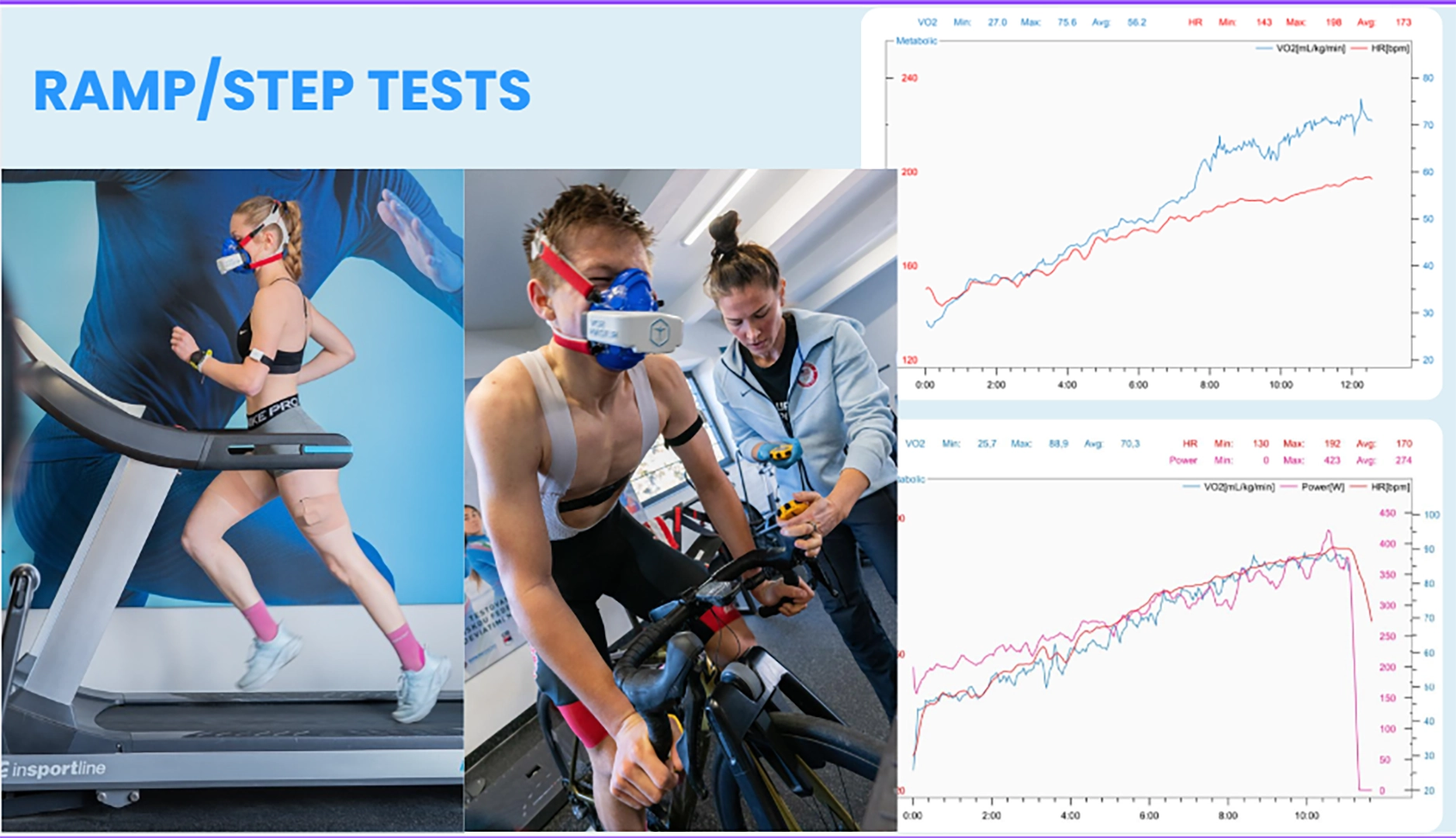
- VO2 on-kinetics (rate of oxygen uptake increase)
- VO2 off-kinetics (rate of recovery toward baseline)
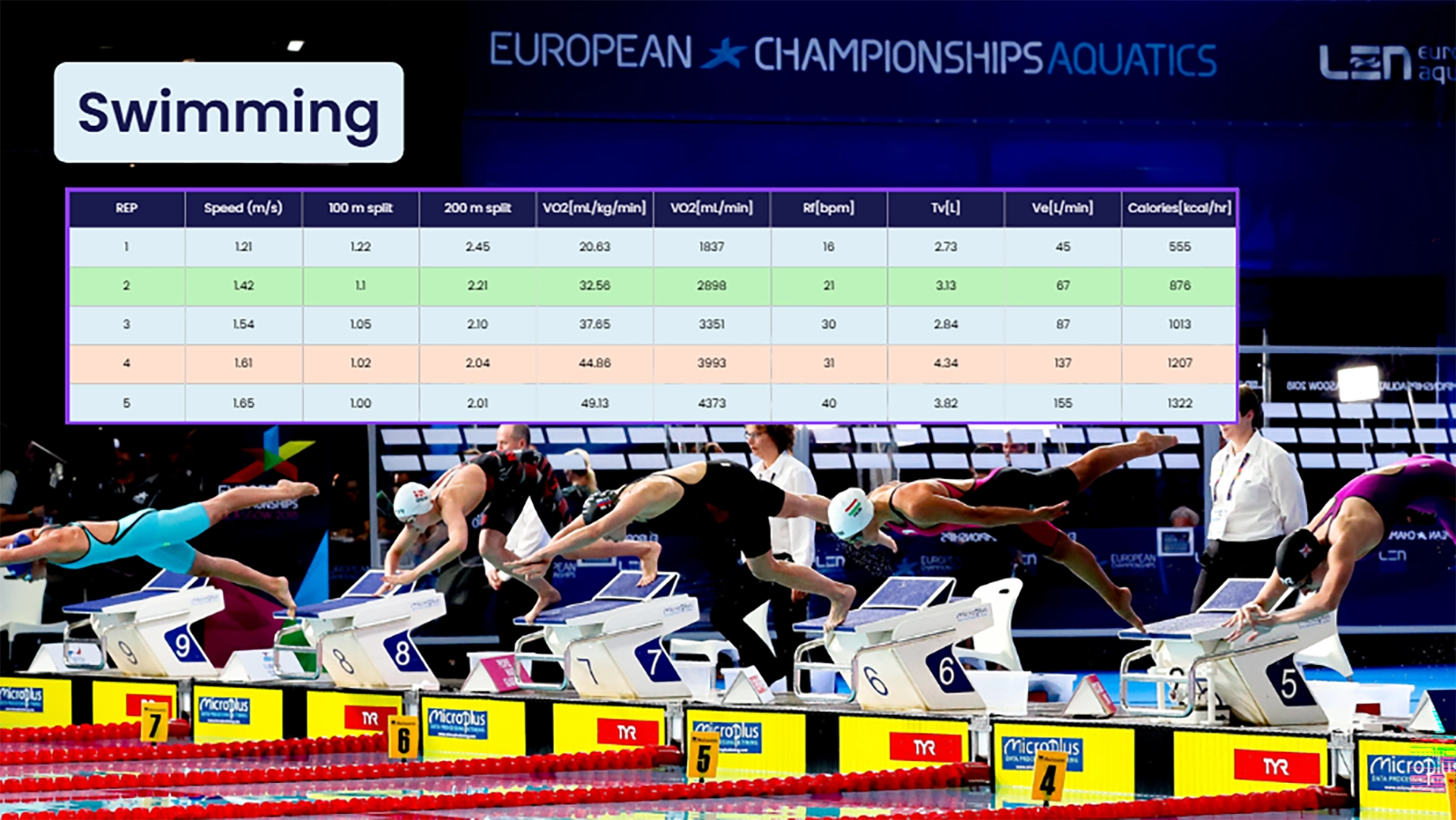
Eva Piatriková shared applied examples in swimming and team sports where recovery kinetics were used to individualize rest intervals, preventing unintended aerobic drift during speed-focused sessions.
This approach improves session quality while reducing unnecessary fatigue accumulation—particularly in mixed-ability training groups.
“Portable metabolic testing lets us individualize recovery, technique, and fueling based on how an athlete actually responds—not assumptions or fixed rest intervals.”
Dr. Eva Piatriková, PhD
Explore how to provide professional metabolic testing in real training environments with a VO2 Master demo – Check Availability
Movement Economy Reveals Hidden Performance Levers
Sport and movement specific economy testing
One of the most powerful applications of portable metabolic testing is movement economy analysis—how much oxygen is required at a given pace or workload.
Examples highlighted:
- Swimming economy per 100 m
- Team sport shuttle tests
- Load carriage in tactical populations
- Shoes and equipment comparisons
These insights allow coaches, physiologists and tactical leads to validate technical changes with precision.
Breathing mechanics and oxygen cost
Contrary to common belief, many elite athletes demonstrate inefficient breathing patterns, even in sports like swimming.
Portable metabolic testing enables:
- Breath-by-breath analysis
- Respiratory frequency and tidal volume tracking
- Integration with muscle oxygenation (SmO₂) sensors
Correcting breathing mechanics alone can reduce oxygen cost and improve efficiency—without changing fitness.
Military Readiness
Mark Jones, PhD (c) emphasized that VO2 max should be viewed not as a standalone performance score but as an integrated marker of cardiovascular, pulmonary, and muscular capacity that underpins tactical readiness and operational sustainability.
In military and tactical populations, aerobic capacity acts as a foundational limiter or enabler for sustained movement under load, repeat high-intensity efforts, recovery between tasks, and resilience under stressors such as sleep deprivation and caloric restriction. He highlighted that while traditional field tests and lab-based metabolic carts each have value, both fall short in ecological validity or scalability, creating a gap between physiological measurement and applied decision-making.
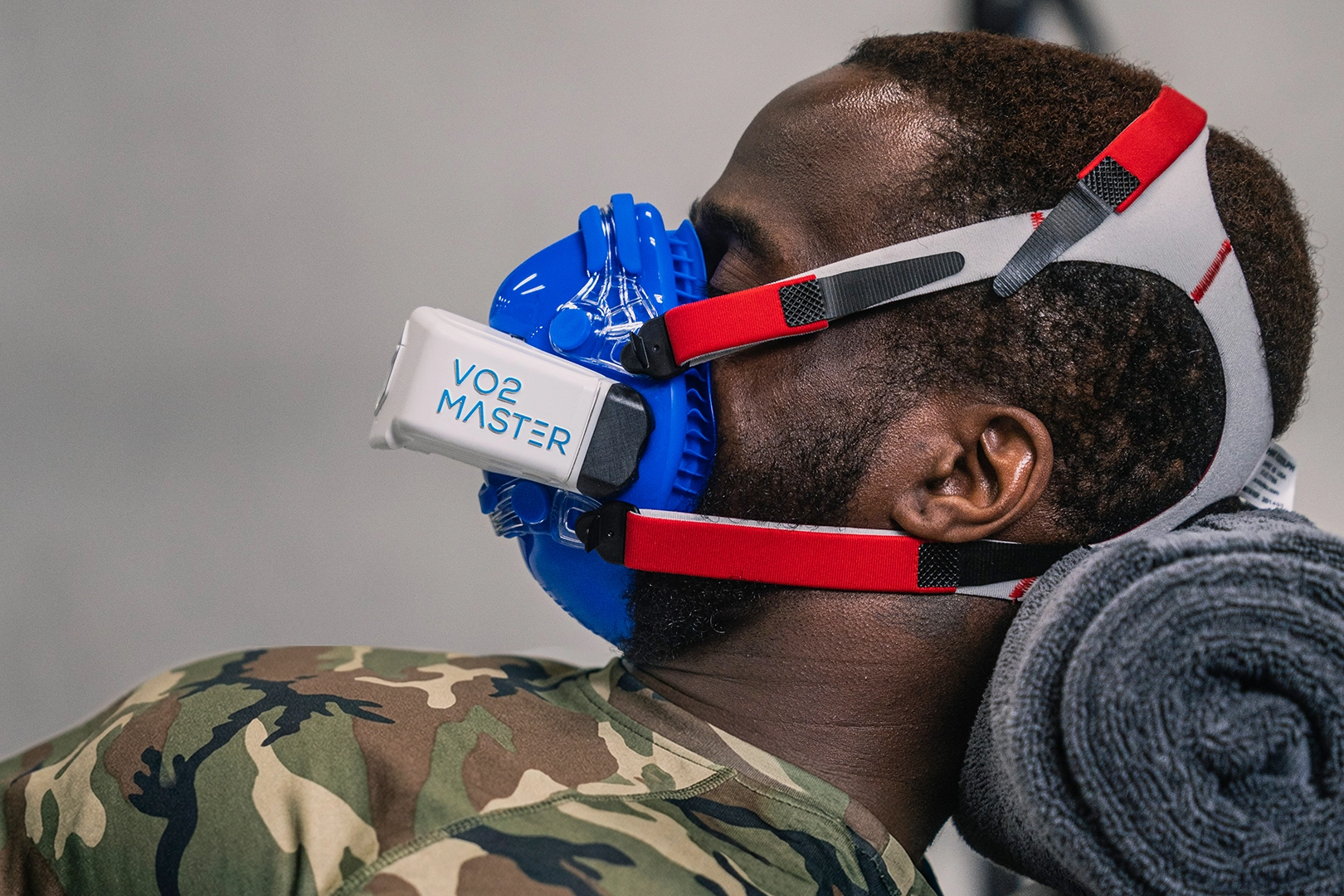
Portable metabolic testing helps bridge this gap by enabling direct, task-specific assessment of VO2, thresholds, and metabolic cost in real-world environments, offering meaningful insight into readiness, fatigue risk, and recovery capacity.
Ultimately, Jones framed portable metabolic technology as a decision-support tool that enhances profiling, screening, and longitudinal monitoring to better align research, practice, and operational readiness in tactical settings.
Portable VO2 testing doesn’t replace performance standards—it explains them, revealing how much physiological reserve a warfighter truly has under repeated stress.”
Mark Edward Jones PhD Candidate
Tactical Performance Specialist & Exercise Physiologist
Resting Metabolic Rate as a Readiness Signal
Beyond performance testing, the webinar underscored the growing importance of resting metabolic rate (RMR) assessment using indirect calorimetry.
Female athlete health
Repeated RMR testing revealed meaningful metabolic fluctuations across menstrual cycle phases, with increases of approximately 100–200 kcal/day during luteal phases. When accounted for in fueling strategies, athletes reported improved training tolerance and performance consistency.
Overtraining and illness recovery
Dynamic metabolic testing has also been used to detect metabolic disruption and drift associated with overtraining, post-viral illness, and chronic stress—allowing practitioners to intervene before performance declines.
“The value of VO2 Master is not just measuring capacity, but understanding sustainability—who can perform, recover, and repeat when conditions are unpredictable.”
Mark Edward Jones PhD Candidate
Lab vs Dynamic Metabolic Testing: Key Differences
| Feature | Static (Lab-Based) Testing | Dynamic Metabolic Testing |
|---|---|---|
| Environment | Controlled laboratory | Indoors/outside, task-specific |
| Ecological validity | Low–moderate | High |
| Setup time | High | Low |
| Primary use | Diagnostic and validation | Training & readiness decisions |
| Recovery insights | Limited | High |
| Coach communication | Abstract | Use in team settings |
| Use in team settings | Limited | Scalable |
| Applied decision-making | Delayed | Immediate |
Review recently published research studies supporting the use of VO2 Master for accurate dynamic metabolic testing in applied sport, clinical, and tactical environments.
Key Takeaways from the APS Webinar
Dynamic portable metabolic testing expands human performance insights. For professionals working with elite athletes and tactical populations, it provides:
- Higher ecological validity
- Better insight into recovery and repeatability
- Clearer links between physiology and performance outcomes
Ultimately, dynamic metabolic testing functions as a decision-support tool, enabling more precise fitness and tactical readiness testing, training, improved recovery management, and more sustainable performance.
Watch the full American Physiological Society APS Webinar:

Product specifications note: The VO2 Master is recommended for use in temperatures ranging from 17 to 45 degrees Celsius.
Experience dynamic metabolic testing in real performance environments—Book a VO2 Master demo or shop now.
Frequently Asked Questions
Is dynamic metabolic testing accurate?
Validation studies show modern portable systems closely align with lab-based metabolic carts when protocols are matched. Published study references are available.
Does this replace lactate testing?
It complements or reduces reliance on lactate by revealing thresholds, kinetics, and metabolic cost without repeated blood sampling.
Who benefits most from dynamic metabolic testing?
Coaches and athletes, tactical operators, and wellness populations.
How often should RMR be tested?
Every 4–8 weeks or during key training, recovery, or nutritional interventions.
Is VO2 max still relevant?
Yes when interpreted alongside thresholds, kinetics, and task demands. It is a major indicator of longevity as well, not just athletic performance potential.
- ACSM Guidelines for Exercise Testing and Prescription
- Montoye et al., validation of portable metabolic systems
- APS Webinar: Piatriková & Jones