VO2 Master co-founder, anesthetist and endurance coach Andrew Sellars, MD, explains why effective testing starts with a question, not a protocol, and how coaches can use physiological data to identify what is actually limiting an athlete.
A test is only valuable if it changes what you do next.
For Dr. Sellars, physiological testing for athletes is not about collecting impressive numbers or chasing VO2 Max. It is about identifying the system that may be limiting performance, changing training accordingly, and then testing again to determine whether the intervention worked.
Table of Contents
Why Physiological Testing for Athletes Should Start with a Question
Dr. Sellars’ philosophy is straightforward: “To improve something, first, you need to measure it.”
But measurement alone is not the point. Before testing an athlete, a coach should decide what they are trying to understand. Then the test should be designed around that question.
Dr. Sellars describes the process as:
- Identify what may need improvement.
- Measure it.
- Create training that targets the suspected limitation.
- Measure again.
- Observe what happens in competition or sport-specific training.
Testing therefore becomes part of a coaching loop rather than an isolated assessment.
As Sellars explains, testing should be specific to what the coach is trying to evaluate and should be used to identify weaknesses and physiological changes that can be influenced over time.
That distinction matters.
If the only question is, “What is this athlete’s VO2 Max?” the coach may get an accurate number without learning what training should change on Monday morning.
A more useful question might be:
Why can this athlete produce the required power for three minutes but not stabilize at it for eight?
That question immediately opens the door to examining cardiovascular response, breathing, muscle oxygenation, technique, metabolic demand, perception and recovery.
Think in Systems, Not Single Metrics
Dr. Sellars views endurance performance as the interaction of multiple physiological systems rather than the product of one headline measurement.
His coaching framework considers:
- Cardiovascular function
- Respiratory function
- Musculoskeletal capacity
- Neurological coordination
- Metabolic function
- Psychological factors
- The interaction between all of them
That last point is important. An athlete does not race with their cardiovascular system on Monday, respiratory system on Tuesday and muscles on Wednesday, every system has to function together.
This is why an athlete with an impressive VO2 Max can still have a very specific performance limitation.
The limiter may not be aerobic capacity
Consider a triathlete who comes from cycling. They may have excellent cardiovascular fitness, yet inefficient running mechanics. Increasing cardiovascular load may do little to address the actual problem.
Likewise, a former runner entering triathlon may need relatively little attention on running fitness but significant technical development in the swim.
Sellars’ approach is therefore to ask:
Which system is preventing this athlete from expressing the fitness they already have?
That changes the role of metabolic testing for athletes. Instead of ranking athletes by a single number, testing can help a coach build an individualized physiological profile.
Structural Versus Functional Adaptations
One of the most useful concepts for coaches in Sellars’ framework is the distinction between structure and function.
Structure refers to the physical building blocks of a system.
Function describes how effectively the athlete can use them.
For example, the cardiovascular system includes structural characteristics such as the heart and blood vessels, while functional responses include how the cardiovascular system behaves as exercise intensity changes.
The same idea applies elsewhere. An athlete may possess substantial muscular strength but lack the coordination required for a particular sport. Another athlete may have strong respiratory muscles but struggle to maintain an efficient breathing pattern as intensity increases.
Sellars emphasizes that some adaptations occur relatively quickly, while structural development can require much longer periods of training.
For coaches, that changes expectations.
Ask whether you’re training the short-term function or long-term structure
If testing reveals a limitation, the next question should be:
Is this something we expect to change quickly, or are we building capacity over months and years?
That perspective can protect coaches from constantly changing training because a metric did not move after a few weeks.
It also supports a longer-term coaching philosophy. Dr. Sellars challenges coaches to think beyond preparing an athlete for one season and instead consider what that athlete could become over several years.

Test the Athlete for the Sport They Actually Do
A testing protocol should reflect both the sport and the athlete’s history.
Dr. Sellars recommends testing athletes in the modality they compete in. Running and cycling should be assessed separately, and swimming requires its own considerations.
Why?
Because physiological capacity does not automatically transfer perfectly between sports.
An excellent cyclist may have exceptional aerobic capacity but lack the neuromuscular coordination and musculoskeletal conditioning to run efficiently. A strong runner moving into triathlon may have a completely different limitation.
The same athlete can therefore require different coaching priorities in each discipline.
Testing should become more specific as the question becomes clearer
Dr. Sellars describes using graded testing for endurance athletes, beginning at low intensity and progressing toward moderately high workloads rather than always requiring maximal efforts.
That is because much of the useful information for endurance coaches exists around the intensities athletes actually need to sustain in training and competition.
“As endurance athletes, we are more interested in understanding what happens at racing intensity.”
He also emphasizes longer stages. Rather than looking only at the first few minutes of an interval, he wants to know whether the athlete’s physiology remains stable as the workload continues.
That is a valuable distinction for coaches:
Can the athlete hit the number? is one question.
Can the athlete stabilize at the number? is often a better one.
What Recovery Can Reveal About the Limiting System
The work interval gets most of the attention in testing.
Dr. Sellars also pays close attention to what happens when the interval stops.
One testing format involves five minutes of work, one minute of recovery and another five-minute interval at the same intensity.
During that one-minute recovery, coaches can watch how different systems respond.
For example:
| Signal | During the work interval | During recovery | Coaching question |
| Heart rate | How high does it rise? | How quickly does it fall? | Is cardiovascular recovery keeping pace with the workload? |
| Breathing | Rate and depth | How quickly does breathing settle? | Is the respiratory system highly taxed? |
| VO2 | Oxygen consumption at workload | Rate of decline | How is aerobic demand changing after the effort? |
| Muscle oxygenation | Local muscular response | Reoxygenation | Are the working muscles recovering? |
| Power or pace | External output | Ability to repeat it | Can the athlete reproduce the performance? |
Coaches can combine information from heart rate, VO2 Master, muscle oxygenation and performance output to build a broader picture of the athlete.
This is where VO2 testing for coaches becomes particularly useful.
A coach is no longer looking only at “VO2 Max = X.”
They are looking at how oxygen consumption behaves at a specific workload, how breathing responds, what happens during recovery and whether the athlete can reproduce the effort.
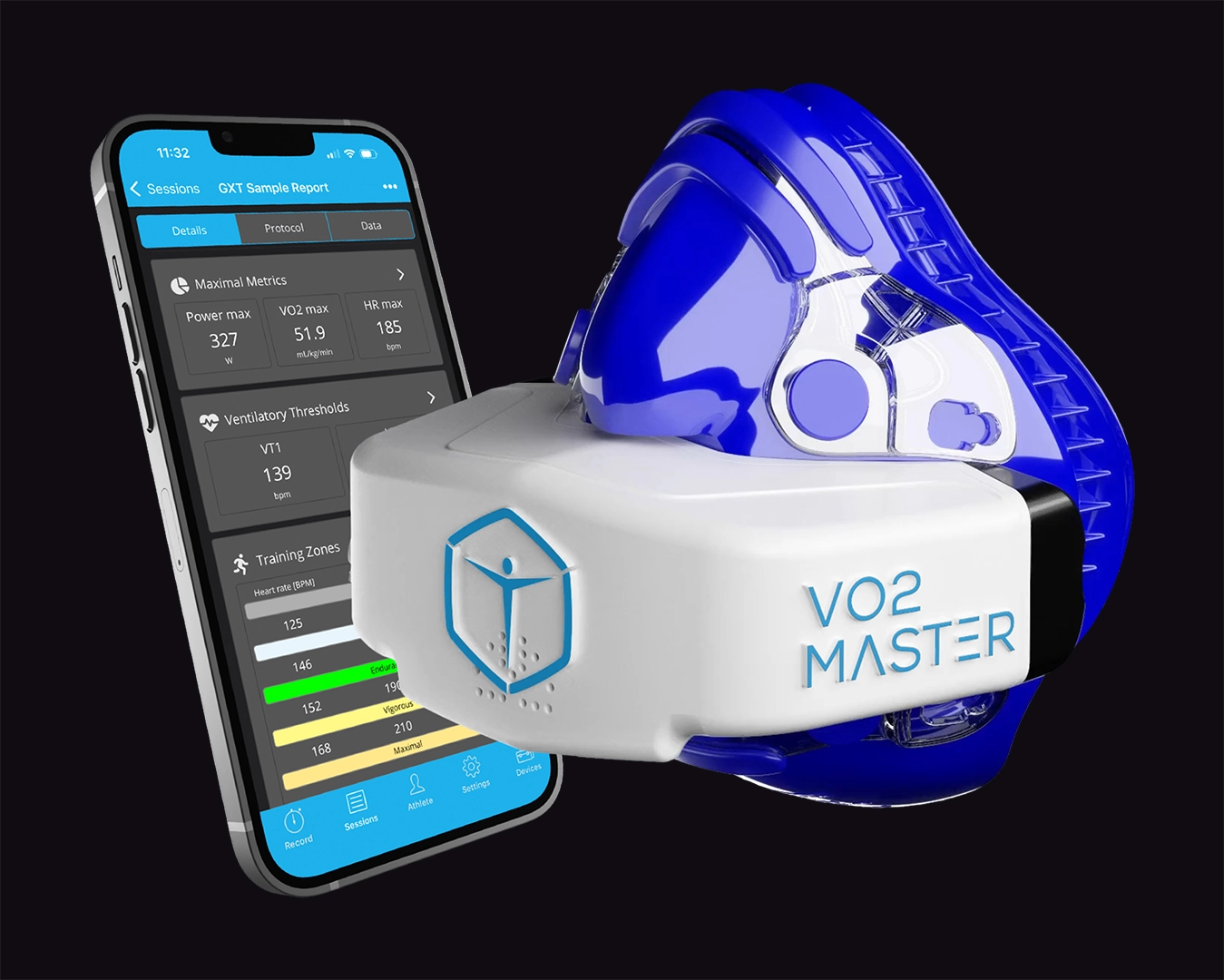
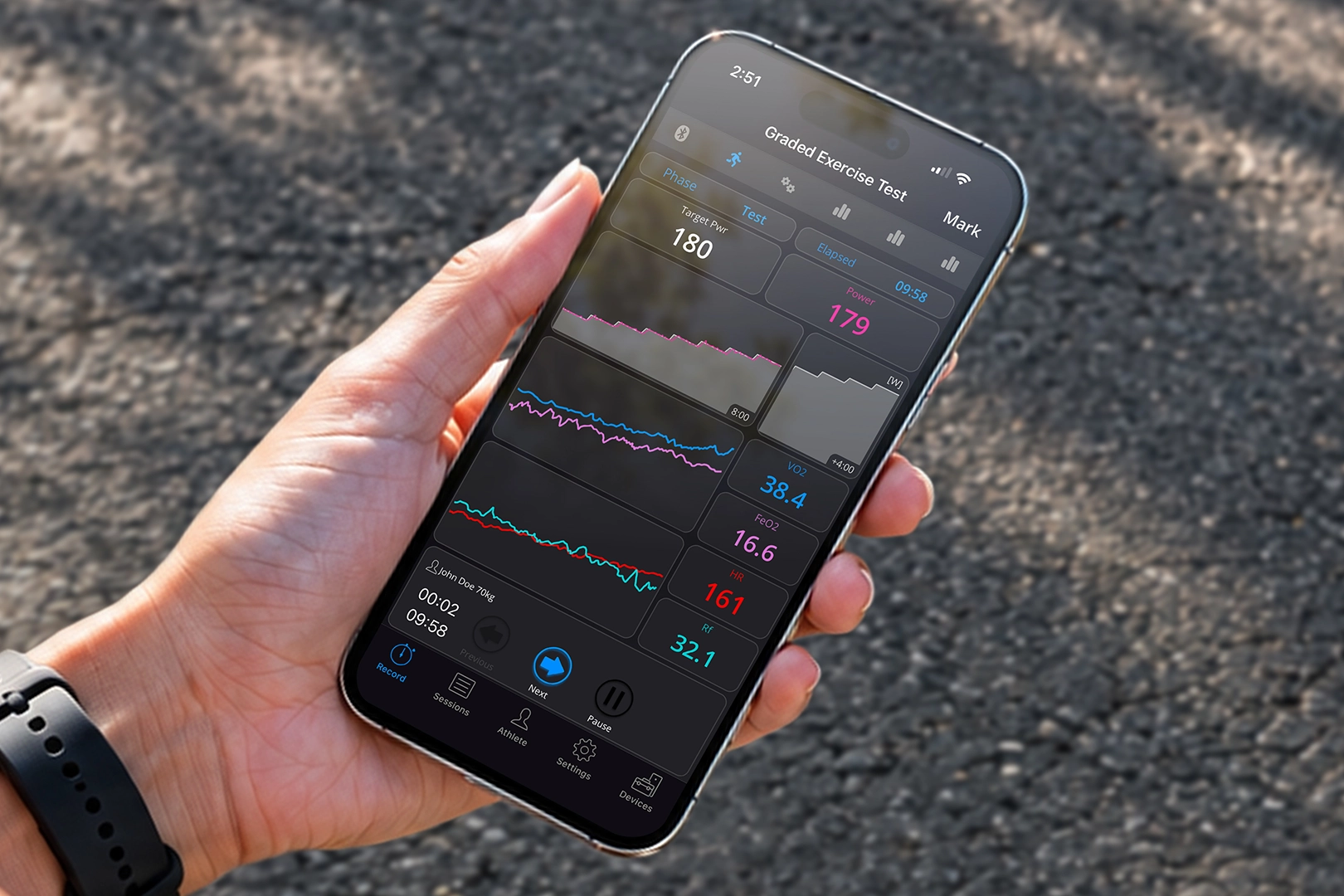
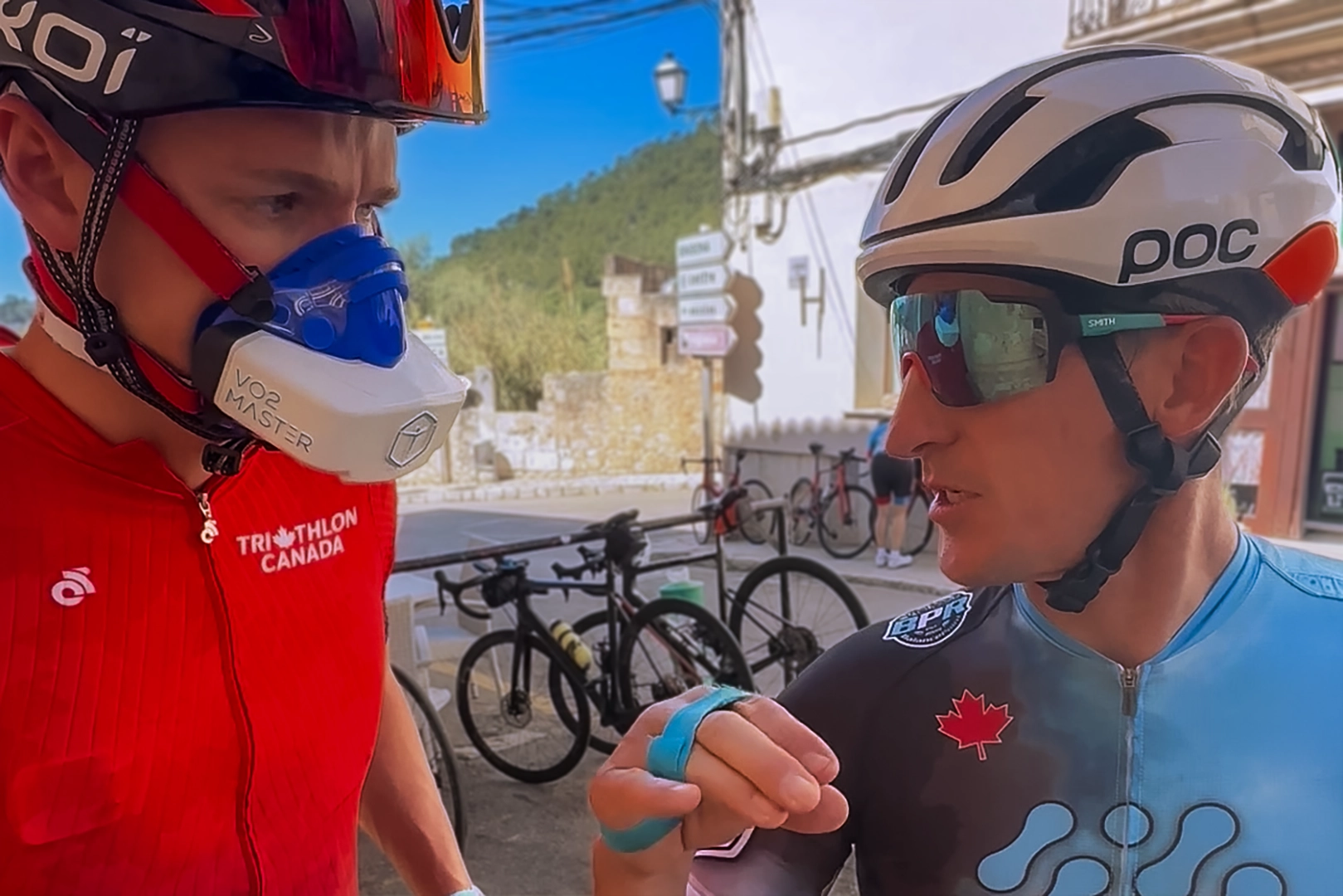
The VO2 Master analyzer enables coaches to collect breath-by-breath metabolic and respiratory information where your client trains.
Shop VO2 Master or book a demo to see how portable metabolic testing can fit into your athlete assessment workflow.
Breathing May Tell You More Than You Expect
One of the most interesting themes in Dr. Sellars’ work is respiratory data.
When he began testing athletes, he noticed substantial differences in how they breathed.
Some athletes breathed quickly and shallowly. Others used slower, deeper breathing patterns. In certain athletes, the loss of breathing control appeared at the same time performance began to deteriorate.
Ventilation, the volume of air moved in and out of the lungs, is primarily influenced by two variables:
- tidal volume: the amount of air moved per breath
- respiratory frequency: how often the athlete breathes
The VO2 Master analyzer allows coaches to observe these responses alongside oxygen consumption during exercise. Dr. Sellars explains that examining breathing was one of the original motivations behind the development of the system.
Look beyond VO2 Max
This creates an important shift in thinking.
Many coaches associate metabolic testing almost exclusively with VO2 Max.
But a graded test can also show how breathing changes as workload increases and how an athlete’s respiratory pattern behaves around ventilatory thresholds.
Those breathing patterns can offer clues about when an athlete begins to lose respiratory coordination. That information may lead to a different training intervention than the coach would choose from pace, power or VO2 Max alone.
A Cross-Country Skier Shows Why Field-Testing Matters
Perhaps the clearest example comes from a cross-country skier Dr. Sellars assessed using the VO2 Master a number of years ago.
The athlete had good skiing technique but would switch to a less efficient movement pattern during a short climb. At first glance, that might appear to be a technical problem.
The respiratory data suggested something was happening immediately before the technique changed.
During single-stride skiing, her breathing rate was around 30 breaths per minute. It then rose sharply toward 45 to 50 breaths per minute. Approximately ten seconds later, she changed skiing technique.
In other words: The visible technical breakdown was preceded by a measurable physiological change.
That was the hook. Instead of simply telling the skier to hold technique longer, the team experimented with different breathing and pacing strategies on the actual course.
Dr. Sellars reports that after refining the approach, the athlete was able to maintain her technique longer and reduce the time required for that climb.
Whether working with skiing, running, cycling or another endurance sport, the coaching lesson is powerful:
What looks like a technique problem may have a physiological cause.
Without testing, the coach sees the symptom. With the right testing, the coach has a better chance of finding the reason behind it.
Sometimes the data tells you to do less
When performance stalls, the natural reaction is often to push harder.
More intervals. More intensity. More suffering.
But if the athlete’s limitation is not a lack of effort tolerance, pushing harder may simply add stress to the wrong system.
Testing gives the coach another option: identify the likely limitation first, then prescribe the workload.
A Practical Testing Framework for Coaches
Dr. Sellars’ philosophy can be distilled into a repeatable coaching process.
Define the question
What problem are you trying to solve? Avoid testing simply because testing is available.
Select the relevant modality
Whenever practical, test the athlete in the movement or sport you want to understand.
Start broad
Look at external performance alongside multiple internal responses rather than drawing conclusions from one metric.
Observe stability
Give the athlete enough time at relevant workloads to see whether physiological responses stabilize or continue to drift.
Watch recovery
The minute after an interval may reveal information that the interval itself does not.
Identify the likely limiter
Is the primary issue cardiovascular, respiratory, metabolic, muscular, neurological, technical or some interaction between them?
Change one meaningful part of training
Use the test to guide a specific intervention rather than rewriting the entire program.
Retest
Return to the original question. Did the athlete respond as expected?
That closes the loop.
Measure. Train. Remeasure. Apply.
Testing Should Make Coaching More Individual, Not More Complicated
The purpose of athlete testing is not to turn every coach into a laboratory scientist.
It should make the coaching process clearer. The temptation with modern technology is to collect everything simply because we can.
Dr. Sellars’ approach is different:
Start with the athlete.
Start with the performance problem.
Then use testing to determine which information could genuinely change your decision.
VO2 Max may be part of the answer.
Sometimes the more important information may be how VO2 behaves below maximum, where ventilatory changes occur, how quickly heart rate recovers, whether breathing becomes unstable or whether an athlete’s technique changes when one physiological system becomes stressed.
The best test is therefore not necessarily the hardest test or the one with the most metrics.
It is the test that helps the coach decide what to do next.
Conclusion: Test to Answer a Coaching Question
For Dr. Sellars, physiological testing evolved from standardized laboratory protocols toward portable testing which is far more practical and individualized, this is why he and co-founder Peter O’Brien worked to develop the VO2 Master analyzer.
The philosophy put simply: the athlete is a system. Training affects multiple components of that system. And the coach’s job is to determine which component deserves attention now.
That is why testing should not end with a VO2 Max score.
It should lead to a conversation:
What did we learn? What should we change? And how will we know if it worked?
When coaches can answer those three questions, metabolic testing becomes much more than an assessment.
It becomes part of coaching.
Use the VO2 Master analyzer to measure real-time VO2 and respiratory responses in the environments where athletes train.
Shop VO2 Master or book a demo to explore how portable metabolic testing can support more individualized athlete assessment and training decisions.
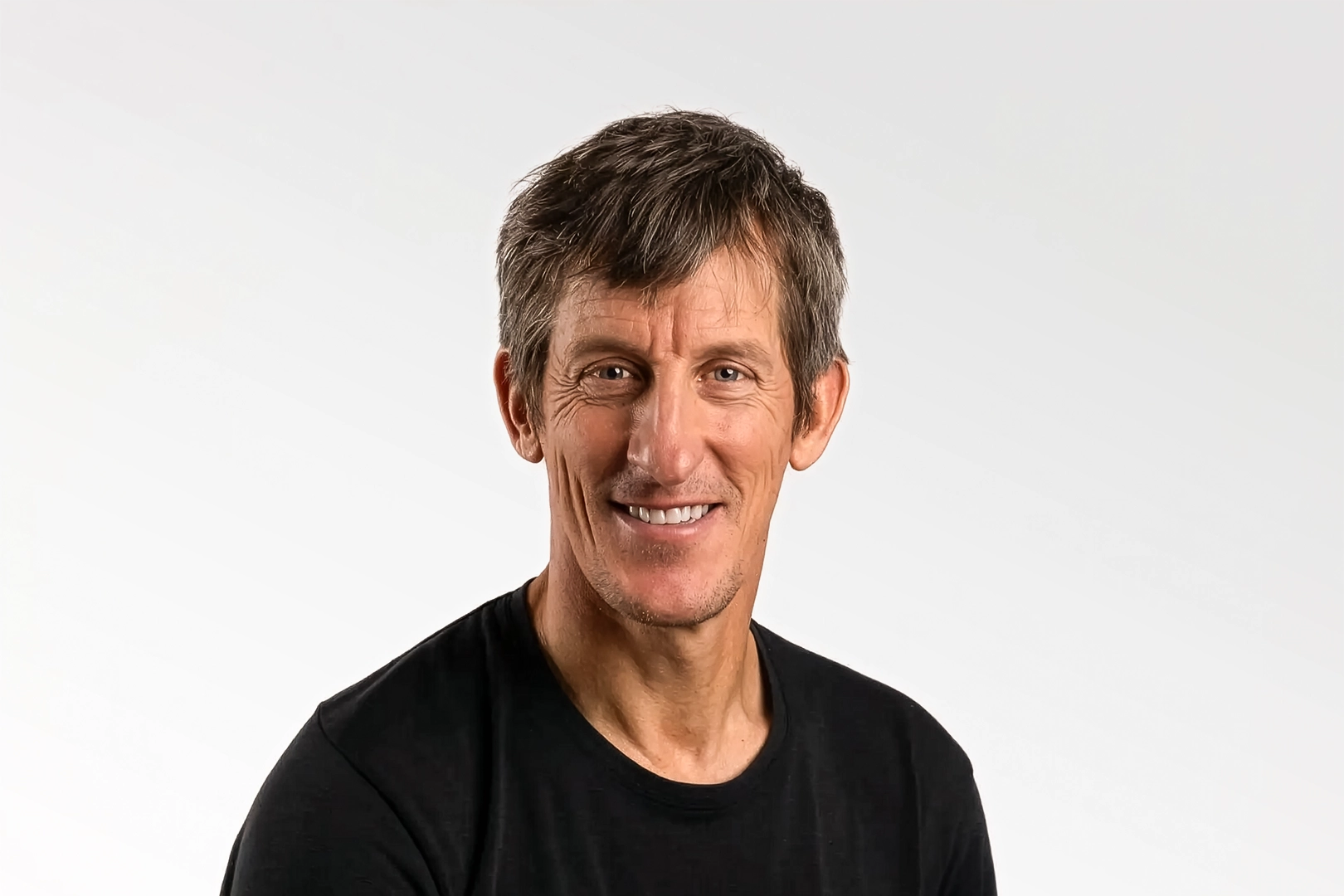
Dr. Andrew Sellars
Practicing Anesthesiologist
• 5x Ironman World Championship Qualifier
• 8x Xterra World Championship Qualifier
• 7x Tour Transalp Finisher, Grandmasters Podium 2023
Co-Founder VO2 Master Inc.
Co-Founder Isocapnic Inc.
Founder Balance Point Racing Team
Dr. Sellars’ physiologic interests include respiratory dynamics, the effects of breathing efficiency on oxygen consumption, lactate dynamics, potential physiologic limitations to endurance sport and the overlap with medical pathology.
Frequently Asked Questions
What should coaches measure in addition to VO2 Max?
Coaches can look beyond VO2 Max by reviewing oxygen use at specific workloads, ventilatory thresholds, breathing pattern, heart-rate response, recovery, power or pace stability and sport-specific performance output. These signals can show whether the athlete can hold the required intensity, recover from it and repeat it, which may be more useful than one maximum data point.
Why does sport-specific testing matter for endurance athletes?
Sport-specific testing matters because physiological capacity does not transfer perfectly between sports. A strong cyclist may not run efficiently, and a strong runner may have different limitations in swimming or cycling. Testing the athlete in the movement(s) they actually compete in helps coaches understand the real performance demand instead of assuming one test explains every discipline.
How can respiratory data help coaches understand performance limiters?
Respiratory data can show how an athlete’s breathing pattern changes as workload increases. A coach may notice faster, shallower breathing, changes in ventilation, or loss of respiratory control near a threshold. That can reveal whether a visible performance issue, such as fading pace or changing technique, may be connected to a physiological stress response.
What can recovery data reveal during athlete testing?
Recovery data can show how quickly an athlete’s systems return toward baseline after a hard effort. Heart rate, breathing, VO2, muscle oxygenation and repeat power or pace can all provide clues. If an athlete can hit a workload once but cannot recover enough to repeat it, the coaching intervention may need to target recovery capacity, not just peak output.
How can coaches turn physiological testing data into a training workflow?
Coaches can turn testing data into a workflow by starting with a question, choosing the right modality, reviewing internal and external responses, changing one meaningful part of training, and retesting. This keeps testing practical. The goal is not just having more data; metabolic testing is a repeatable process that helps the coach decide what to adjust next.