Autoren:
Neil Ernest Wolkodoff 1, Gerald Martin Haase 2 und Ben Nathaniel Pennymon 3
1 Colorado Center for Health & Sport Science, Denver, Colorado.
2 Medizinische Fakultät der University of Colorado, Aurora, Colorado.
3 Common Ground Golf Course, Aurora, Colorado.
Einleitung
Golf hat in den letzten zehn Jahren als Freizeitsportart einen Aufschwung erlebt. Während der zwei Jahre der Pandemie verzeichnete Golf einen sprunghaften Anstieg, da es den Teilnehmern die Möglichkeit bot, Zeit im Freien in einer entspannten Umgebung zu verbringen, verbunden mit einer Vielzahl von wahrgenommenen gesundheitlichen und sozialen Vorteilen [1, 2]. Aber entsprechen die wahrgenommenen Vorteile tatsächlich der Realität, was den Beitrag zur Gesundheit oder Fitness angeht?
Es wird seit langem diskutiert, ob Golf ein Sport oder eine Freizeitaktivität ist und inwieweit es gesundheitliche Vorteile bietet. In einer begrenzten Anzahl von Studien wurde versucht, den Beitrag von Golf zur Gesundheit zu ermitteln. Frühere Untersuchungen stützten sich auf Messgrößen wie Schrittzahl, zurückgelegte Strecke, Herzfrequenz, Bewegungsmuster und in seltenen Fällen den tatsächlichen Energieverbrauch anhand der ausgeatmeten Gase, um den Nutzen für Gesundheit oder Fitness zu bewerten [3, 4, 5]. Auch wenn diese Ergebnisse nicht schlüssig sind – da Golf eine komplexe Aktivität mit vielen Spielaspekten ist –, deuten die Untersuchungen doch stark darauf hin, dass Golf als körperliche Aktivität mit moderater Belastung zur Gesundheit beiträgt [4, 5, 6]. Es ist besser als bloßes Gehen, was zum großen Teil auf die erhöhten metabolischen Anforderungen durch das Gelände, den Gesamtenergieverbrauch und den Golfschwung selbst zurückzuführen ist.
Vollständiger Artikel:
https://doi.org/10.30574/wjarr.2022.16.3.1403
The study involved 10 golfers completing nine-hole rounds using three transport modes while wearing a portable metabolic system.
Häufig gestellte Fragen
What did the study on golf transport, energy expenditure and mental focus measure?
The study compared energy expenditure, oxygen consumption, heart rate, mental focus, and golf score across three modes of play: motor cart, pushcart, and electric trolley. Ten golfers completed nine-hole rounds under each condition while wearing a portable metabolic measurement system.
How is energy expenditure estimated from oxygen consumption for golf transport, energy expenditure and mental focus?
Energy expenditure was determined from measured oxygen consumption during play. The researchers collected oxygen consumption in L/min, converted this to kilocalories per hour, and also recorded relative oxygen consumption in mL/kg/min, providing a direct physiological estimate of the metabolic demands of each transport mode.
How might walking or transport mode influence performance outcomes in golf transport, energy expenditure and mental focus?
Walking modes were associated with greater energy expenditure and better reported mental focus than using a motor cart. Golfers also averaged approximately one stroke better relative to par when using the two walking modes, although this difference was not statistically significant.
How can VO2 Master be used to study golf transport, energy expenditure and mental focus?
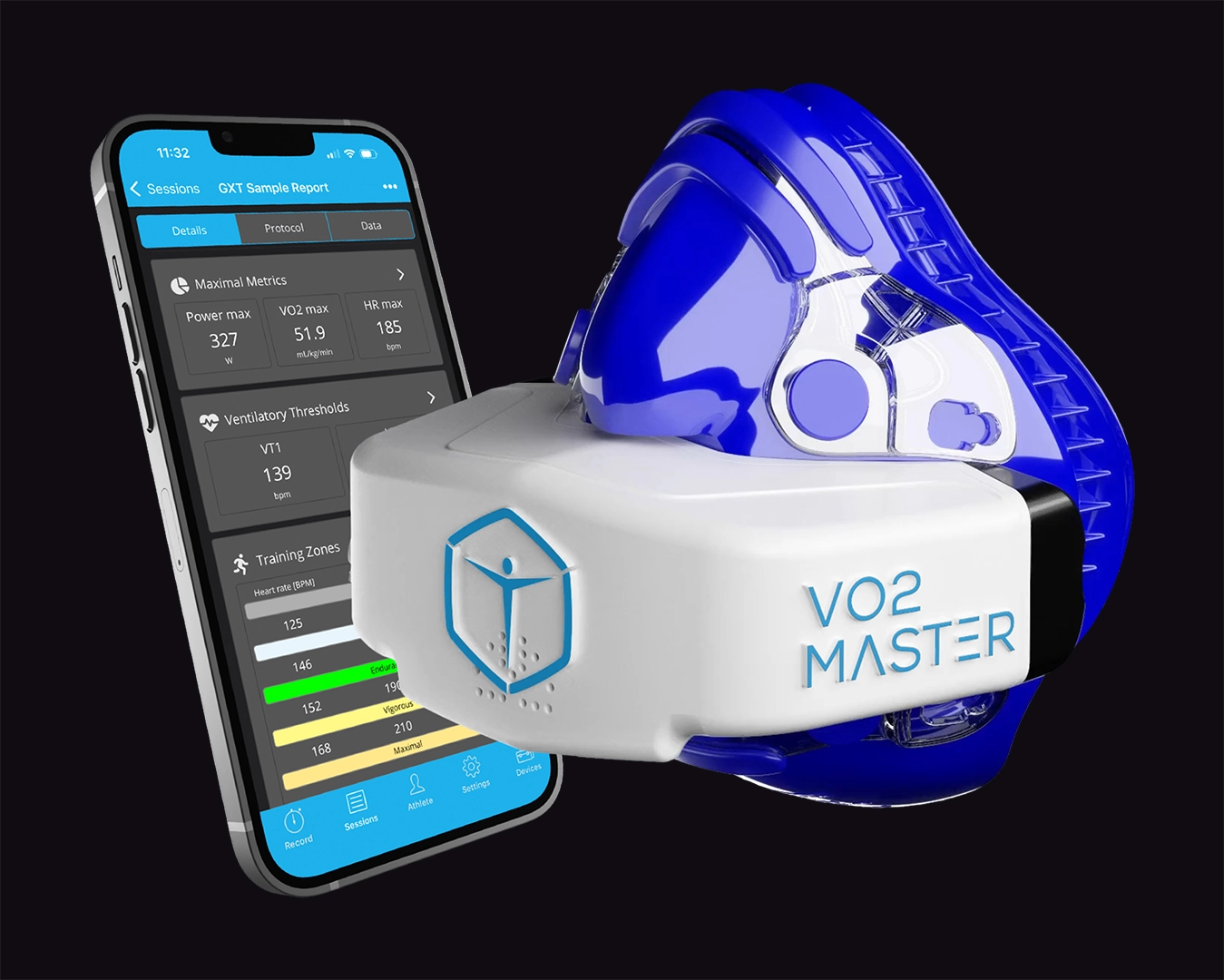
A portable VO2 Master Analyzer allows researchers to collect respiratory and metabolic data during actual golf play rather than only in a laboratory. This makes it possible to quantify oxygen consumption and energy expenditure while golfers walk, push a cart, use an electric trolley, and perform normal golf activities on the course. The published study used a portable metabolic system during each nine-hole trial.
Which factors can change energy expenditure in golf transport, energy expenditure and mental focus?
Transport method is an important factor, but energy expenditure can also vary with the golfer’s fitness and body size, course terrain, walking distance and pace, environmental conditions, equipment carried or pushed, and duration of play. In this study, average expenditure was 211 kcal/hr with a motor cart, 236 kcal/hr with an electric trolley, and 288 kcal/hr with a pushcart.
How should mental focus or task performance be measured alongside golf transport, energy expenditure and mental focus?
The study combined physiological measurements with actual golf scores and a mental-focus survey. Participants rated their focus for tee shots, second through fourth shots, and short-game shots from within 100 yards. Using both objective performance outcomes and standardized subjective assessments provides context for interpreting metabolic demands alongside golf performance.
How can findings from golf transport, energy expenditure and mental focus guide golf conditioning?
The findings suggest that walking a golf course can provide meaningful moderate-intensity physical activity without necessarily compromising performance or focus. Golf conditioning programs can therefore prepare players for the aerobic and physical demands of walking a course while maintaining the concentration and technical execution required throughout a round.
Which study limitations matter most for golf transport, energy expenditure and mental focus?
The most important limitation is the small sample of only 10 regular golfers, which limits how broadly the findings can be generalized. Golf is also highly variable: course terrain, weather, golfer ability, pace of play, and individual fitness can influence physiological demand and performance. The scoring difference between walking and motor-cart conditions was also not statistically significant, so it should not be interpreted as proof that walking improves golf scores.
How could a practitioner reproduce the protocol for golf transport, energy expenditure and mental focus?
A practitioner could have golfers complete comparable nine-hole rounds using a motor cart, pushcart, and electric trolley, while wearing a portable metabolic analyzer and heart-rate monitor. Oxygen consumption, energy expenditure, and heart rate can be recorded throughout each trial, while golf scores and a consistent mental-focus questionnaire are collected for comparison. Conditions should be standardized as much as practical across trials to make comparisons more meaningful.
What is the key takeaway from Energy expenditure compared to mental focus & score in three modes of golf transport/play?
The study found that walking the golf course increased energy expenditure without appearing to negatively affect mental focus or scoring. Pushcart play produced the highest average energy expenditure, while electric-trolley play produced the highest reported mental-focus score. Overall, the researchers concluded that walking modes offered greater potential health and fitness benefits than motor-cart play.